Installation guide
 Owner’s manual
 Error Codes



What is the average lifespan of a KitchenAid refrigerator?
KitchenAid refrigerators typically last 14 to 17 years on average, and many run 10 to 20 years with normal use and good maintenance. For your KitchenAid KSCS23INSS02 side-by-side refrigerator, routine care (cleaning coils, protecting the sealed system, and keeping water filtration maintained) helps you reach the upper end of that range; see the KSCS23INSS02 owner's manual for model-specific care and operating guidance.
Typical lifespan and what to expect
Most KitchenAid side-by-side refrigerators fall into these real-world ranges:
| What you’re measuring | Typical range | What usually limits life |
|---|---|---|
| Overall refrigerator lifespan | 10 to 20 years | Sealed system wear, airflow issues, door seal leaks |
| “Average” service life | 14 to 17 years | Normal component aging (fans, controls, ice maker) |
| Sealed system coverage (many models) | Up to 10 years (parts) | Compressor, evaporator, condenser, dryer, tubing |
Maintenance that extends life (high impact)
We recommend these habits for KSCS23INSS02 to reduce strain on the compressor and improve cooling efficiency:
- Vacuum dust from the condenser area regularly (more often with pets).
- Keep door gaskets clean and ensure doors close fully.
- Avoid overpacking; leave space for airflow at vents and shelves.
- Keep freezer temperature near 0°F and refrigerator near 37°F for balanced run time.
- Replace the water filter on schedule to maintain flow and reduce valve stress; use the refrigerator water filter EDR3RXD1.
Signs your refrigerator is nearing end-of-life
These symptoms often show up as a refrigerator ages; addressing them early can add years:
- Warm temperatures or wide temperature swings
- Loud or constant running (especially after cleaning coils)
- Frost buildup on the back wall or poor airflow
- Water leaks or recurring ice maker and dispenser issues
- Repeated repairs involving major cooling components
Why it matters
A refrigerator that is clean, sealed well, and moving air correctly runs fewer hours per day. That reduces heat load on the compressor and helps protect the sealed refrigeration system, which is the most expensive group of components to repair.
Last updated: January 2026
What is the most common problem with a KitchenAid refrigerator?
The most common KitchenAid refrigerator issues are ice maker problems and cooling problems. On the KitchenAid KSCS23INSS02 side-by-side, those symptoms are usually tied to airflow restrictions (dirty condenser area, weak evaporator airflow), defrost/drain issues that cause frost or leaks, or water-supply problems that affect the dispenser and ice maker; see the KSCS23INSS02 owner's manual for model-specific checks.
Most common symptoms we see
- Ice maker makes little or no ice
- Refrigerator section is warm but freezer seems OK
- Frost buildup on the freezer back wall
- Water leaking inside the fresh food section or onto the floor
- Noisy operation (fan noise, rattling, buzzing)
- Water dispenser is slow or sputters
Quick checks that solve many calls
- Confirm temperatures: Set refrigerator to about 37°F and freezer to about 0°F, then allow 24 hours to stabilize.
- Check airflow: Make sure vents are not blocked by food; listen for the evaporator fan running.
- Clean the condenser area: Dust buildup reduces cooling and can increase noise.
- Inspect for frost patterns: Heavy frost often points to a defrost system issue.
- Verify water supply: Kinked tubing or low house water pressure can stop ice production.
Parts that commonly relate to these problems
| Symptom | Common cause | Example part for KSCS23INSS02 |
|---|---|---|
| No ice or small cubes | Restricted water flow | Refrigerator water filter EDR3RXD1 |
| No ice and no water at dispenser | Water valve not opening | Refrigerator inlet valve W10247725 |
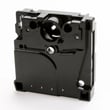
| Warm temps, fan noise, poor airflow | Fan blade damage or obstruction | Refrigerator evaporator fan blade WP2169142 |
| Frost buildup, warm refrigerator section | Defrost control issue | Refrigerator defrost bi-metal thermostat WPW10225581 |
Why it matters
Ice maker and cooling complaints often share the same root causes: restricted airflow, poor heat removal at the condenser, or restricted water flow. Catching those early helps prevent food spoilage, repeated ice jams, and unnecessary part replacements.
Helpful DIY guidance
Last updated: January 2026
What is the disadvantage of a side-by-side fridge?
A common disadvantage of a side-by-side refrigerator like the KitchenAid KSCS23INSS02 is reduced usable width in each compartment; wide platters, pizza boxes, and large produce trays can be harder to fit, and fresh-food items can be less “at eye level” compared with many French door designs.
Common side-by-side drawbacks (and what to do about them)
- Narrow shelves and bins: Each side is slimmer, so wide items may not fit flat.
- More bending for fresh food: Many frequently used refrigerator items end up mid-to-lower shelf.
- Freezer organization can feel tight: Tall items may block drawers or shelves.
- Door swing clearance matters: You need enough side clearance for doors to open fully.
- Airflow can be easier to block: Overpacking can reduce cooling performance.
Door clearance and space planning for KSCS23INSS02
Your installation guide calls out door swing space needs; planning for clearance helps prevent daily frustration when loading groceries.
| What to check | Typical guidance for this style | Why it matters |
|---|---|---|
| Door opening | Plan for doors to open to about 150° | Lets you remove bins and access shelves more easily |
| Side-wall clearance | Allow roughly 13 1/4 in. to 16 1/2 in. depending on side | Prevents doors from hitting walls and improves access |
| Cabinet opening height | Varies by capacity and overlay style | Avoids fit issues during install |
For the exact measurements and your configuration, use the KSCS23INSS02 installation guide.
Quick tips to make a side-by-side easier to live with
- Store wide items (party trays, sheet cakes) on adjustable shelves if available, or rotate shelves to create a wider bay.
- Keep everyday fresh items (milk, deli, leftovers) between waist and eye level.
- Avoid packing food tightly against vents; keep a little space for airflow.
- If water taste or flow is poor, replace the filter on schedule; use the refrigerator water filter EDR3RXD1 when it fits your setup.
- If you want a step-by-step filter swap, follow how to replace the water filter in a KitchenAid refrigerator.
Why it matters
Most “side-by-side complaints” come down to access and usable shelf width, not cooling ability. When the doors have proper clearance and the shelves are organized for your habits, a side-by-side can be very convenient for both refrigerated and frozen foods.
Last updated: January 2026