Owner’s manual


How do I know if my Kenmore dryer thermal fuse is blown?
If your Kenmore Elite dryer model 11097729701 won’t start or the drum turns but there’s no heat, a blown thermal fuse is a top suspect. We confirm it by doing a continuity test with a multimeter, then fixing the airflow problem that caused it.
Common symptoms that point to a blown thermal fuse include:
- Dryer will not run at all (no motor operation)
- Drum turns but there is no heat (often confused with a tripped breaker)
- Cycle starts, then stops quickly
- Repeated “no heat” complaints even after cleaning the lint screen
- Unplug the dryer (or switch off the breaker).
- Access the thermal fuse (location varies by design; follow the disassembly steps in the 11097729701 owner’s manual).
- Remove at least one wire from the fuse terminal.
- Test with a multimeter on continuity/ohms.
| Meter result | What it means | What to do next |
|---|---|---|
| Beep or near 0 ohms | Fuse is good | Keep troubleshooting heat/run issues |
| No beep or OL/infinite | Fuse is blown | Replace the fuse and correct venting |
A thermal fuse usually opens because the dryer overheated from poor airflow. Before running the dryer again:
- Clean the lint screen and the lint screen housing
- Inspect the vent hose for kinks, crushing, or long runs
- Clear lint buildup in the wall duct to the outside
- Confirm the outside damper opens freely
- Make sure the dryer is not pushed tight against the vent
The thermal fuse is a safety device; replacing it without correcting venting often leads to another no-heat or no-start failure. The manual also notes that “no heat” can be caused by a blown household fuse or tripped breaker even while the drum turns, so checking power is part of the same diagnosis.
Last updated: January 2026
How to hard reset a Kenmore dryer?
For Kenmore Elite dryer model 11097729701, a hard reset is simply removing power long enough to clear the electronic control; unplug the dryer (or switch the breaker off) for about 1 to 5 minutes, then restore power and try starting a cycle again. Use the 11097729701 owner's manual for the exact control steps for your panel.
- Unplug the dryer or turn the circuit breaker OFF.
- Wait 1 to 5 minutes.
- Restore power.
- Close the door fully.
- Press and hold START for about 3 seconds to begin a cycle.
- If you need to clear a running cycle first, press STOP twice.
A reset clears the control, but it will not fix a failed safety device or airflow problem. Check these common causes:
- Door not fully closed or latch not engaging.
- Control is locked (Control Locked feature enabled).
- Restricted venting causing overheating and shutdown.
- Failed drive system parts (belt, idler, rollers) preventing the drum from turning.
- Motor issue or a heat-related safety trip.
| Symptom | What it often points to | Example part for this model |
|---|---|---|
| Dryer runs but makes thumping/squealing | Worn drum support components | Support WPW10314173 |
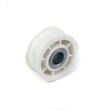
| Dryer hums but drum will not turn | Belt/idler problem | Dryer idler pulley 279640 |
| Dryer runs but shuts down or dries poorly | Airflow restriction, lint buildup | (Clean venting and lint path) |
Resetting is a fast way to clear a stuck control state, but repeated shutdowns usually mean the dryer is protecting itself. Fixing airflow and worn moving parts helps prevent overheating, long dry times, and repeat no-start problems.
Last updated: January 2026
What are the most common issues with 11097729701?
For the Kenmore Elite dryer model 11097729701, the most common problems are no heat or weak heat, long dry times, squealing or thumping noises, and drum not turning. These issues usually trace to airflow restrictions, wear parts in the drum drive system, or gas-heat ignition components.
- No heat (gas model): failed igniter, weak gas valve coils, or a safety device opening due to overheating
- Long dry times: clogged lint screen or venting, restricted blower housing, or poor airflow
- Squealing or grinding noise: worn idler pulley, drum support components, or belt-related wear
- Drum not turning: broken belt or a seized pulley, sometimes a failing drive motor
- Shuts off too soon or cycles oddly: temperature sensing issues (thermistor) or overheating from blocked venting
If your symptoms match, these model-compatible parts are frequently involved:
| Symptom | Common part to check | Example part on this model page |
|---|---|---|
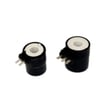
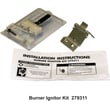
| No heat / intermittent heat | Gas ignition and valve components | Igniter 279311, dryer gas valve coil kit 279834 |
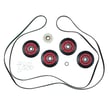
| Squealing / drum drag | Idler and drum drive wear parts | Dryer idler pulley 279640, dryer repair kit 4392067 |
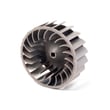
| Long dry times | Airflow and lint path components | Screen W10120998, dryer blower wheel WP697772 |
| Overheating / no heat after overheating | Safety cut-off components | Dryer thermal cut-off kit WP8573713 |
| Erratic temperature control | Temperature sensor | Dryer thermistor WP8577274 |
- Clean the lint screen and confirm it is not torn or warped.
- Inspect the exhaust duct for kinks, crushing, or heavy lint buildup.
- Listen at startup: a click and glow with no flame often points to coils; loud squeal points to the idler.
- Check drum movement by hand (power off): rough rotation suggests pulley or support wear.
- Confirm strong airflow at the outside vent hood.
Dryer problems often stack; a restricted vent can cause overheating that trips safety cut-offs and shortens the life of ignition and drive components. Fixing airflow first helps the 11097729701 dry faster and protects parts like the motor, thermistor, and burner system.
For model-specific disassembly steps and diagrams, use the owner's manual.
Last updated: March 2026