Installation guide
 Owner’s manual
 Error Codes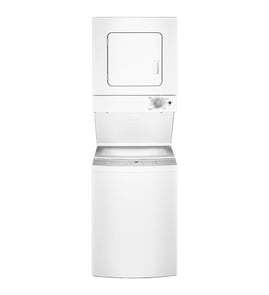





How to do laundry with a whirlpool washer?
For the Whirlpool WET4024HW0 stacked laundry center, we recommend loading clothes loosely, using only HE detergent, choosing the right cycle and temperature, then pressing Start/Pause. This model uses a low-water wash system and a lid lock, so it may look and sound different than older agitator washers.
Step-by-step: washing a typical load
- Sort laundry by color, fabric type, and soil level.
- Add a measured amount of HE (High Efficiency) detergent to the basket (or a single-dose packet first, then clothes).
- Load items in loose heaps evenly around the washplate (do not pack tightly).
- Add liquid chlorine bleach to the bleach dispenser (optional) and liquid fabric softener to the softener dispenser (optional).
- Close the lid, press Power On/Off, select a cycle, select Temp, then press Start/Pause.
For the exact cycle guide and control-panel details for this model, use the WET4024HW0 use and care guide.
Key settings to choose (and what they do)
- Normal: everyday cottons and mixed loads.
- Heavy Duty: sturdy fabrics, heavy soil, and loads using bleach.
- Delicate: lingerie and loosely knit items.
- Rinse: extra rinsing without a full wash.
- Spin: removes excess water from wet items.
- Clean Washer: run about every 30 loads with an empty tub to reduce odor and buildup.
| What you’re washing | Recommended cycle | Typical temp choice |
|---|---|---|
| Mixed everyday clothes | Normal | Warm or Cool |
| Towels/jeans | Heavy Duty | Warm |
| Lingerie/knits | Delicate | Cool or Cold |
Lid lock and “low water” behavior (normal for this model)
- The lid must be closed for the washer to fill and start.
- The lid locks before high-speed spin; unlocking can take about a minute after movement stops.
- Clothes may not be fully submerged; the washer senses load size and adds the correct water level.
Why it matters
Using HE detergent, the right cycle, and proper loading helps the WET4024HW0 clean better, rinse better, and avoid issues like excess suds, long cycle times, and off-balance spinning.
Last updated: January 2026
What is the downside to a stackable washer and dryer?
For the Whirlpool WET4024HW0 stacked laundry center, the main downside is convenience and serviceability: you save floor space, but you typically give up easier access, flexible placement, and simpler repairs compared with separate, side-by-side machines. See the WET4024HW0 use and care guide for operating and maintenance details.
Common downsides (what most owners notice)
- Harder access: controls and dryer door are higher; reaching the lint screen and loading/unloading can be tougher for shorter users.
- Smaller, less flexible capacity: laundry centers often have less room than full-size separate washer and dryer sets.
- More vibration sensitivity: stacked units can be more sensitive to leveling and load balance, which can increase noise.
- Repairs can be more involved: service access is tighter; some repairs require removing panels and working in confined spaces.
- Less upgrade flexibility: you cannot replace just the washer or just the dryer with any brand or size; you are tied to the combined platform.
Installation and venting considerations
A stacked laundry center like the WET4024HW0 depends heavily on correct venting and clearances. Poor airflow can increase dry times and heat stress.
| Topic | Why it matters on a laundry center | What to do |
|---|---|---|
| Vent material | Restricts airflow if incorrect | Use 4-inch rigid or flexible metal vent (avoid plastic/foil) |
| Vent length/turns | Too long or too many elbows slows drying | Keep the run short with minimal bends |
| Leveling | Reduces “walking” and vibration | Level the unit and lock the feet |
For step-by-step setup requirements, use the WET4024HW0 installation instructions.
Why it matters
With a stacked design, airflow, leveling, and access are bigger factors than they are with separate machines. Getting those basics right helps prevent long dry times, excess vibration, and avoidable service calls.
Last updated: January 2026
Do washer dryer combos need to be vented?
Yes for this model: the Whirlpool WET4024HW0 stacked laundry center uses a vented dryer, so it must be exhausted outdoors with proper metal ducting. For venting rules, clearances, and routing limits, follow the WET4024HW0 installation guide.
What “vented” means for WET4024HW0
This unit is not a ventless condenser or heat pump combo. The dryer section needs airflow to dry efficiently and safely, so you’ll install an exhaust duct from the dryer outlet to an exterior hood.
Key venting requirements to follow
- Exhaust must go outdoors (not into an attic, wall, ceiling, chimney, or crawlspace)
- Use 4-inch diameter venting
- Use rigid metal vent when possible; flexible metal only if accessible for cleaning
- Do not use plastic or foil vent
- Keep the run as short and straight as possible; limit elbows to maintain airflow
- Clean lint from the full vent system periodically (not just the lint screen)
Quick comparison: vented vs ventless (why your answer may differ by product)
| Type of laundry unit | Needs an exhaust duct to outdoors? | Typical install flexibility |
|---|---|---|
| Vented laundry center (like WET4024HW0) | Yes | Needs access to an exterior vent path |
| Ventless condenser/heat pump combo | No | Can be placed where venting is not possible (still needs drain/condensate handling) |
Why it matters
Correct venting helps your WET4024HW0 dry faster, reduces energy use, and helps prevent overheating and lint buildup. Poor airflow is one of the most common causes of long dry times.
If you’re planning a new install
Use the WET4024HW0 installation guide to confirm:
- Venting requirements and allowed materials
- Closet and clearance requirements
- Electrical and drain hookup requirements
Last updated: January 2026