 Installation guide
 Owner’s manual
 Error Codes



Why is my Frigidaire dishwasher not air drying?
On the Frigidaire FFID2426TD1A, selecting AIR DRY turns the heater off during the drying phase, so it is normal for dishes to come out wetter than with heated drying. For better drying, use heated dry (do not select AIR DRY), keep rinse aid filled, and confirm hot water is at least 120°F.
What to check first (fast fixes)
- Make sure AIR DRY is not selected if you want maximum drying performance.
- Fill the rinse aid dispenser and increase the rinse aid setting.
- Run the kitchen hot water until it is hot before starting the cycle (target about 120°F).
- Load to avoid nesting; trapped water in cups and bowls will not evaporate well.
- Use a cycle/options combination that includes a drying phase (the DRYING light should come on).
Settings and conditions that affect drying
The FFID2426TD1A can dry two different ways: unheated (AIR DRY) or heated (heater on). Use this quick comparison:
| Drying choice | What the dishwasher does | What you typically see |
|---|---|---|
| AIR DRY selected | Heater is deactivated during drying | More droplets, plastics stay wet longer |
| AIR DRY not selected (heated dry) | Heater is activated during drying | Better overall drying, fewer droplets |
For cycle and option details specific to this model, follow the steps in the FFID2426TD1A owner’s manual.
When a part problem is likely
If you are not using AIR DRY and drying is still poor, a heating or water-temperature issue is most common.
- If the water is not hot enough (below about 120°F), the dishwasher cannot evaporate moisture effectively.
- If the heater is not working, heated dry will not improve results.
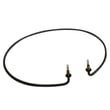
A common repair for no-heat drying is replacing the Frigidaire dishwasher heating element 154825001.
Why it matters
Drying performance depends on heat, airflow, and rinse aid chemistry. Using AIR DRY saves energy by turning the heater off, but it also increases the chance of wet dishes, especially plastics and tightly nested loads.
Last updated: January 2026
What is the most common problem with a Frigidaire dishwasher?
For the Frigidaire FFID2426TD1A dishwasher, the most common problems we see are water not draining (water left in the bottom) and poor cleaning caused by restricted water flow from a dirty filter or blocked spray arms. These issues are usually fixable with cleaning, inspection, and a few basic checks from the FFID2426TD1A owner's manual.
Most common symptoms and what they usually point to
- Water left in the tub: clogged filter area, kinked drain hose, or a weak drain pump
- Food soils left on dishes: blocked spray arm holes, incorrect loading, low water temperature, or low water pressure
- Detergent not working well: old detergent, wrong amount for water hardness, or dispenser issues
- Odor: standing water, food debris in the filter area, or dishes sitting too long
- Cycle seems “quiet” but you hear splashing or pumping: normal fill, wash pump, and drain pump sounds
Quick checks we recommend first (fastest wins)
- Remove and clean the filter area; reinstall it correctly (a loose or dirty filter can hurt cleaning and draining).
- Confirm spray arms spin freely and are not blocked by tall items.
- Use fresh automatic dishwasher detergent and fill rinse aid if your model has it.
- Verify home water conditions: about 120°F incoming water and 20 to 120 psi water pressure.
- If draining is slow, inspect the drain path for restrictions (air gap, disposer connection, drain hose routing).
Parts that commonly solve these problems
| Problem | Common part to inspect | Example part for FFID2426TD1A |
|---|---|---|
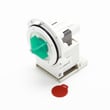
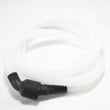
| Not draining | Drain pump, drain hose | Drain pump a A00126401, dishwasher drain hose 807117001 |
| Not cleaning well | Filter, spray arm | Dishwasher filter 5304532206, dishwasher spray arm 5304507158 |
| Not drying well | Heating circuit | Frigidaire dishwasher heating element 154825001 |
Why it matters
Drain and wash-flow problems can leave dirty water and food soils in the tub, which leads to odors, poor results, and extra wear on the pump and motor over time.
Last updated: January 2026
How can I force my Frigidaire dishwasher to drain?
On Frigidaire dishwasher model FFID2426TD1A, we force a drain by canceling the cycle: press and hold START/CANCEL for about 3 seconds, then close the door. The dishwasher runs a 90-second drain and the START/CANCEL light stays on.
Steps to force a drain (FFID2426TD1A)
- Press and hold START/CANCEL for 3 seconds.
- Confirm the cycle/option lights go out and the START/CANCEL light remains lit.
- Close and latch the door so the drain can run.
- Wait about 90 seconds for the drain to finish.
- Select a new cycle if needed after draining.
If it still will not drain
A forced drain only works if the drain path is open. We check these common causes next:
- Make sure the drain hose is not kinked or crushed under the sink.
- If connected to a disposer, make sure the disposer is empty and the knockout plug was removed.
- Verify the drain hose connection enters above the sink trap (to prevent backflow).
- Clean and reinstall the filter and any trap area so water can reach the pump.
- If the pump hums but water does not move, inspect the drain components.
| Symptom | Most likely issue | What to check first |
|---|---|---|
| No drain sound at all | Control/door not starting drain | Door fully latched; repeat cancel-drain steps |
| Hums but no water leaves | Blockage or weak drain pump | Hose kink/clog; filter/trap; pump inlet |
| Drains slowly | Partial restriction | High loop/air gap routing; hose buildup |
Parts that commonly affect draining
If you find a blockage or a failed component, these model-matched parts are commonly involved:
Why it matters
Standing water can cause odors and poor cleaning, and it can also mask a drain-hose routing problem (like a low entry point or missing high loop) that leads to water backing up into the tub.
For control and cycle details, follow the steps in the FFID2426TD1A owner’s manual.
Last updated: January 2026
How to fix a Frigidaire dishwasher power failure?
On the Frigidaire FFID2426TD1A dishwasher, a “power failure” style issue is often cleared by resetting the control and confirming the unit has safe, steady power. We recommend verifying the door is fully latched, then resetting the cycle, and restoring power at the breaker if needed (see the FFID2426TD1A owner's manual).
Quick reset steps (most common fix)
- Make sure the door is closed and latched firmly.
- Press and hold Start/Cancel for 3 to 5 seconds until the lights turn off.
- Wait 10 to 15 seconds.
- Select a cycle and press Start.
- If the panel is still unresponsive, turn the dishwasher’s breaker OFF for 1 minute, then ON.
Power and safety checks to do next
Before checking wiring or internal components, disconnect power at the breaker and follow the grounding and junction box requirements in the FFID2426TD1A installation guide.
- Confirm the circuit breaker is not tripped and the dishwasher has power.
- Check that wiring connections are enclosed in the junction box.
- Confirm the dishwasher is connected to a grounded, permanent wiring system.
- If your home has aluminum wiring, use proper connectors when joining to the dishwasher’s copper leads.
When a “power failure” symptom is actually a fill or drain problem
Some interruptions feel like a power issue when the dishwasher cannot fill or drain correctly.
| Symptom | What to check first | Likely part to inspect |
|---|---|---|
| Stops early, standing water | Drain path, disposer plug, hose routing | Drain pump a A00126401, dishwasher drain hose 807117001 |
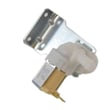
| Hums but won’t start washing | Water supply valve open, inlet screen | Dishwasher water inlet valve 807047901 |
Why it matters
A proper reset clears a stuck control state, but stable power and correct grounding prevent repeat shutdowns and protect the electronic control. If the dishwasher is losing power intermittently, addressing the electrical connection is the fastest way to stop recurring failures.
Last updated: January 2026





