Owner’s manual

What is the most common cause of air compressor failure?
The most common cause of air compressor failure is poor maintenance that leads to overheating, air leaks, and premature wear of internal components. On the Craftsman 921166390, routine draining, leak checks, and keeping airflow clear prevent many no-start and low-pressure problems; see the owner's manual.
What “failure” usually looks like
Most breakdowns show up as one of these symptoms:
- Motor will not start (power, switch, or pressure-related issues)
- Won’t build tank pressure (leaks, valve issues, pump wear)
- Constant leaking after shutoff (often a check valve issue)
- Safety valve popping or excessive tank pressure (control problem)
- Excess moisture in discharge air (tank not drained regularly)
Top preventable causes (and what to do)
These are the most common, fixable causes we see with portable air compressors:
- Overheating: Keep vents clear and give the unit cool-down time before service.
- Water left in the tank: Drain the tank after use to reduce internal corrosion and moisture problems.
- Air leaks: Check fittings, quick connect, and valves; leaks force longer run time and heat.
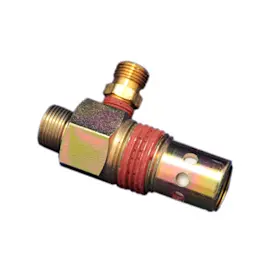
- Check valve problems: A defective check valve can cause a constant leak at the pressure relief valve after shutdown.
- Electrical supply issues: Use the correct circuit and address repeated fuse/breaker trips.
Quick troubleshooting map
| Symptom | Most likely cause | First action |
|---|---|---|
| Won’t start | Power supply, switch, check valve load | Verify outlet/fuse; then inspect for repeated tripping |
| Won’t build pressure | Leak, valve issue, pump wear | Listen for leaks; soap-test fittings |
| Leaks after shutoff | Check valve leaking back | Drain tank; clean or replace check valve |
| Moisture at tool | Condensation, tank not drained | Drain tank; consider an in-line water filter |
Why it matters
When an air compressor runs hotter and longer than it should (from leaks, restricted airflow, or water in the tank), internal parts wear faster and safety controls can be stressed. The manual also calls out key safety steps: turn the unit off, unplug it, bleed air from the tank, and let it cool before maintenance.
Helpful DIY guides we recommend
- Air compressor won't start
- Air compressor won't build tank pressure
- Air compressor air leaks
- How to replace an air compressor check valve
If you need to look up diagrams or replacement items by model number, start with the parts list for Craftsman 921166390, or search by model on Sears PartsDirect.
Last updated: February 2026
What does 4.0 SCFM at 90 psi mean?
“4.0 SCFM at 90 PSI” tells you the compressor’s airflow output: it can deliver about 4 standard cubic feet of air per minute while maintaining 90 PSI at the outlet. This rating helps you match a compressor to air tools that list a required SCFM at a given PSI (including Craftsman model 921166390). For model 921166390, the manual lists 2.4 SCFM @ 90 PSI.
How to use SCFM at 90 PSI when choosing tools
- Find your tool’s required airflow (often listed as SCFM at 90 PSI).
- Choose a compressor with an SCFM rating higher than the tool requirement.
- Remember that long hoses, small fittings, and quick-connect couplers can reduce real airflow.
- If you run tools continuously (sanders, grinders), you typically need more SCFM than for short-burst tools (brad nailers).
- Set the regulator to the tool’s recommended PSI; do not exceed the tool rating.
What “standard” means in SCFM
SCFM is measured under standardized conditions so you can compare compressors more fairly.
| Spec term | What it measures | Why it matters |
|---|---|---|
| PSI (pressure) | Force of the air | Tools need a minimum PSI to operate correctly |
| CFM | Air volume per minute | Higher CFM supports longer run time |
| SCFM | CFM corrected to standard conditions | Best number for comparing compressor output |
Why it matters for Craftsman 921166390
If a tool needs 4.0 SCFM at 90 PSI and your compressor is rated 2.4 SCFM at 90 PSI, the compressor can still run the tool, but it will cycle more often and may not keep up during continuous use.
Quick checks if performance feels low
- Drain the tank after use to reduce moisture and corrosion.
- Listen for leaks at the regulator, hose, and quick connect.
- Confirm the outlet regulator is set correctly for the tool.
- Review operating and safety limits in the owner's manual.
- Use our troubleshooting steps for air compressor won't build tank pressure if the tank pressure rises slowly.
Ordering parts and diagrams
We list diagrams and parts information for Craftsman 921166390; you can also search by model number on Sears PartsDirect.
Last updated: February 2026
What are the 4 types of compressors?
The four common compressor types are reciprocating (piston), rotary screw, centrifugal, and axial. Your Craftsman air compressor model 921166390 is a reciprocating piston-style unit (oil-lube direct drive), which is the most common design for powering air tools and general shop use.
The 4 compressor types (quick breakdown)
- Reciprocating (piston): Uses a piston and cylinder to compress air in strokes; common in portable and shop compressors.
- Rotary screw: Uses two meshing screws for continuous compression; common in commercial and industrial duty cycles.
- Centrifugal: Uses a high-speed impeller to add velocity and convert it to pressure; common in large facilities.
- Axial: Uses multiple rotating and stationary blade stages; used where very high airflow is needed (specialized industrial applications).
Positive displacement vs dynamic (how they are grouped)
Most “4 types” lists also group compressors into two big families:
| Family | Types in this family | How it builds pressure | Typical use case |
|---|---|---|---|
| Positive displacement | Reciprocating, rotary screw | Traps air and reduces its volume | Tools, shops, many industrial systems |
| Dynamic | Centrifugal, axial | Adds velocity to air, then converts to pressure | Large-scale plant air systems |
Why it matters when choosing parts or troubleshooting
Knowing the type helps you focus on the right components and symptoms:
- Piston compressors commonly involve the intake filter, reed valves/valve plate, piston rings, pressure switch, and check valve.
- If a piston unit won’t start, electrical supply and the pressure switch are common checks.
- If it won’t build tank pressure, air leaks, valve issues, or pump wear are common causes.
For model-specific safety, electrical requirements (such as a dedicated 15 amp circuit and extension cord guidance), and operating guidelines, use the owner's manual. For replacement parts by model number, we recommend starting with the parts list for 921166390, or searching by model on Sears PartsDirect.
Last updated: February 2026
Can you paint a car with a 60 gallon air compressor?
Yes, you can paint a car with a 60-gallon air compressor as long as it can continuously meet your spray gun’s air demand (SCFM/CFM at the required PSI) and you control moisture. For Craftsman model 921166390 specifically, the manual lists a 7-gallon tank and 2.4 SCFM at 90 PSI, which is typically too small for full-car HVLP spraying without frequent pauses.
What matters most for car painting
A big tank helps, but the real requirement is steady airflow (SCFM/CFM) at the pressure your gun needs.
- Match the spray gun’s required SCFM at the gun’s recommended PSI
- Plan for higher air demand during continuous passes (base coat and clear coat)
- Use a regulator at the gun and verify pressure while spraying (trigger pulled)
- Control water in the air line with filtration and frequent tank draining
- Keep the compressor well-ventilated and on the correct electrical circuit
How Craftsman 921166390 compares (real-world guidance)
This model is a small, portable-style compressor (7-gallon tank; 1.0 HP; 2.4 SCFM @ 90 PSI). That output is commonly fine for brad nailers and light air tools, but automotive paint guns usually need more continuous airflow.
| Use case | Typical air demand | Fit for 921166390 (2.4 SCFM @ 90 PSI) |
|---|---|---|
| Touch-ups, small panels | Lower to moderate | Sometimes workable with pauses |
| Full car with HVLP gun | Moderate to high continuous | Not a good match |
| Full car with LVLP gun | Moderate continuous | Borderline; expect pauses |
Moisture control steps (prevents fisheyes and dull clear)
Moisture is a common paint-quality problem, and the manual calls out draining the tank after each use.
- Drain the tank daily or after each use
- Add an in-line water separator near the tank
- Add a final filter at the gun for paint work
- Keep hose runs as short as practical
- Avoid spraying in high humidity when possible
Why it matters
If the compressor cannot keep up, pressure drops mid-pass and the gun’s atomization changes. That leads to uneven metallics, orange peel, dry spray, and rework. Correct airflow and dry air are what make a 60-gallon setup succeed.
For operating limits, electrical requirements, and maintenance steps for this specific compressor, use the owner's manual. For parts and accessories, we list model-specific options on the parts list, and you can also search by model number on Sears PartsDirect.
Last updated: February 2026