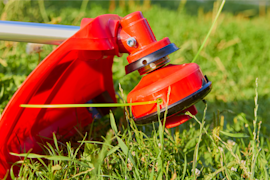





Which is better, .080 or .095 trimmer line?
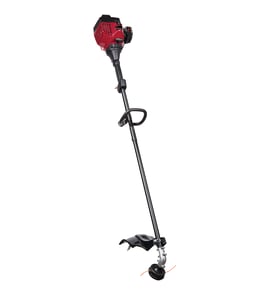
For the Weed EATER FEATHERLITE trimmer, .095 line is better for thicker weeds and longer runtime between re-spools because it is stronger and more wear-resistant; .080 line is better for lighter trimming and cleaner edging because it spins up easier and is more flexible.
Quick comparison
| Trimmer line size | Best for | Tradeoff |
|---|---|---|
| .080 in | Light grass, detail edging, smaller yards | Breaks and wears faster in heavy weeds |
| .095 in | Dense grass, weeds, fence lines, longer sessions | Can reduce cutting speed on smaller engines and may feed less smoothly |
How to choose for FEATHERLITE
- Choose .080 if you want easier line feeding, less vibration, and cleaner edging around sidewalks.
- Choose .095 if you regularly hit thick weeds, woody stems, or abrasive areas (rock borders, chain-link fences).
- Match the line to your cutting head capacity; forcing thicker line than the head is designed for can cause poor feed and extra load.
- If the trimmer bogs down at full throttle with .095, step back to .080 or shorten the line length slightly.
- For best results, keep the line ends even and avoid “overextending” line past the guard.
Why it matters
Line diameter changes how hard the engine works and how cleanly the trimmer cuts. Going thicker can improve durability, but going too thick for the head or engine can reduce RPM and make trimming feel sluggish.
Related part that can affect performance
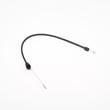
If the trimmer struggles to accelerate or hold speed (which can feel worse with thicker line), inspect the throttle linkage and cable routing; a sticking cable can limit full-throttle operation. Consider the line trimmer throttle cable 530057991 if the cable is frayed, kinked, or binding.
Last updated: January 2026
How to replace string trimmer spool?
To replace the spool on your Weed EATER FEATHERLITE trimmer, remove the trimmer head cap, lift out the old spool, seat the new spool on the center post, then reinstall the cap and pull the line ends free from the retaining notches so it feeds correctly.
Steps to replace the spool
- Shut the engine off and let it cool; disconnect the spark plug boot for safety.
- Clean grass and debris from the trimmer head so the cap can release.
- Press the head cap tabs (or unscrew the bump knob, depending on head style) and remove the cap.
- Lift the spool straight up off the spindle/center post.
- Install the replacement spool; align it so it sits flat and the line exits through the eyelets.
- Reinstall the cap; pull both line ends to release them from the holding notches and set line length.
Quick checks if the line will not feed after replacement
- Line routed wrong: Make sure each line end passes through its own eyelet.
- Spool not seated: The spool must sit fully down on the center post before the cap locks.
- Line jammed: Remove the spool and rewind evenly and tight, without crossing.
- Wrong line size: Most gas trimmers use common diameters (often 0.080 in or 0.095 in); match what your head is designed for.
What you should see when it is installed correctly
| Item | Correct result | What it prevents |
|---|---|---|
| Spool seating | Spool sits flat, no wobble | Vibration, cap popping off |
| Line exit | Line comes out through both eyelets | Tangling, no-feed |
| Cap fit | Tabs fully locked (or knob snug) | Spool slipping |
Why it matters
A properly seated spool and correctly routed line lets the bump-feed (or fixed-feed) head advance line smoothly, reduces breakage, and prevents the line from welding together from heat.
For help confirming you have the right replacement parts for this trimmer, use how to find your appliance model number (and what it means for parts).
Last updated: January 2026
How does the auto feed work on a string trimmer?
Auto feed (often called automatic feed spool) advances new cutting line as the line wears shorter during use. On a Weed Eater FEATHERLITE trimmer, the goal is the same: keep a consistent cutting length without bumping the head, so trimming stays smooth and efficient.
How auto feed typically advances line
Most auto-feed systems use head rotation and light spring tension to release small amounts of line when the cutting line gets too short.
- As the trimmer head spins, centrifugal force helps pull line outward.
- When the line shortens from wear, the head mechanism allows a small release.
- The spool then “indexes” and feeds a bit more line.
- A line limiter blade on the guard trims excess line to the correct length.
- If the head is dirty or the line is wound wrong, feeding becomes inconsistent.
What to check if auto feed is not working
Auto feed problems are usually caused by line size, winding direction, or debris in the head.
| Symptom | Most common cause | What to do next |
|---|---|---|
| Line will not advance | Line fused together on spool | Replace line, rewind evenly, avoid overheating |
| Line advances too much | Wrong line diameter or weak spool tension | Install correct line size, rewind with proper tension |
| Line breaks at the head | Burrs, cracked eyelets, or old line | Inspect head openings, replace line with fresh line |
| Engine bogs when trimming | Line too long or head packed with grass | Clean head, let limiter blade trim line |
Why it matters
A properly feeding trimmer head keeps the cutting circle consistent, reduces engine strain, and prevents you from stopping repeatedly to adjust line. It also helps avoid overfeeding, which can waste line and make the trimmer feel underpowered.
Related parts that can affect performance
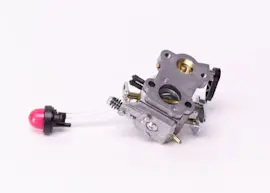
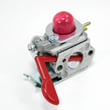
If the trimmer is hard to start or won’t stay running, the issue can look like a feed problem because the head never reaches steady speed. In that case, fuel delivery parts are worth checking, such as the ayp leaf blower primer bulb 530035497.
Last updated: January 2026