Installation guide
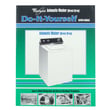
 Owner’s manual

What is a common problem for a Whirlpool washer?
A common problem we see on the Whirlpool WTW5100VQ2 washer is a no-drain or no-spin condition, often caused by a lid safety issue, a draining restriction, or a worn drive component. Start with the basic checks in the WTW5100VQ2 use & care manual before replacing parts.
- Won’t drain or leaves water in the tub: kinked/clogged drain hose, pump obstruction, or a failing drain pump
- Won’t spin: lid not fully closed, failing lid switch, or a drive system issue
- Loud noises: unbalanced load, leveling issue, or worn mechanical components
- Leaking: loose fill hoses, worn hose washers, or drain hose installation problems
- Musty odor: detergent buildup, standing water, or infrequent cleaning
Use these steps before ordering parts:
- Confirm the lid is fully closed; this model will not spin with the lid open.
- Reduce load size and redistribute items to correct out-of-balance conditions.
- Check the drain hose for kinks and confirm it is installed correctly (standpipe height and air gap matter); see the WTW5100VQ2 installation instructions.
- Verify both water faucets are fully open and inlet hoses are not kinked.
- If the washer pauses for a couple minutes during certain cycles, allow the cycle to continue (normal operation on this style).
If the basic checks don’t help, these model-compatible parts are common fixes:
| Symptom | Part to consider | What it does |
|---|---|---|
| Won’t drain | Washer drain pump WP3363394 | Pumps water out of the tub during drain/spin |
| Won’t spin (lid-related) | Washer lid switch assembly WP8318084 | Confirms lid is closed so the washer can spin |
| Agitates poorly or “ratcheting” in agitator | Agitator dog 80040 | Helps the agitator move properly during wash |
Catching a drain, spin, or balance problem early helps prevent repeat cycle failures, excess vibration, and water left in the tub (which can lead to odor and residue).
Last updated: January 2026
What is the capacity of the wtw5100vq2?
The Whirlpool WTW5100VQ2 top-load washer is commonly listed as having about 3.2 cu. ft. of capacity. Because capacity can vary slightly by how brands measure it, we recommend using the loading guidance in the WTW5100VQ2 washer use & care manual to avoid overfilling and keep wash performance consistent.
Use these practical rules for the WTW5100VQ2 so clothes can circulate around the agitator:
- Load items loosely; do not pack them down.
- Distribute items evenly around the agitator to reduce out-of-balance spin.
- Keep the load at or below the top row of basket holes (or about the top of the basket).
- Bulky items should move freely; if they float and bind, reduce the load.
- If agitation seems weak or the washer bangs in spin, reload smaller.
Capacity affects cleaning, rinsing, and spin stability more than it affects cycle time.
| Loading outcome | What you may notice | What to do |
|---|---|---|
| Overloaded | Poor cleaning, more vibration | Reduce load size, redistribute items |
| Properly loaded | Better turnover and rinse | Follow basket-fill guidance |
| Underloaded (single heavy item) | Off-balance spin | Add similar items to balance |
On an agitator-style Whirlpool washer like the WTW5100VQ2, leaving space in the basket lets the agitator pull items through the wash water. That helps prevent poor cleaning, excess vibration, and extra wear on drive and suspension parts.
Last updated: January 2026
What is the average lifespan of a Whirlpool washing machine?
Whirlpool does not list an “average lifespan” for the Whirlpool WTW5100VQ2 washer in the product documents we have for this model, so we can’t give a model-verified year range. In practice, service life depends most on installation, load habits, and how consistently you follow the care steps in the WTW5100VQ2 washer user instructions manual.
The WTW5100VQ2 Use & Care information emphasizes routine care and hose maintenance to help prevent failures.
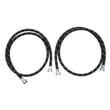
- Replace water inlet hoses after 5 years of use
- Periodically inspect inlet hoses for bulges, kinks, cuts, wear, or leaks
- Keep the washer level to reduce vibration and “washer walk”
- Load evenly and avoid overloading to help maintain balance
| Maintenance item | What to do | Model-specific note |
|---|---|---|
| Water inlet hoses | Inspect regularly | Look for bulges, kinks, cuts, wear, leaks |
| Water inlet hoses | Replace | After 5 years of use |
| Leveling | Verify washer is level | Helps reduce noise and vibration |
These symptoms do not guarantee replacement is needed, but they often signal increasing wear.
- Repeated leaking that returns after tightening hoses and clamps
- Persistent loud grinding or banging during agitation or spin
- Frequent no-drain or no-spin events
- Multiple repairs needed within a short period
A washer’s “lifespan” is really about preventing the most common wear and water-damage problems. Following the model’s care guidance and replacing inlet hoses on schedule can reduce breakdown risk and protect your laundry area.
Last updated: January 2026