Owner’s manual


Where is the part number on a Kenmore dryer?
On Kenmore dryer model 11082832100, the model and serial number label (which you will use to look up the correct replacement part numbers) is located at the top inside the dryer door well. We use that label information to match your exact Kenmore configuration.
What to look for on the label
You will typically see these items together on the same sticker:
- Model number (example format: 110.XXXXXXXX)
- Serial number
- Sometimes the purchase date field (or space to record it)
- Electrical ratings and other identification details
For the exact label location and how it is referenced by Kenmore, use the 11082832100 owner's manual.
Quick steps to find it (and why it helps)
- Open the dryer door.
- Look along the top edge inside the door opening (the door well).
- Write down the full model number and serial number exactly as shown.
- Use that information when selecting parts like a heating element, thermal fuse, or door switch.
Common mix-ups (model vs. part number)
The label inside the door well is mainly for model/serial identification. Individual parts have their own numbers on the part itself or packaging.
| You need | Where to find it | What it’s used for |
|---|---|---|
| Model number | Top inside dryer door well | Ensures parts fit your exact dryer |
| Serial number | Same label as model number | Identifies production details for service |
| Part number | On the part or parts packaging | Orders the correct replacement component |
Why it matters
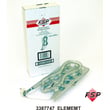
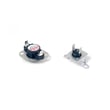
Kenmore dryers often have multiple versions that look similar. Using the model and serial label prevents ordering the wrong component, especially for fit-critical items like the dryer heating element WP3387747 or the dryer thermal fuse WP3390719.
Last updated: February 2026
What is the life expectancy of a Kenmore dryer?
A Kenmore dryer like model 11082832100 typically lasts about 13 years with normal household use. Consistent airflow care (especially cleaning lint and keeping the vent clear) is the biggest factor in reaching that lifespan and avoiding overheating-related shutdowns.
Typical lifespan and what affects it
Most dryers reach their expected service life when heat and airflow stay in spec and moving parts stay supported.
- Clean the lint screen after every load (this is the #1 habit that protects the heater and motor)
- Keep the exhaust vent run short, smooth, and unobstructed
- Avoid overloading; heavy loads strain the belt, idler pulley, and drum rollers
- Use the right cycle and temperature; Auto Dry reduces overdrying and heat stress
- Address new noises early (squeal, thump, rumble) before they damage the drum or motor
For Kenmore 11082832100 maintenance steps and cleaning intervals, follow the 11082832100 owner's manual.
Parts that commonly limit dryer life
Wear items usually fail before the cabinet or drum does. Replacing them on time often restores normal operation.
| Symptom | Common wear area | Example part for this model |
|---|---|---|
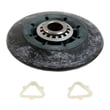
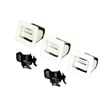
| Squealing or rumbling | Drum support rollers/idler | Support kit WPW10314173 |
| Runs but no heat | Heater circuit/overheat protection | Dryer heating element WP3387747 or dryer thermal fuse WP3390719 |
| Long dry times, weak airflow | Blower/venting | Dryer blower wheel WP697772 |
Why it matters
A dryer that is starved for airflow runs hotter and longer, which shortens the life of the heating element, thermostats, and motor. Good lint and vent maintenance helps your Kenmore dryer dry faster, use less energy, and last its full expected lifespan.
Last updated: February 2026
How to replace a Kenmore dryer thermistor?
For Kenmore dryer model 11082832100, replacing the thermistor typically means unplugging the dryer, accessing the blower housing or heater housing area, swapping the sensor, and reassembling. After replacement, we verify airflow and venting because overheating and poor drying often trace back to restricted exhaust.
Before you start
- Unplug the dryer (or switch off the breaker) before removing any panels.
- Let the dryer cool completely if it was running.
- Take a quick photo of the wire connections so they go back the same way.
- Have a nut driver/screwdriver ready; most access panels use hex-head screws.
- Review access and safety notes in the 11082832100 owner's manual.
Replacement steps (typical Kenmore 110/Whirlpool-built layout)
- Disconnect power.
- Access the thermistor. On many Kenmore 110-series dryers, the thermistor mounts on or near the blower housing (airflow path) or near the heater housing (heat source), depending on the exact configuration.
- Remove the rear panel (common access point) and locate the small sensor with a 2-wire connector.
- Label and disconnect the wires, then remove the mounting screw(s).
- Install the new thermistor, secure it, and reconnect the wires firmly.
- Reinstall the panel, restore power, and run a timed heat cycle to confirm normal heating and cycling.
Quick checks that prevent repeat failures
A thermistor can read “bad” because the dryer is running too hot from poor airflow. We check these items every time:
- Clean the lint screen and confirm it is not coated with fabric softener residue
- Inspect the exhaust duct for crushing, long runs, or multiple sharp turns
- Confirm strong airflow at the outside hood after 5 to 10 minutes of running
- Clean lint buildup in the vent system (the manual recommends vent lint removal about every 2 years, more often with heavy use)
- Make sure the blower wheel is tight and moving air (a loose wheel can reduce airflow)
Symptoms guide
| What you notice | Common related cause | What we check next |
|---|---|---|
| No heat or heat cuts out | Overheat protection opened | Venting, thermal fuse |
| Overheats or scorches | Restricted airflow | Duct run, outside hood |
| Long dry times | Weak airflow or cycling issue | Venting, blower wheel |
Why it matters
The thermistor helps the control regulate temperature. If airflow is restricted, temperatures rise, drying performance drops, and safety devices like the thermal fuse can open, creating a “no heat” condition.
Last updated: February 2026
How do I tell if my dryer heating element is bad?
If your Kenmore dryer model 11082832100 runs but never produces heat, the heating element is a top suspect. We confirm it by testing the element for continuity with a multimeter; a good element typically reads about 10 to 50 ohms, while an open (no reading) element is bad.
Quick checks before you test the element
Before opening the cabinet, rule out common “no heat” causes the manual calls out.
- Make sure the dryer is on a heat cycle (not Air Fluff or No Heat)
- Check that the dryer is plugged into a grounded outlet
- Verify the door fully closes and the cycle actually starts
- Check both house fuses or breakers (many electric dryers use two)
- Confirm the vent is not crushed or kinked (restricted airflow can trigger heat safety cutoffs)
For the model-specific startup and “feel for heat after 5 minutes” check, use the 11082832100 owner’s manual.
How to test the heating element (basic method)
- Unplug the dryer (electric shock risk).
- Access the heater housing (location varies by design).
- Remove at least one wire from the element terminal.
- Set your multimeter to ohms (Ω) and measure across the element terminals.
What the meter reading means
| Meter result | What it usually means | Next step |
|---|---|---|
| 10 to 50 Ω | Element is likely OK | Check thermostats, thermal fuse, airflow |
| OL / no reading | Element is open (failed) | Replace the element |
| Very low Ω (near 0) | Possible short | Inspect wiring and heater housing |
If you need the correct replacement part for this model, match by model number and use the dryer heating element WP3387747.
Why it matters
A failed heating element stops drying performance, but overheating from poor airflow can also blow safety devices (like a thermal fuse). Fixing the airflow issue helps prevent repeat failures and protects the heater circuit.
Related parts often checked with “no heat”
- Dryer thermal fuse WP3390719
- Dryer high-limit thermostat WP3391914
- Dryer thermal cut-off fuse kit 279973
Last updated: February 2026
What is an F1 code on a Kenmore dryer?
An F1 code on a Kenmore dryer typically points to a control problem (often the electronic control board or its wiring). On Kenmore model 11082832100, start by resetting power, then inspect harness connections; if the code returns, the control usually needs service.
What to do first (safe, quick checks)
- Unplug the dryer (or switch off the breaker) for 2 minutes, then restore power.
- Press and hold START to try restarting the cycle (this restart step is also used for some displayed codes in the troubleshooting section of the 11082832100 owner's manual).
- If the code comes back immediately, stop and move to inspection steps below.
- If the dryer also has no heat, confirm both house breakers are on (many electric dryers use two).
- If you smell a brief “new heat” odor after restoring heat, that can be normal when a heating element is first used.
Likely causes of an F1 code
In most Kenmore electronic-control dryers, F1 is triggered when the control detects an internal fault or an abnormal signal.
Common causes include:
- Loose or oxidized wire harness connection at the control
- Damaged harness or connector pins
- Failed electronic control board (most common)
- Power quality issues (surge/outage) that corrupt control operation
Basic inspection steps (what we check)
- Disconnect power.
- Access the console/control area using the disassembly guidance in the 11082832100 owner's manual.
- Reseat the wire harness plugs on the control (take a photo first so every connector goes back correctly).
- Look for overheated terminals, broken locking tabs, or pinched wires.
When a part replacement is more likely
If the dryer runs but shuts down with F1 repeatedly after reseating connections, the electronic control is usually the fix. If you are also chasing heat complaints, these parts are commonly involved:
| Symptom you notice | More likely area | Example part for this model |
|---|---|---|
| F1 returns quickly after reset | Control/wiring | (control not listed in the parts shown) |
| No heat, drum turns | Heating circuit/airflow | Dryer thermal fuse WP3390719 |
| Overheats, then stops heating | Temperature sensing | Dryer high-limit thermostat WP3391914 |
Why it matters
An F1 code is the dryer telling you it cannot reliably manage motor and heat functions. Addressing it early helps prevent repeated shutdowns, poor drying performance, and unnecessary stress on components like the heating element and thermal fuse.
Last updated: February 2026
Is it worth replacing the heating element in a dryer?
Yes, it’s usually worth replacing the heating element in your Kenmore 11082832100 dryer when the dryer runs but produces little or no heat; a new element restores normal drying performance and is typically far less expensive than replacing the entire dryer. Confirm airflow and power first using the 11082832100 owner’s manual.
When replacing the heating element makes sense
Replace the heating element when the drum tumbles normally but clothes stay damp and you’ve ruled out common non-part issues.
- The dryer runs for 5 minutes and you feel no heat inside the drum
- Drying times suddenly get much longer on the same cycles
- You have good airflow at the outside vent hood (strong, steady exhaust)
- The lint screen is clean and the vent is not crushed or kinked
- Power supply is correct (many electric dryers need two fuses or breakers for heat)
A common replacement for this model is the dryer heating element WP3387747.
Quick checks before you buy parts
These checks prevent replacing a good element when the real issue is airflow or power.
| What you observe | Most likely cause | What to do next |
|---|---|---|
| Drum turns, no heat | Tripped breaker or blown fuse on one leg | Reset both breakers or check both fuses |
| Heat is weak, loads take forever | Restricted venting or lint buildup | Clean venting and confirm strong airflow |
| Dryer stops heating mid-cycle | Overheating from poor airflow, safety device opens | Fix venting; inspect thermal fuse and thermostats |
| Burning smell on first heat after repair | Normal new-element odor | Run a cycle; odor clears after initial use |
Why it matters
A failed heating circuit forces longer run times, wastes energy, and can trigger overheating shutdowns if airflow is restricted. Keeping the lint screen and exhaust path clear helps the new heating element and temperature controls work correctly.
Last updated: February 2026
How do I know if my Kenmore dryer thermal fuse is blown?
If your Kenmore dryer model 11082832100 suddenly won’t run (or runs but has no heat), a blown thermal fuse is a common cause. The sure way to confirm is to unplug the dryer and test the thermal fuse for continuity with a multimeter; a blown fuse reads open (no continuity). See the 11082832100 owner's manual for basic “won’t run” and “no heat” checks.
What you’ll typically notice when the thermal fuse is blown
A thermal fuse is a one-time safety device that opens if the dryer overheats. Common symptoms include:
- Dryer will not start at all (most common)
- Drum tumbles but there’s no heat (on some configurations)
- Dryer stops mid-cycle and won’t restart
- You recently had poor airflow (clogged lint screen or vent restriction)
How we test the thermal fuse (continuity check)
- Unplug the dryer (or switch off the breaker) before opening any panels.
- Access the thermal fuse location (often on the blower housing or exhaust duct area).
- Pull one wire off the fuse terminal.
- Set your multimeter to continuity or the lowest ohms setting.
- Touch a probe to each terminal.
- Good fuse: continuity (near 0 ohms)
- Blown fuse: no continuity (open/infinite)
What to do if it’s blown (fix the cause, not just the fuse)
Replacing the fuse without correcting overheating usually leads to another failure. We recommend:
- Clean the lint screen and lint screen housing
- Check that the exhaust vent is not crushed or kinked
- Confirm strong airflow at the outside hood (run dryer 5 to 10 minutes and feel for airflow)
- Clean the full vent run if airflow is weak
- Inspect heating circuit components if overheating continues
Helpful parts often involved in “no heat” or overheating repairs
| Part | What it affects | When it’s suspect |
|---|---|---|
| Dryer thermal fuse WP3390719 | Safety shutoff | Dryer won’t run or stops |
| Dryer high-limit thermostat WP3391914 | Overheat control | Overheating, cycling heat issues |
| Dryer thermal cut-off fuse kit 279973 | Heater safety | No heat after overtemp event |
| Dryer heating element WP3387747 | Heat production | Runs but no heat |
Why it matters
A blown thermal fuse is almost always a sign of restricted airflow. Fixing the venting and lint buildup helps restore normal drying, prevents repeat fuse failures, and reduces overheating stress on the drive motor and heating system.
Last updated: February 2026