
What is the 4 inch rule for bandsaw?
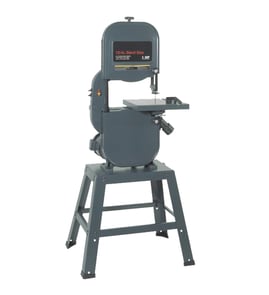
The 4-inch rule for a band saw is a safety best practice: we keep our hands and fingers at least 4 inches away from the moving blade during cutting on a Delta 28-180 2-wheel bench band saw. When a cut would bring your hands closer than that, we switch to a push stick, jig, or clamp.
How to follow the 4-inch rule in real cuts
- Use a push stick or push block for narrow rips and small offcuts.
- Clamp small workpieces to a carrier board or use a simple sled.
- Use a miter gauge or fence to guide the stock; do not freehand tight work.
- Keep your hands to the sides of the cut line, not in line with the blade.
- Slow down for short pieces, knots, and irregular shapes.
Quick guide: what to do when your hands would get too close
| Situation | Safer approach | Goal |
|---|---|---|
| Narrow stock near the blade | Push stick or push block | Maintain control with distance |
| Small parts or short cutoffs | Clamp to a carrier board | Keep fingers out of the danger zone |
| Curves with tight radius | Use a jig, relief cuts, or a scroll blade | Reduce binding and sudden grabs |
| Stock wants to twist | Featherboard or better support | Prevent drift and hand repositioning |
Why it matters
A band saw blade can pull material into the cut and change direction quickly if the blade is dull, the guides are misadjusted, or the stock binds. Keeping a 4-inch buffer gives you time and space to react without putting fingers in the hazard area.
Related DIY reading
For general DIY safety habits and prep before repairs or adjustments, we recommend: are diy appliance repairs safe.
Last updated: February 2026
What is the 3-tooth rule for bandsaws?
The 3-tooth rule means you choose a bandsaw blade tooth pitch (TPI) so at least 3 teeth are in the cut at all times. On a Delta 28-180 2-wheel bench band saw, this helps the blade track smoothly, reduces tooth snagging, and improves cut quality and blade life.
How to apply the 3-tooth rule (quick method)
- Measure the material thickness (the direction the blade travels through).
- Pick a blade where that thickness covers 3 or more teeth.
A practical shortcut is:
- Minimum TPI material thickness (in inches) 3
- Then choose the next common blade TPI above that number.
Common examples (thickness vs. typical TPI)
| Material thickness | Good starting range | Why it works |
|---|---|---|
| 1/8 in (0.125) | 18 to 24 TPI | Keeps tiny stock from grabbing |
| 1/4 in (0.25) | 10 to 14 TPI | Balanced control and speed |
| 1/2 in (0.5) | 6 to 10 TPI | Clears chips without stripping teeth |
| 1 in | 3 to 6 TPI | Prevents clogging in thicker cuts |
What happens if you break the rule
- Too few teeth engaged (TPI too low): rough cut, tooth snagging, vibration, possible tooth stripping
- Too many teeth engaged (TPI too high): slow cutting, heat buildup, blade dulling, wandering cuts from packed sawdust
- Wrong feed pressure: even with the right TPI, forcing the cut can deflect the blade and hurt tracking
Setup tips that matter on a 2-wheel bench band saw
- Set blade tension and tracking before judging cut quality.
- Use guides/bearings close to the work to reduce blade twist.
- Match blade width to the job: narrower for tight curves, wider for straighter resaw-style cuts.
- Let the blade cut at a steady rate; if the motor bogs, reduce feed pressure.
Why it matters
The 3-tooth rule is mainly about control and chip clearance. When the tooth pitch matches the stock thickness, the blade cuts cooler and straighter, which protects the wheels, guides, and blade on your Delta 28-180.
For more DIY safety and best practices before servicing or adjusting your saw, use are diy appliance repairs safe.
Last updated: February 2026
Are Delta band saws any good?
Yes. Delta band saws are generally a solid choice for DIYers and serious hobbyists because they tend to be sturdy, cut smoothly, and hold adjustments well when set up correctly. For the Delta 28-180 2-wheel bench band saw, overall performance depends most on blade selection, guide adjustment, and proper tracking.
What “good” looks like on a band saw
A band saw is doing its job when it:
- Tracks the blade consistently (no wandering off the wheels)
- Cuts straight with minimal drift after setup
- Runs with low vibration and steady speed
- Keeps the blade guides close to the work without rubbing
- Holds tension and tracking settings between uses
What to check before you judge the saw
Most complaints about band saw performance come from setup, not the brand. On the Delta 28-180, we recommend these quick checks:
- Blade condition and type: Use the right width and tooth count for the material (wood vs. metal, thick vs. thin)
- Blade tension: Too loose causes drift and flutter; too tight can stress bearings
- Tracking: Center the blade on the wheel crown before fine-tuning guides
- Guide blocks/bearings: Set close to the blade (paper-thin gap) and align to support the cut
- Table square: Confirm the table is 90 degrees to the blade for accurate resawing and joinery cuts
Accessories: what you may need to add
Some band saw packages do not include every accessory users expect. If you want more accuracy and repeatability, these add-ons matter:
| Add-on | What it helps with | When it’s worth it |
|---|---|---|
| Rip fence | Straight, repeatable cuts | Ripping, resawing, veneers |
| Miter gauge | Angle cuts | Frames, trim, segmented work |
| Better blade | Cleaner cuts, less drift | Anytime you want improved results |
| Mobile base | Stability and storage | Small shops, shared spaces |
Why it matters
A “good” band saw is one that stays stable and predictable under load. With a quality blade and careful guide and tracking setup, the Delta 28-180 can deliver clean, accurate cuts and a smoother experience than many lightweight saws.
For help confirming you have the correct model and matching the right replacement parts, use how to find your appliance model number (and what it means for parts).
Last updated: February 2026
What size blade is a Delta 28 180?
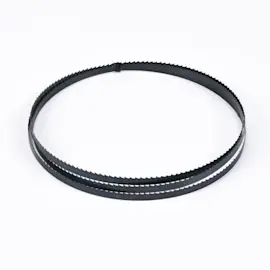
For the Delta 28-180 2-wheel bench band saw, the correct blade length is 56 1/8 inches (about 1426 mm). After you match the length, choose blade width and TPI based on whether you are cutting curves, doing general woodworking, or making straight/resaw cuts.
Blade size details that matter
- Blade length: 56 1/8 in (about 1426 mm)
- Blade width: Choose based on curve radius and cut stability
- Teeth per inch (TPI): Choose based on material thickness and finish
- Tooth pattern: Skip or hook tooth is common for wood
- Blade material: Carbon steel for typical wood cutting; bi-metal for longer life on tougher materials
Quick selection guide (typical for small band saws)
| Cutting goal | Typical blade width | Typical TPI range |
|---|---|---|
| Tight curves | 1/8 in to 1/4 in | 10 to 14 |
| General woodworking | 1/4 in to 3/8 in | 6 to 10 |
| Straight cuts and light resawing | 1/2 in | 3 to 6 |
Why it matters
Using the correct 56 1/8-inch blade length lets the tensioning system work properly so the blade tracks on the wheels and runs through the guides correctly. The right width and TPI reduce drift, burning, and premature wear on the blade and guide components.
Helpful related info
If you want to confirm you are ordering for the exact Delta model, use how to find your appliance model number (and what it means for parts).
Last updated: February 2026