Error Codes



Why is the bottom freezer refrigerator not popular?
Bottom-freezer refrigerators (including the GE GDE21EMKLRES) are less popular mainly because they cost more than basic top-freezer models and put the freezer down low, which some people find less convenient. Popularity is usually about layout preference and price, not because the design is inherently unreliable.
Bottom-mount designs are common and work well, but they compete with top-freezer and side-by-side layouts that many shoppers already know.
- Price point: bottom-mount units often cost more than comparable top-freezer models.
- Ergonomics: fresh food is at eye level (a plus), but the freezer requires bending.
- Storage style: pull-out baskets can be great for organization, but some users prefer shelves.
- Space needs: door swing and drawer clearance can matter in tight kitchens.
- Feature mix: many bottom-mount models bundle features (ice maker, filtration) that raise cost.
| Layout | What people like | Common tradeoff |
|---|---|---|
| Bottom-freezer | Fresh food at eye level; wide fridge shelves | Must bend for freezer; often higher cost |
| Top-freezer | Lower cost; simple layout | Fresh food lower; less “premium” feel |
| Side-by-side | Easy freezer access; narrow door swing | Narrow shelves; less room for wide items |
A bottom-freezer refrigerator still uses the same core cooling system as other styles: compressor, evaporator, fans, sensors, and defrost controls. If cooling performance is inconsistent, it is usually tied to a specific component issue (not the freezer being on the bottom), such as:
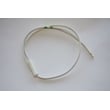
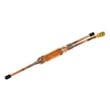
- A failing temperature sensor like the GE profile refrigerator temperature sensor WR55X10025
- Frost buildup from a defrost problem (for example, a defrost thermostat)
- Poor airflow from an evaporator fan issue
- Door seal leaks letting warm air in
For GE-specific troubleshooting patterns, we use GE refrigerator error codes to narrow down likely causes.
Choosing a refrigerator layout affects daily convenience (how often you bend, how you organize food) and long-term satisfaction more than it affects basic cooling performance.
Last updated: January 2026
How to remove bottom grille on GE refrigerator?
On the GE GDE21EMKLRES bottom-mount refrigerator, the bottom grille (base grille or toe grille) typically comes off by removing any retaining screws (if present) and then pulling the grille straight out to release the clips. Reinstall by aligning it and sliding it back into place.
- Unplug the refrigerator or switch off power at the breaker (recommended when working near wiring).
- Pull the refrigerator forward a few inches if you need better access.
- Use a flashlight to spot screws or clip locations along the top edge of the grille.
- Look for Phillips-head screws at the left and right ends of the grille; remove them if your unit has them.
- Grip the grille near both ends.
- Pull the grille straight toward you to pop it off the retaining clips.
- If it feels stuck, wiggle gently side-to-side while pulling; do not pry hard against the cabinet.
- Set the grille aside and keep the screws together for reinstallation.
Common causes and what to do:
- Hidden screws: Check both ends and the center area for additional fasteners.
- Clips are tight: Pull evenly with two hands; avoid bending the grille.
- Refrigerator not level: If the cabinet is pressing on the grille, slightly roll the unit forward and try again.
| What you see | Most likely attachment | What to do |
|---|---|---|
| Screws at the ends | Screws plus clips | Remove screws, then pull straight out |
| No screws visible | Clip-on grille | Pull straight out near both ends |
| Grille flexes but won’t release | Clip tension or cabinet pressure | Wiggle gently, pull evenly, move fridge forward |
We remove the bottom grille to access and clean the condenser area, check for water leaks, or reach lower components. A grille that is reinstalled crooked can rattle, restrict airflow, or interfere with door alignment.
For related GE guidance, use how to reset the door alarm on a GE refrigerator if the alarm starts sounding after moving the unit.
Last updated: January 2026
What is the most common problem with a GE refrigerator?
The most common GE refrigerator complaint (including the GE GDE21EMKLRES bottom-mount) is not cooling properly, which is usually caused by restricted airflow, a failing evaporator fan, frost buildup from a defrost issue, or a temperature-sensing/control problem.
- Confirm the refrigerator and freezer controls are set to normal (not “off” or “demo”).
- Make sure vents inside the fresh food section and freezer are not blocked by food packages.
- Listen for the evaporator fan running when the doors are closed; no fan often means a cooling airflow problem.
- Check for heavy frost on the freezer back wall; that points to a defrost system issue.
- Clean the condenser area (dust buildup can raise temps and increase run time).
| Symptom | Most common cause | Parts often involved on GDE21EMKLRES |
|---|---|---|
| Warm fridge, freezer OK | Poor airflow from freezer to fridge | Refrigerator evaporator fan motor WR60X32614, temperature sensor |
| Warm freezer and fridge | Sealed system or start components | run capacitor, compressor |
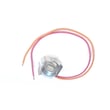
| Frost on freezer back wall | Defrost failure | Refrigerator defrost bi-metal thermostat WR50X10069 |
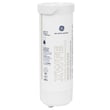
| Water/ice issues | Filter restriction or valve issue | GE refrigerator water filter XWFE, inlet valve |
| Temps swing up and down | Sensor/control issue | GE profile refrigerator temperature sensor WR55X10025 |
A refrigerator is a system: the compressor makes cooling, the evaporator fan moves cold air, and sensors/control boards decide when to run. If airflow is blocked, frost builds up, or a sensor reads wrong, temperatures rise even though the unit still runs.
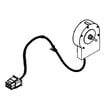
- No evaporator fan sound, warm fresh food: inspect the fan area; a failed motor is common. Consider refrigerator evaporator fan motor WR60X32614.
- Heavy frost, weak airflow: suspect a defrost problem; the bi-metal thermostat is a frequent culprit. Consider refrigerator defrost bi-metal thermostat WR50X10069.
- Erratic temps or false warm alarms: a bad sensor can mislead the control. Consider GE profile refrigerator temperature sensor WR55X10025.
Use GE refrigerator error codes to match any displayed code to the most likely failure area before replacing parts.
Last updated: January 2026