Error Codes



What is the disadvantage of a wall oven?
Wall ovens (including the Dacor CPS230) cost more to buy and install than a freestanding range, and repairs can be more involved because the oven is built into cabinetry. You also need a separate cooktop, which can raise total project cost and complexity.
Common disadvantages to plan for
- Higher total cost: separate wall oven plus cooktop, plus electrical and cabinet work.
- More complex service access: built-in placement can mean extra labor to pull the oven.
- Less flexibility later: changing sizes or layouts can require cabinet modifications.
- Heat and ventilation considerations: tight cabinetry clearances can affect performance if the install is not correct.
- Ergonomics vary: depending on mounting height, lifting heavy roasts or Dutch ovens can be awkward.
Wall oven vs range: quick comparison
| Feature | Wall oven | Freestanding range |
|---|---|---|
| Upfront cost | Usually higher | Usually lower |
| Installation | Cabinet cutout, hardwire, trim fit | Typically simpler hookup |
| Cooktop included | No | Yes |
| Repair access | Often harder (built-in) | Easier (pull out) |
Why it matters
A wall oven setup can be a great choice for kitchen workflow and a built-in look, but the tradeoff is usually higher installation cost and more complicated repairs. Planning for service access and correct mounting hardware helps avoid headaches later.
Parts that commonly affect fit and service access
If you are adjusting how the oven sits in the cabinet or re-securing it after service, these model-matched parts are often involved:
Last updated: February 2026
Can you still buy wall ovens?
Yes. Wall ovens are still widely sold new, and they are also commonly supported with replacement parts for existing units like the Dacor CPS230 electric wall oven.
What to consider before you buy
- Size and fit: Most wall ovens are 24-inch, 27-inch, or 30-inch wide; measure your cabinet cutout carefully.
- Power requirements: Many electric wall ovens use a dedicated 240V circuit; confirm your home wiring matches the oven’s needs.
- Single vs. double oven: Double ovens add capacity but require more cabinet space and often higher electrical demand.
- Controls and features: Look for convection, self-clean, and temperature probe options based on how you cook.
- Parts support: If you are keeping an older oven, confirm key service parts are available.
If you are keeping your Dacor CPS230 instead
If your goal is to avoid replacing the whole oven, many common “wear and tear” items can restore usability and safety.
| Need | Typical fix | Example part for CPS230 |
|---|---|---|
| Missing or damaged rack | Replace the rack so pans sit level | Dacor oven rack 82230 |
| Loose trim or panel hardware | Replace stripped or missing fasteners | Dacor screw 83022 |
| Cosmetic or fit issues around the opening | Replace bent or damaged trim pieces | Dacor wall oven trim 27469B |
Why it matters
Wall ovens are a built-in appliance; choosing the right size, electrical setup, and long-term parts support prevents expensive cabinet modifications and helps you avoid repeat service calls.
Last updated: February 2026
How do I know if my wall oven is 27 or 30?
To tell whether your Dacor wall oven opening is for a 27-inch or 30-inch unit, we measure the cabinet cutout width (inside edge to inside edge). A cutout near 27 inches fits a 27-inch oven; a cutout near 30 inches fits a 30-inch oven.
How to measure the cutout correctly
- Turn power off to the oven at the breaker before removing any trim.
- Measure cutout width: left inside cabinet edge to right inside cabinet edge.
- Measure cutout height: bottom support surface to the top inside edge.
- Measure cutout depth: front cabinet face to the back wall.
- Measure in at least 3 spots (top, middle, bottom) because cabinets can be out of square.
- Use the smallest width measurement as your “true” cutout width.
- Do not measure the oven door or decorative trim; those are often wider than the cutout.
- If the oven is still installed, remove only what you need to access the cabinet edges.
What numbers you should expect (typical)
Most wall ovens are sold as “27-inch” or “30-inch” classes, but the actual cutout is usually slightly larger than the nominal size.
| Nominal oven size | Typical cutout width you’ll measure | What it means |
|---|---|---|
| 27-inch | About 25 1/2 to 28 1/2 inches | Usually a 27-inch wall oven opening |
| 30-inch | About 28 1/2 to 31 1/2 inches | Usually a 30-inch wall oven opening |
Quick checks if you are between sizes
- If the cutout width is around 28 1/2 inches, confirm by checking height and depth too.
- Look for a model/serial tag on the oven frame; matching the exact model helps confirm the intended size class.
- If you are replacing an existing unit, compare the old oven’s overall width to the cutout width.
Why it matters
Correct cutout sizing prevents installation problems like cabinet interference, poor ventilation, and trim gaps. It also helps ensure replacement parts and accessories fit as intended for your Dacor CPS230 wall oven.
For fit and finish after measuring, replacing bent or missing trim can help; see Dacor wall oven trim 27469B.
Last updated: February 2026
Where to find model number on Dacor wall oven?
On a Dacor wall oven, the model number is typically on the oven frame around the door opening (often along the left or right side) or on the frame lip near the top or bottom when the door is open. For the Dacor CPS230, check these spots first before removing any panels.
Most common places to check
- Open the oven door and look along the front frame (the metal rim the door closes against).
- Check the left and right vertical sides of the door opening.
- Look along the top front frame lip (just above the cavity opening).
- Look along the bottom front frame lip (just below the cavity opening).
- If it is a double wall oven, check both upper and lower door frames.
What the label looks like
The ID label is usually a small sticker or metal tag that includes:
- Model number (for example, CPS230)
- Serial number
- Electrical ratings (volts and amps)
| What you see | What it means | What to do next |
|---|---|---|
| “CPS230” | Model number | Use it to match parts for your exact oven |
| Serial number only | Not enough by itself | Keep looking for the model line on the same tag |
| Worn or greasy label | Hard to read | Clean gently and use a flashlight at an angle |
Tips to find it faster
- Use a flashlight and look from the side; glare often hides the print.
- Wipe the frame with a damp cloth and mild dish soap; avoid abrasive pads.
- Take a photo and zoom in; small print is easier to read on your phone.
- If you find multiple numbers, use the one labeled “Model” for parts lookup.
Why it matters
Dacor wall oven parts can vary by revision, even within the same series. Using the exact model number helps us match the correct trim, rack, or mounting hardware for your oven.
If you are replacing missing hardware while you are identifying the unit, common items for this model include the screw 83022 and wall oven trim 27469B.
Last updated: February 2026
Are electric wall ovens 110 or 220?
Most electric wall ovens, including the Dacor CPS230, are wired for 240 volts (often called 220V) on a dedicated circuit; they do not run on a standard 120-volt (110V) household outlet.
What to expect for power requirements
In U.S. homes, electric wall ovens typically use a 240V supply with two hot legs plus a ground (and sometimes a neutral, depending on the wiring setup).
Common signs it is a 240V appliance:
- It is hardwired or uses a heavy-duty oven junction box connection
- The breaker is a 2-pole breaker (two linked switches)
- The circuit uses thicker wire than a standard 120V outlet circuit
- The oven is installed in a wall cabinet cutout (not plugged into a receptacle)
Quick safety checks (power off first)
We recommend these basic checks before planning an install or troubleshooting power issues:
- Turn off the oven breaker and confirm the oven is fully de-energized
- Look in the electrical panel for a 2-pole breaker labeled “oven”
- Verify the circuit is dedicated (no other major loads on the same breaker)
- If you are testing voltage, use a meter rated for the job and follow safe practices
For guidance on safe testing, use how to use a multimeter to test electrical parts video.
Typical circuit sizing (general guidance)
Exact amperage depends on the oven’s wattage, but these are common ranges for electric wall ovens:
| Oven type | Typical supply | Typical breaker range |
|---|---|---|
| Single electric wall oven | 240V | 20A to 30A |
| Double electric wall oven | 240V | 30A to 50A |
Why it matters
Using a 120V circuit on a 240V wall oven can prevent heating, cause nuisance breaker trips, or create unsafe wiring conditions. Correct voltage and breaker sizing protect the control, heating elements, and wiring harness.
If you are also replacing hardware during reinstallation, matching mounting and trim parts helps the oven sit correctly in the cabinet; see mounting plate 27470 and wall oven trim 27469B.
Last updated: February 2026
How long do Dacor wall ovens last?
A Dacor wall oven like model CPS230 typically lasts 15 years with normal use and good care. Keeping the oven clean, ensuring proper airflow, and replacing worn parts (like racks or trim) helps maintain consistent baking performance over time.
Typical lifespan and what affects it
Most wall ovens reach their full life when heat stays even and electrical connections stay tight.
- Cooking frequency: daily high-heat use shortens life compared to light use
- Self-clean use: frequent self-clean cycles add heat stress to wiring and controls
- Ventilation: blocked vents trap heat and can damage internal components
- Power quality: loose connections or voltage issues can stress the oven’s electronics
- Maintenance: prompt repair of small issues prevents bigger failures
Quick care checklist for longer life
These habits protect the cavity, trim, and electrical components.
- Wipe spills after the oven cools to prevent baked-on residue
- Keep vent areas clear; do not cover vent trim
- Avoid slamming the door; it can affect alignment and sealing
- Use the correct rack positions and avoid overloading racks
- If you notice hot spots, address it early (sensor, airflow, or calibration issues)
Parts that commonly wear first (and why)
| What you notice | Common cause | Example part for CPS230 |
|---|---|---|
| Rack wobbles, sags, or won’t slide smoothly | Warped or damaged rack | Dacor oven rack 82230 |
| Gaps, rattles, or cosmetic looseness around the opening | Trim or mounting hardware loosening | Dacor wall oven trim 27469B |
| Heat seems trapped, cabinet area feels hotter than normal | Vent trim or airflow path issues | Dacor wall oven vent trim (white) 82229W |
Why it matters
A wall oven’s lifespan is mostly about heat management. When airflow is correct and parts fit tightly, the oven holds temperature better, bakes more evenly, and puts less strain on wiring, sensors, and controls.
Last updated: February 2026
Where is the reset button on a Dacor oven?
Most Dacor wall ovens, including model CPS230, do not have a single external “reset button.” A reset is typically done by restoring power at the home circuit breaker; some heating problems are instead caused by a tripped high-limit safety device or a failed component that needs testing.
Fast ways to “reset” a Dacor CPS230 wall oven
- Power cycle at the breaker: turn the oven circuit OFF for 1 to 5 minutes, then turn it back ON.
- If the display is blank or the oven is dead, check for a tripped breaker (some trip to a middle position).
- If the oven is stuck in a lock state after self-clean, let it cool fully, then power cycle again.
- If the oven runs but will not heat, focus on diagnosis, not resetting.
If the oven will not heat: what to check next
Electric wall ovens commonly stop heating due to a safety trip or an electrical failure in the heating circuit.
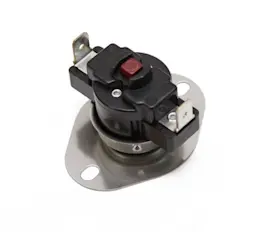
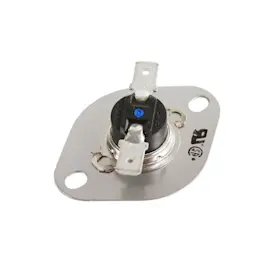
- High-limit safety: some models use a high-limit device that opens if the oven overheats; once open, the oven may not heat until the underlying cause is fixed.
- Temperature sensor circuit: a bad sensor or wiring can prevent normal heating.
- Wiring and connections: loose, overheated, or broken wires can interrupt power to elements.
- Control or relay issue: the control may not be sending power to the heating circuit.
For safe electrical checks, we use a meter and basic wiring tracing steps like those shown in how to use a multimeter to test electrical parts video.
Quick symptom guide
| Symptom | Most likely direction | What we do first |
|---|---|---|
| Completely dead (no display) | Power supply issue | Check breaker, terminal connections |
| Display works, no heat | Heating circuit issue | Test sensor, wiring, control output |
| Heats sometimes, then stops | Overheat or intermittent connection | Inspect wiring, cooling/airflow, high-limit |
Why it matters
A “reset” only clears a temporary control glitch. If a safety device tripped or a wire/part failed, the oven can keep losing heat until the root cause is corrected, which protects the appliance and your home.
Last updated: February 2026