


How can I tell what size my microwave is?
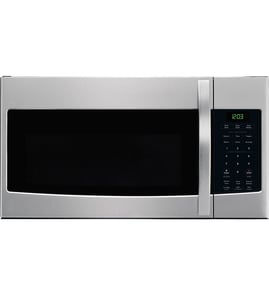
For your LG LMV1650ST-01 microwave/hood combo, “size” usually means two things: the outside dimensions (so it fits your cabinet space) and the inside capacity (so your dishes fit). We recommend measuring both so you can match the right replacement unit or accessories.
Use a tape measure and record these in inches:
- Width: measure the front face from left edge to right edge
- Height: bottom of the microwave to the top of the case
- Depth: front face to the back (exclude the cord); note if the door handle sticks out
- Clearance: measure space above and on the sides so the unit can vent properly
| What you’re checking | What it tells you | Typical range |
|---|---|---|
| Outside width | Cabinet fit (most important) | 24 to 30 inches |
| Outside depth | How far it projects | 15 to 18 inches |
| Outside height | Space between cabinet and cooktop | 16 to 18 inches |
Interior capacity is measured in cubic feet. If you do not have the listed capacity, you can estimate it:
- Measure interior width, height, depth (in inches)
- Multiply them together
- Divide by 1728 to convert cubic inches to cubic feet
Getting the size right prevents installation problems (cabinet fit, vent alignment, mounting points) and everyday usability issues (turntable clearance, tall mugs, casserole dishes). It also helps you choose compatible replacement parts and accessories.
If you are checking size because of venting or mounting concerns, these model-matched parts can matter:
- Microwave mounting plate 3300W0A030A (mounting alignment)
- Microwave vent damper door 4900W1A001B (airflow direction and backdraft control)
- Microwave grease filter 5230W1A012E (grease capture for the hood fan)
- LG microwave charcoal filter 5230W1A003A (odor control for recirculating setups)
Last updated: February 2026
What is the spec of the LMV1650ST-01?
The LG LMV1650ST-01 is a 1.6 cu. ft. over-the-range microwave/hood combo typically rated around 1000 cooking watts with a 10 power level cooking system and a vent fan commonly in the 300 CFM range. For exact ratings and feature set, match by model number when ordering parts.
These are the most-requested specifications for the LMV1650ST-01:
- Capacity: 1.6 cu. ft.
- Cooking power: about 1000 W (cooking watts)
- Power levels: typically 10
- Vent fan airflow: commonly around 300 CFM
- Finish: stainless steel (model suffix dependent)
Over-the-range LG microwaves in this size class commonly include:
- Auto/rapid defrost options
- Child lock / control lock
- Energy saver mode
- Sensor cooking (uses a humidity sensor on some versions)
- Multi-speed hood fan and cooktop light
| Spec area | What to look for | Where it matters |
|---|---|---|
| Cooking watts | 900 to 1100 W typical | Heating speed and performance |
| Venting | Recirculating vs. ducted | Filter type and installation setup |
| Filters | Grease filter plus optional charcoal filter | Odor control and airflow |
| Electrical | 120V household circuit typical | Fuse and interlock safety |
Specs drive parts compatibility. For example, whether your unit is set up for recirculating ventilation affects which filters you need, and electrical specs tie directly to safety parts like the fuse and door interlock switches.
If you are checking specs because performance is off, these model-matched parts are commonly involved:
- Heating circuit: microwave high-voltage diode 6021W3B001V, microwave high-voltage capacitor 0CZZW1H004B
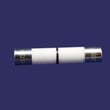
- No power or dead display: microwave fuse 3B74133Q
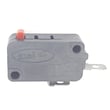
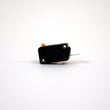
- Door won’t start or stops when closing: microwave door interlock switch 6600W1K001R or microwave door interlock switch 6600W1K001Q
- Venting and odors: microwave grease filter 5230W1A012E, LG microwave charcoal filter 5230W1A003A
Use our troubleshooting steps in why is my microwave not heating to narrow it down before replacing parts.
Last updated: February 2026
Can you reset a LG microwave?
Yes. For an LG LMV1650ST-01 microwave/hood combo, the most reliable “reset” is a power reset: unplug the microwave (or switch off the breaker) for about 1 minute, then restore power and re-set the clock. This clears many control glitches without replacing parts.
- Power reset: Unplug for 60 seconds, plug back in.
- Breaker reset: Turn the microwave circuit breaker off, wait 60 seconds, turn it back on.
- Control lock check: If the keypad seems unresponsive, make sure the control lock is not enabled (many models use a 3-second press on a key such as Stop/Clear).
- Clock re-entry: After power returns, set the clock; some functions will not run until the time is set.
A reset helps when the display is frozen, buttons lag, or the unit acts erratically. If the microwave is dead, blows the breaker, or runs but does not heat, a failed electrical part is more likely.
Common parts involved on LMV1650ST-01 include:
- Microwave fuse 3B74133Q (no display, completely dead)
- Microwave door interlock switch 6600W1K001R (won’t start, stops when door moves)
- Microwave high-voltage diode 6021W3B001V (runs but no heat)
- Microwave high-voltage capacitor 0CZZW1H004B (runs but no heat, humming)
- Confirm the outlet has power (test with a lamp).
- Try a different cook setting and time.
- Listen for the fan and turntable; note any unusual buzzing.
- Inspect the door for a full, solid close.
| Symptom | Reset likely helps? | Next step |
|---|---|---|
| Display frozen or random characters | Yes | Power reset, then set clock |
| Keypad won’t respond | Sometimes | Check control lock, power reset |
| Completely dead | Rarely | Check house power; likely fuse issue |
| Runs but does not heat | No | Diagnose heating circuit parts |
A simple reset can restore normal operation after a power surge or control glitch. If the issue is a fuse, door switch, or high-voltage heating component, resetting will not correct the root cause and the symptom usually returns.
Last updated: February 2026
What are common problems with LG microwaves?
Common problems with LG microwaves like model LMV1650ST-01 include not heating, blowing a fuse or going dead, the turntable not spinning, sparking or arcing, and vent fan or airflow issues. Many symptoms trace to a few high-wear parts, such as a fuse, door interlock switch, or high-voltage components.
- Not heating: often a high-voltage component issue such as the microwave high-voltage diode 6021W3B001V or microwave high-voltage capacitor 0CZZW1H004B
- Completely dead or shuts off right after Start: commonly a blown microwave fuse 3B74133Q or a door switch problem (interlock)
- Runs but turntable does not rotate: failed microwave turntable motor 6549W1S013H or a mechanical bind under the tray
- Starts only with the door held a certain way: worn door interlock switch or latch alignment (LMV1650ST-01 uses multiple interlock switches)
- Poor venting or loud airflow noise: grease buildup, a stuck damper, or a restricted filter such as the microwave grease filter 5230W1A012E
- Confirm power: verify the outlet works and the breaker is not tripped.
- Check the door close: the door should close firmly with no sag; a weak close can prevent proper interlock operation.
- Look for obvious arcing causes: metal in the cavity, damaged rack, or food splatter buildup.
- Inspect filters and airflow (microwave/hood combos): clean the grease filter and confirm the vent damper moves freely.
- Test only what is safe to test: internal high-voltage components can retain a dangerous charge even when unplugged.
| Symptom | Common part involved | Example part for LMV1650ST-01 |
|---|---|---|
| Dead/no display | Fuse | Microwave fuse 3B74133Q |
| No heat | High-voltage diode/capacitor | Microwave high-voltage diode 6021W3B001V |
| Won’t start, door-related | Door interlock switch | Microwave door interlock switch 6600W1K001R |
| Turntable not spinning | Turntable motor | Microwave turntable motor 6549W1S013H |
| Weak venting/odor in recirculation mode | Charcoal filter | LG microwave charcoal filter 5230W1A003A |
Microwave symptoms can look similar, but the fix is very different. For example, a “runs but no heat” complaint often involves high-voltage parts, while a “won’t start” complaint is frequently tied to door interlocks or a fuse. Correct diagnosis helps avoid unnecessary parts and repeat failures.
For deeper troubleshooting steps, we use the same process outlined in why is my microwave not heating.
Last updated: February 2026