
How do I know what model my garage door opener is?
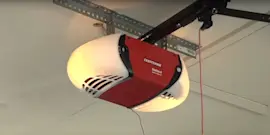
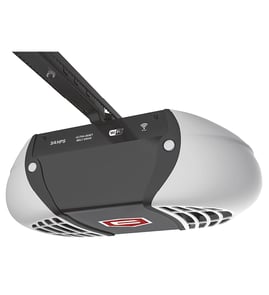
Your garage door opener’s model is printed on an ID label on the powerhead (the motor unit mounted to the ceiling or wall). For a Craftsman garage door opener like model 13953200, the label is usually under a light lens/cover or behind the front cover.
Where to look on the opener
Check these common label locations first (power off the opener before removing covers):
- Under the light cover/lens (one-light and two-light openers)
- Behind the front cover (some units hide the label behind the faceplate)
- On the side or back of the motor housing near the wiring terminals
- On the ceiling-mounted rail area close to where the rail meets the motor unit
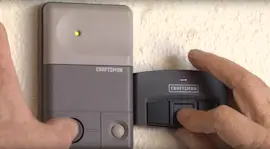
- Inside the wall control cover (less common, but sometimes the wall console has a model reference)
What to write down (so you get the right parts)
When you find the label, record these items exactly as shown:
- Model number (for example, 13953200)
- Serial number (helps identify production run)
- Motor type (AC vs. DC, if listed)
- Logic board or receiver info (if shown)
Quick ID checklist
| Item on label | Why it matters | Example |
|---|---|---|
| Model number | Matches the correct parts list | 13953200 |
| Serial number | Helps confirm version changes | Varies |
| Motor type | Affects troubleshooting and error codes | AC or DC |
If the label is missing or unreadable
Use these practical cross-checks to narrow it down:
- Look for a Learn button color (often tied to remote compatibility)
- Note whether it is chain drive, belt drive, or screw drive
- Check if the opener has one light or two lights
- Compare any blinking-light patterns with our Craftsman error codes
Why it matters
Garage door opener parts and remotes are model-specific. Using the exact model number (like 13953200) helps us match the correct drive system parts, safety sensor setup, and compatible controls.
Last updated: February 2026
Where can I buy Craftsman garage door opener parts?
You can buy replacement parts for your Craftsman garage door opener model 13953200 through our parts listings and search tools at Sears PartsDirect. We help you match the right part to your opener so you can fix common problems like remote issues, sensor faults, or drive wear.
Best way to find the exact part for model 13953200
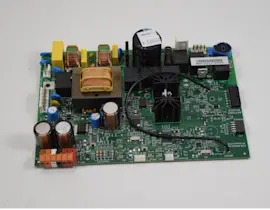
Use your model number (13953200) and identify the system that is failing (safety sensors, wall control, drive, or logic board). Then confirm the part by comparing your opener’s existing part markings and how it mounts.
- Start with the model-based parts list for Craftsman 13953200
- Narrow by symptom (won’t close, won’t open, lights blinking, remotes won’t work)
- Check for visible identifiers (wire connector style, bracket shape, gear housing)
- Replace worn items in pairs when applicable (for example, sensor sets)
- Verify power is off before handling wiring or control components
If you’re seeing blinking lights or error patterns
Many Craftsman garage door openers use diagnostic flashes to point to the problem area (often safety sensors, travel limits, or control issues). Use our error-code help to translate the pattern before ordering parts.
Common parts customers replace (and what they fix)
| Symptom | Most likely area | What to check first |
|---|---|---|
| Door won’t close | Safety sensor circuit | Sensor alignment, wiring, sun glare |
| Door reverses | Force or travel settings | Door balance, binding, limit settings |
| Motor runs but door won’t move | Drive system | Chain/belt condition, internal gears |
| Remotes won’t work | Remote/wall control/radio | Battery, reprogramming, wall control |
Why it matters
Ordering by the exact model number helps prevent returns and downtime. Garage door opener parts can look similar across Craftsman models, but wiring connectors, travel modules, and drive components often differ.
Last updated: February 2026
What are the common problems with Craftsman garage door openers?
Common problems on the Craftsman 13953200 garage door opener are safety sensor faults that stop the door from closing, remote or wall control issues, travel or force settings that are out of adjustment, and worn drive components (chain/belt, gears) that cause noise or no movement.
Most common symptoms and what they usually mean
- Door won’t close; lights blink: safety sensors misaligned, blocked, or wired incorrectly
- Door reverses while closing: force too high, travel limits off, binding door hardware
- Opener hums but door doesn’t move: stripped drive gear, seized sprocket, or a jammed trolley
- Remote works sometimes: weak remote battery, interference, or receiver/logic board issue
- Wall control dead: loose wiring at the wall button or opener terminals, failed wall control
- No power at all: tripped breaker/GFCI, unplugged opener, failed internal power supply
Quick checks we recommend first (safe, fast)
- Confirm the door moves freely by hand (pull the emergency release and lift the door). If it’s heavy or sticks, fix the door hardware first.
- Check the safety sensors: both lenses clean, both LEDs on steady, sensors aimed at each other.
- Inspect the photo-eye path: remove anything in the doorway, including cobwebs and direct sunlight glare.
- Try the wall control: if wall works but remotes don’t, focus on remote programming/batteries.
- Listen for grinding or clicking: that points to worn gears or a failing drive system.
Common problem areas (and typical fixes)
| Problem area | What you notice | Typical fix |
|---|---|---|
| Safety sensors | Won’t close; blinking lights | Align sensors, clean lenses, repair wiring |
| Force/travel settings | Reverses, stops short | Adjust force and travel limits |
| Drive system (chain/belt/gears) | Grinding, hums, no movement | Replace worn gears or drive parts |
| Controls (remote/wall) | Intermittent operation | Replace batteries, reprogram, check wiring |
Why it matters
Most “won’t close” complaints are sensor-related, but a door that binds or a worn gear can overload the motor and create repeat failures. Fixing the door movement and sensor alignment first prevents unnecessary parts replacement.
For blink patterns and diagnostic steps, use our Craftsman error codes guide.
Last updated: February 2026
Is it cheaper to repair or replace a garage door opener?
For a Craftsman 13953200 garage door opener, it’s usually cheaper to repair when the problem is limited to common wear items or adjustments (safety sensors, wall control, remote programming, force/travel settings). Replacement makes more sense when the opener is older (typically 10 to 15 years), has repeated failures, or the repair cost is close to half the price of a comparable new opener.
Quick rule of thumb (cost vs. value)
Use these decision points to choose the most cost-effective path:
- Repair when the opener runs but won’t close, reverses, or remotes act up (often sensors, settings, or controls).
- Repair when the door itself is binding; fixing rollers, hinges, or spring issues can stop “opener” symptoms.
- Replace when the motor/control board is failing repeatedly or the unit struggles even after proper adjustments.
- Replace when you want quieter operation or newer features and your current unit is near end-of-life.
- Replace when parts plus labor approach about 50% of a new opener’s installed cost.
Common “repairable” problems first
These are the most frequent, lower-cost fixes that can keep a Craftsman opener going:
- Safety sensor alignment or wiring issues
- Force or travel limit adjustments
- Remote reprogramming or keypad issues
- Wall control problems
- Drive gear wear (chain-drive units commonly show this)
For step-by-step troubleshooting paths, use our Craftsman error codes resource.
Repair vs. replace comparison
| Situation | Repair is usually best | Replace is usually best |
|---|---|---|
| Opener age | Under ~10 years | 10 to 15+ years |
| Failure pattern | One-off issue | Repeated breakdowns |
| Symptoms | Settings/sensors/controls | Motor/logic failures, weak lifting |
| Cost | Low to moderate | Repair cost near half of new |
Why it matters
A garage door opener can look “bad” when the real issue is door drag or sensor misalignment. Repairing the right root cause protects the motor, improves safety sensor performance, and prevents premature replacement.
Last updated: February 2026
How to find a compatible garage door opener?
To find a compatible garage door opener (or compatible remote/smart control) for your Craftsman model 13953200, match the opener’s radio technology and control type first, then confirm the learn-button style and safety-sensor setup. This prevents buying a control that will not pair or will work unreliably.
What to check on your existing opener
- Model number on the motor head: confirm it matches 13953200 (or note the exact number you see).
- Learn button and indicator light: the button color and nearby LED style help identify the radio system.
- Safety sensors: confirm you have photo eyes installed and aligned (most openers use them).
- Wall control type: basic push-button vs. multi-function wall console can affect compatibility.
- Drive type: chain vs. belt does not usually affect remote compatibility, but it matters when replacing the whole opener.
Compatibility quick guide (what you are actually matching)
| What you’re buying | Must match | What usually varies | Best first check |
|---|---|---|---|
| Replacement remote | Radio system (rolling code vs. older fixed code) | Button layout, visor clip style | Learn button style/color |
| Keypad | Same radio system as the opener | Backlight, temporary PIN features | Learn button style/color |
| Smart controller add-on | Opener compatibility list and wiring/radio support | App features, alerts | Opener model and learn button |
| New opener (full unit) | Door weight/height needs, safety sensors | Noise level, speed, lighting | Door size/weight and usage |
How to choose the right path
- If your goal is a new remote/keypad, identify the opener’s learn button system first, then choose a compatible control.
- If your goal is smartphone control, confirm whether your opener supports a smart add-on or if a full opener replacement is the cleanest solution.
- If your goal is replacing the entire opener, match the opener’s lifting capacity to your door (single vs. double, insulated vs. non-insulated) and confirm the rail length fits your door height.
Why it matters
Garage door opener “compatibility” is mostly about the radio/security protocol and control electronics, not the brand name printed on the cover. Matching the wrong system can lead to pairing failures, short range, or intermittent operation.
Helpful troubleshooting if you are unsure what system you have
Use our Craftsman error codes reference to interpret flashing lights or diagnostic codes before you replace anything; many “compatibility” problems are actually sensor alignment, wiring, or wall control issues.
Last updated: February 2026