Owner’s manual
 Error Codes


Does anyone make a 30 inch side by side refrigerator?
Yes. Several brands make 30-inch class side-by-side refrigerators, including built-in and undercounter styles; exact widths vary by model, so we recommend confirming the published cabinet cutout and overall width before you buy. For KitchenAid KSF26C4XYW03, use the KSF26C4XYW03 owner's manual to compare your current opening and clearance needs.
What “30-inch” usually means
Most “30-inch” refrigerators are marketed as 30-inch class, which commonly means the cabinet is close to 30 inches wide, but the installed footprint can be wider once you include:
- Door and handle projection
- Hinge swing clearance
- Side clearance for airflow
- Space behind the unit for water line and power cord
- Leveling feet and floor trim variations
Quick fit check before switching models
Use these steps to avoid a tight fit or door-swing issues:
- Measure the opening width at the front and back (walls are often not perfectly square).
- Measure height to the lowest cabinet or soffit point.
- Measure depth to the front edge of counters, then add door clearance.
- Confirm you have a nearby water supply if you want an ice maker or dispenser.
- Plan for at least a small gap at the sides and top for ventilation (follow the manual for the model you choose).
Side-by-side vs. other 30-inch options
If you are shopping specifically for a 30-inch wide refrigerator, side-by-side models exist, but you may also find more choices in other configurations.
| Configuration | Typical availability at 30-inch width | Best for |
|---|---|---|
| Side-by-side | Moderate | Narrow door swing, easy freezer access |
| Top freezer | High | Budget-friendly, simple layout |
| Bottom freezer | Moderate | Fresh food at eye level |
| Built-in/undercounter side-by-side | Niche | Tight kitchens, custom installs |
Why it matters
A refrigerator that is even 1/4 inch too wide can bind in the opening, rub cabinets, or prevent doors from opening fully. Matching the width, depth, and door-swing clearance is more important than the advertised “30-inch” label.
If you decide to keep your KitchenAid KSF26C4XYW03 running instead of replacing it, you can order model-matched replacement parts from the parts list for this model, or search by model number on Sears PartsDirect.
Last updated: February 2026
Is side by side better than a French door?
A side-by-side like the KitchenAid KSF26C4XYW03 is “better” when you want easy freezer access and lots of door bins; a French door is “better” when you want wider fresh-food shelves and more flexible refrigerator storage. Your best choice depends on how you shop, cook, and use ice and water.
Quick comparison: side-by-side vs French door
| Feature | Side-by-side (like KSF26C4XYW03) | French door |
|---|---|---|
| Fresh-food space | Narrower shelves; tall items fit well | Wider shelves; better for platters and pizza boxes |
| Freezer access | Eye-level access to many items | Lower freezer drawer; can hold bulky items |
| Door storage | Typically strong (bins on both doors) | Strong on refrigerator doors; freezer door storage varies |
| Organization style | Vertical zones; easy to separate categories | Wide zones; easier to see everything at once |
| Footprint | Often fits tighter kitchen aisles | Doors can need more swing clearance |
How we recommend choosing
- Choose side-by-side if you use the freezer daily, want frozen foods at eye level, or prefer lots of door storage.
- Choose French door if you store wide items (sheet pans, party trays) and want the refrigerator section to feel more open.
- If you rely on ice and water, compare dispenser layout and ice storage capacity.
- If you meal prep, prioritize shelf width and crisper layout.
- If your kitchen is tight, measure door swing and aisle clearance before deciding.
Why it matters for real-world use
The “best” style is the one that matches your habits. Side-by-sides can feel more organized for frozen foods, while French doors usually make fresh-food storage easier to see and rearrange. Either style performs well when the door seals, airflow, and filters are maintained.
Maintenance tip that applies to both styles
Keeping odors down and airflow clean helps any refrigerator run better. For this model, replacing the refrigerator air filter W10311524 on schedule and following the cleaning guidance in the owner's manual helps maintain fresh airflow and consistent temperatures.
You can also shop model-specific replacement parts and maintenance items on this page, or search by model on Sears PartsDirect.
Last updated: February 2026
What does a side-by-side refrigerator cost?
A new side-by-side refrigerator typically costs about $900 to $5,000+, depending on size, finish, and features like in-door ice and water. For your KitchenAid KSF26C4XYW03, repair parts are often a cost-effective way to extend the life of the refrigerator; see the owner's manual for feature details and care guidance.
What drives the price up or down
Side-by-side refrigerator pricing usually changes most based on these factors:
- Width and capacity (larger cubic feet and 36-inch models cost more)
- Ice and water system (in-door dispenser, filtration, and ice maker features)
- Finish and trim (stainless and specialty finishes cost more)
- Controls and electronics (more sensors and control boards increase cost)
- Efficiency and noise design (premium compressors and insulation can raise price)
Repair vs replace: a quick comparison
If your KSF26C4XYW03 is cooling well but has a specific failure (ice maker, airflow, water dispensing), replacing a targeted part is often the practical first step.
| Option | Typical cost range | Best when |
|---|---|---|
| Replace a failed part | $15 to $350+ | One system is acting up (ice, water, fan, controls) |
| Replace the refrigerator | $900 to $5,000+ | Multiple major systems are failing or cabinet damage exists |
Common repairs that can control costs
These are frequent side-by-side fixes that can restore performance without buying a new unit:
- Replace a clogged air filter such as the refrigerator air filter W10311524 to help reduce odors
- Diagnose dispenser or ice maker water supply issues (often tied to the inlet valve)
- Address warm temperatures caused by evaporator fan problems
- Fix door sealing issues that cause frost, sweating, and longer run times
- Replace a failed electronic control if symptoms point to erratic cooling or defrost behavior
Why it matters
Side-by-side refrigerators pack a lot of systems into a narrow footprint. When one component like an evaporator fan motor, water inlet valve, or control board starts failing, it can look like the whole refrigerator is “going bad” even though a single repair can restore normal cooling and ice production.
Ordering parts and planning your next step
We list model-matched replacement parts for KitchenAid KSF26C4XYW03 on this page, and you can also search by model number on Sears PartsDirect if you are comparing options or building a full repair list.
Last updated: February 2026
What is the most common problem with a KitchenAid refrigerator?
The most common KitchenAid refrigerator problems are ice maker and water dispensing issues, followed closely by cooling complaints (warm refrigerator, freezer OK or vice versa). On the KitchenAid KSF26C4XYW03, these symptoms often trace back to airflow, defrost, or water-supply components; use the owner's manual for model-specific checks and settings.
Most common symptoms we see
- Ice maker not making ice or making small/hollow cubes
- Water dispenser slow, sputtering, or not dispensing
- Refrigerator section warm while freezer stays cold (airflow problem)
- Frost buildup on the freezer back wall (defrost problem)
- Unusual fan noise or rattling from the freezer (evaporator fan area)
Quick checks you can do first (no parts needed)
- Confirm temperature settings are at normal targets (most refrigerators run best near 37°F fresh food and 0°F freezer).
- Make sure vents inside the refrigerator and freezer are not blocked by food packages.
- Clean condenser coils and verify the condenser fan area is clear of dust.
- If you have water/ice issues, verify the shutoff valve is fully open and the supply line is not kinked.
- After replacing a filter or restoring water, purge air from the dispenser by running several cups of water.
Parts that commonly fix these problems on KSF26C4XYW03
If basic checks do not resolve the issue, these model-matched parts are frequent solutions:
| Problem area | What you notice | Common matching part |
|---|---|---|
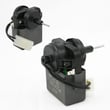
| Airflow in freezer | Warm fridge, noisy fan, weak airflow | Refrigerator evaporator fan motor WP2315549 |
| Defrost system | Frost sheet on freezer back wall, warming over time | Refrigerator defrost bi-metal WPW10225581 |
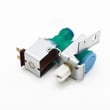
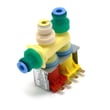
| Water supply to ice maker/dispenser | No ice, no water, or intermittent fill | Refrigerator water inlet valve WPW10341320 |
Why it matters
Ice, water, and cooling problems usually get worse if they are caused by restricted airflow, a failing evaporator fan motor, or a defrost failure. Catching the symptom early helps protect food temperatures and reduces strain on the compressor.
You can order replacement parts for your KitchenAid KSF26C4XYW03 from the parts list for this model, or search by model number on Sears PartsDirect.
Last updated: February 2026