Owner’s manual



Are Electrolux appliances considered high end?
Yes. Electrolux is generally considered a high-end (premium) appliance brand, and the Electrolux EFME627UIW2 dryer fits that positioning with features and build quality aimed at customers who want strong performance, quieter operation, and more refined controls. For model-specific features, see the EFME627UIW2 use & care manual.
When we describe a dryer brand as high end, we are typically talking about a mix of design, feature set, and long-term ownership experience.
- More advanced drying controls (sensor drying, specialty cycles)
- Better fit and finish (door feel, drum design, control layout)
- More attention to fabric care (temperature management, options)
- Stronger focus on noise and vibration control
- Broader service documentation and parts support for repairs
Use this as a quick way to set expectations when shopping or deciding whether a repair is worth it.
| Tier | Typical brands (examples) | What you usually get |
|---|---|---|
| Value | Basic models across many brands | Fewer cycles, simpler controls |
| Mid-range | Many mainstream lines | Good performance, fewer premium options |
| Premium | Electrolux and similar | More features, refined operation, higher overall cost |
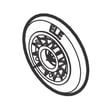
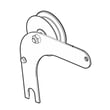
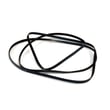
Premium dryers like the EFME627UIW2 often justify repair because the drum system, heating system, and electronic controls are designed to deliver better results over time. If you ever run into squealing, thumping, or a drum that will not turn, common wear items include the belt and support rollers, such as the white-westinghouse dryer drum belt 134719300 and the dryer drum support roller 5304523152.
- Clean the lint screen every load to keep airflow strong
- Keep the exhaust venting clear; restricted airflow hurts drying and can overheat components
- Avoid overloading; it increases wear on the drive belt and rollers
- If drying times increase, address airflow first before replacing parts
Last updated: January 2026
What are the parts of a dryer called?
Most dryers, including the Electrolux EFME627UIW2, use the same core groups of parts: a drive system to tumble the drum, an airflow system to move heated air through clothes, and safety and control parts to regulate temperature and operation. For diagrams and feature names, use the EFME627UIW2 use & care manual.
- Drum: Holds and tumbles the load.
- Drive belt and idler system: Turns the drum and keeps belt tension.
- Drive motor: Powers the belt and blower.
- Blower wheel and blower housing: Pulls air through the drum and pushes it out the vent.
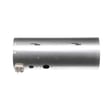
- Heating system: Electric heating element (electric models) or burner components (gas models).
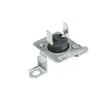
- Temperature sensing and safety: Thermistor(s), high-limit thermostat, thermal limiter.
- Lint handling: Lint screen and lint chute.
- Door and safety interlock: Door switch, latch/strike.
These are common names you will see when shopping for replacement parts for this model:
| Part name (as listed) | What it’s for | Common symptom when it fails |
|---|---|---|
| White-westinghouse dryer drum belt 134719300 | Turns the drum | Drum will not tumble, squealing, burning rubber smell |
| Dryer blower wheel 5304513609 | Moves air through the dryer | Poor drying, loud rumble or thump, overheating |
| Dryer heating element 5304535760 | Produces heat (electric heat) | No heat or weak heat |
| Dryer thermistor 5304513591 | Senses temperature | Overheating, underheating, cycle issues |
| Dryer lint screen 5304534450 | Captures lint before it enters ducting | Long dry times, lint buildup, airflow restriction |
Using the correct part name helps you match the right component to the symptom. For example, “blower wheel” problems usually show up as airflow and drying-time issues, while “drum support roller” or “belt” problems usually show up as noise or a drum that will not turn.
Last updated: January 2026
What is the life expectancy of an Electrolux washer?
Electrolux washers typically last 10 to 15 years with normal household use. Because EFME627UIW2 is an Electrolux dryer model, we cannot confirm any washer-specific lifespan details from this model’s information; the 10 to 15 year range is the standard expectation for modern residential washers.
Washer longevity is mostly driven by mechanical wear, water exposure, and how consistently the machine is maintained.
- Heavy weekly volume and oversized loads increase stress on bearings and suspension
- Hard water and detergent buildup can shorten the life of valves, pumps, and seals
- Frequent unbalanced loads can wear shocks, springs, and tub supports faster
- Skipping routine cleaning can lead to odor, residue, and component strain
- Small leaks left uncorrected can damage electrical parts and bearings
These steps help most front-load and top-load Electrolux washers reach the typical lifespan.
- Use HE detergent and measure carefully to avoid oversudsing
- Leave the door and dispenser slightly open between loads (front-loaders)
- Run a monthly tub-clean cycle or hottest cycle with an approved washer cleaner
- Wipe the door boot/gasket and glass regularly (front-loaders)
- Check pockets and avoid washing single heavy items that can throw the load off balance
| Washer age | What we usually recommend | Why it matters |
|---|---|---|
| 0 to 5 years | Repair is usually worthwhile | Most major components are still early-life |
| 6 to 10 years | Compare repair cost to replacement | Multiple wear items may be approaching mid-life |
| 11 to 15 years | Replace if a major component fails | Risk of additional near-term failures increases |
Knowing the typical washer lifespan helps you decide when preventive maintenance is worth the effort and when a bigger repair (motor, bearings, control board) may not be the best long-term value.
For general Electrolux laundry care practices that also apply to many matching washer and dryer sets, see the EFME627UIW2 use & care manual.
Last updated: January 2026
Why is my Electrolux dryer not drying completely?
When an Electrolux dryer like model EFME627UIW2 runs but leaves clothes damp, the most common cause is restricted airflow (lint buildup or a vent problem) or an overloaded load that prevents proper tumbling and heat circulation. Start with the lint screen and exhaust system checks in the EFME627UIW2 use & care guide.
- Clean the lint screen before every load; rinse and dry it if you use dryer sheets (they can leave a film).
- Confirm the exhaust vent is not crushed behind the dryer and that the outside vent hood opens fully.
- Reduce load size; items should tumble freely (especially towels and jeans).
- Verify you are using an appropriate cycle; sensor cycles can end early if the load is too small or mixed.
- If you have a steam model, make sure steam options are not being confused with heat settings (steam does not replace heat).
A dryer can make heat but still dry poorly if it cannot move air. In the EFME627UIW2 manual, Electrolux emphasizes using 4-inch rigid or semi-rigid metal ducting and keeping the exhaust system clear.
| What you notice | What it usually points to |
|---|---|
| Clothes are warm but still damp | Vent restriction or overloaded drum |
| Dryer takes 2+ cycles | Lint blockage in ducting or vent hood |
| Top of dryer feels very hot | Poor exhaust flow, overheating risk |
If airflow and load size are good but drying is still weak, we start looking at heating and temperature sensing components.
- No heat or very low heat: heating circuit issue (electric models) or burner system issue (gas models)
- Heat cuts out mid-cycle: overheating protection may be opening due to restriction or a failing limiter
- Erratic sensor drying: temperature sensing can be inaccurate
Model-compatible parts that can be involved include the dryer heating element 5304535760 (electric heat issue) and the dryer thermistor 5304513591 (temperature sensing).
Incomplete drying is more than an inconvenience; it increases energy use, can cause musty odors, and can trigger overheating safeties if airflow is restricted. Fixing airflow first is the fastest, most cost-effective path.
Last updated: January 2026