 Error Codes




Why is my Whirlpool dishwasher leaking at the bottom of the door?
A bottom-of-door leak on your Whirlpool DU941PWKQ1 dishwasher is usually caused by a worn door seal, a door that is not latching tightly, or spray being forced toward the door by a loose or damaged spray arm. Fixing the seal or correcting spray direction typically stops the leak.
Most common causes to check first
- Food debris or detergent buildup on the door sealing surface
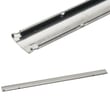
- Worn, flattened, or torn dishwasher door seal WPW10509257
- Door not closing tightly because the latch is worn or misaligned
- Water being driven at the door by a loose spray arm or missing hardware
- Over-sudsing from the wrong detergent (hand soap or too much detergent)
Quick troubleshooting steps (in order)
- Clean the sealing surfaces: Wipe the inner door edge and the tub lip where the gasket contacts; remove any grit that can “wick” water out.
- Inspect the door seal: Look for splits, hard spots, or areas that no longer sit evenly. If it is deformed, replace the dishwasher door seal WPW10509257.
- Confirm the door closes firmly: If the door feels loose or pops open slightly, replace the dishwasher door latch WP3380854.
- Check spray arm tightness and condition: A wobbling arm can shoot water at the door. Inspect the dishwasher spray arm WP8268874 and make sure the dishwasher spray arm nut WP8268873 is snug.
- Reduce suds: Use only automatic dishwasher detergent; if you see lots of foam, run a rinse cycle to clear it.
What to replace based on symptoms
| Symptom | Most likely fix | Part to consider |
|---|---|---|
| Drips from bottom corners | Door seal not sealing evenly | Dishwasher door seal WPW10509257 |
| Leak only when running, door feels loose | Latch not pulling door tight | Dishwasher door latch WP3380854 |
| Leak happens during wash, worse with heavy spray | Spray arm loose or damaged | Dishwasher spray arm WP8268874 and/or dishwasher spray arm nut WP8268873 |
Why it matters
A door-area leak can send water into the toe-kick area and onto the floor, which can damage flooring and lead to repeated cycle interruptions. Stopping the leak early also helps the dishwasher maintain proper wash pressure for better cleaning.
Helpful DIY guidance
If the dishwasher is acting erratically after a leak or interruption, follow how to reset a Whirlpool dishwasher.
Last updated: February 2026
What does F4 mean on a Whirlpool dishwasher?
On Whirlpool dishwasher model DU941PWKQ1, an F4 code most commonly points to a drain problem (the dishwasher is not pumping water out as expected). Clearing the water and restoring normal draining usually clears the code; if it returns, focus on the drain path and drain components.
What to check first (fast, no parts)
- Cancel the cycle and let the unit try to drain; listen for the drain pump sound.
- Remove standing water from the tub so you can inspect the sump area.
- Check the sink drain or garbage disposal connection for a clog.
- Verify the drain hose has a high loop and is not kinked or crushed.
- Clean any debris near the pump inlet area (labels, glass, food).
Common causes and the most likely fixes
| What you notice | Most likely cause | What to do |
|---|---|---|
| Water stays in tub, pump sounds weak or strained | Partial blockage in hose or pump area | Clear the hose and sump area; re-test drain |
| Water drains slowly, then code returns | Restricted drain hose routing | Correct kinks; ensure proper high loop |
| Dishwasher overfills or drains inconsistently | Float stuck or float switch issue | Make sure the float moves freely; clean around it |
| Leaks at the door plus odd stopping behavior | Door not sealing or latching consistently | Inspect latch and seal alignment |
Parts that can be involved (when checks above do not fix it)
If the drain path is clear and the code keeps coming back, these model-related parts are commonly involved:
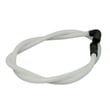
- Dishwasher drain hose WP3374077 (clogged, split, or internally restricted)
- Dishwasher float assembly WP3376397 (stuck float can confuse fill and drain behavior)
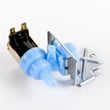
- Valve-inlt W10844024 (a fill valve that seeps can leave extra water to drain later)
Why it matters
An F4 drain-related condition can leave dirty water in the tub, cause poor cleaning, and increase the chance of odors. Fixing the drain restriction early also helps protect the pump and prevents repeat shutdowns mid-cycle.
For model-specific troubleshooting steps and code behavior, use our Whirlpool dishwasher error codes guide.
Last updated: February 2026
What does E1 F9 mean on a Whirlpool dishwasher?
On a Whirlpool dishwasher like model DU941PWKQ1, E1 F9 points to a drain or water-handling problem (the dishwasher is not draining correctly, is detecting abnormal water level behavior, or is timing out while trying to move water out). Start by checking for a clog, a kinked drain hose, or a drain pump issue.
What to check first (fast, no parts)
- Cancel the cycle and let the unit attempt to drain; listen for the drain pump running.
- Check the sink/disposer connection for a blockage (including a knocked-out plug if newly installed).
- Inspect the drain hose for kinks, crushing, or a low loop that can cause backflow.
- Clean the filter area and sump for debris (labels, glass, food, twist ties).
- Verify the dishwasher is getting hot water and proper fill; low fill can also trigger odd drain behavior.
Parts that commonly relate to E1 F9 symptoms
If the dishwasher will not drain, drains slowly, or refills unexpectedly, these model-matched parts are common suspects:
| Symptom you see | Most likely area | Model-matched part to consider |
|---|---|---|
| Standing water after cycle | Drain path restriction or leak/backflow | Dishwasher drain hose WP3374077 |
| Overfilling or fill problems | Water inlet valve or float system | Valve-inlt W10844024 or dishwasher float assembly WP3376397 |
| Leaks at the door during/after drain | Door seal not sealing | Dishwasher door seal WPW10509257 |
Why it matters
Drain and fill faults can leave dirty water in the tub, cause odors, and lead to repeated cycle stops. Fixing the root cause (clog, hose routing, valve, or float issue) restores normal wash performance and prevents water from backing up.
Helpful DIY references
Last updated: February 2026
What could be wrong with my Whirlpool dishwasher?
Several common issues can cause a Whirlpool dishwasher like model DU941PWKQ1 to act up, including a door that is not sealing, a fill problem, a drain restriction, or weak spray. We recommend starting with the symptom (leak, won’t drain, won’t start, not cleaning) and checking the most likely parts first.
Quick symptom checklist (most common causes)
- Leaking at the door: worn or misaligned door seal; inspect and replace the dishwasher door seal WPW10509257.
- Not draining: kinked/clogged drain hose, blocked sink/disposal connection, or a restriction in the sump; check the dishwasher drain hose WP3374077.
- Not filling or fills slowly: inlet valve screen clogged, low water supply, or a failing inlet valve; consider the valve-inlt W10844024.
- Not cleaning well: spray arm holes clogged, spray arm not spinning, or loading issues; inspect the dishwasher spray arm WP8268874.
- Won’t start or stops mid-cycle: door not latching fully; check the dishwasher door latch WP3380854.
Step-by-step checks we recommend
- Reset the control and retry a cycle: use the steps in how to reset a Whirlpool dishwasher.
- Confirm the door closes and latches firmly (no “bounce back,” no gap at the top).
- Check for standing water in the bottom after a cycle; if present, inspect the drain path and hose.
- Inspect spray performance: remove the spray arm and rinse debris from the jets.
- Look for error codes (if your model displays them): use Whirlpool dishwasher error codes.
What to check first (by symptom)
| Symptom | First thing to inspect | Common part involved |
|---|---|---|
| Water on floor at front | Door seal seating, tears, gaps | Door seal |
| Water left in tub | Drain hose routing and clogs | Drain hose |
| Dishes gritty/dirty | Spray arm jets, filter area | Spray arm |
| Won’t run | Door latch engagement | Door latch |
| No/low water entering | Supply valve open, inlet valve | Inlet valve |
Why it matters
Dishwashers depend on correct fill level, strong spray circulation, and a tight door seal. A small restriction (like a partially clogged spray arm) or a worn seal can quickly turn into poor cleaning, leaks, and longer cycle times.
Last updated: February 2026







