Installation guide
 Error Codes


Is it worth repairing a Kenmore washing machine?
Yes, it’s usually worth repairing a Kenmore washer, especially a proven direct-drive model like Kenmore 11082980130, when the fix is a common wear part and the machine isn’t leaking from the tub or roaring from bad bearings. Many repairs cost far less than replacing the washer.
A practical way to decide
Use this quick checklist before you spend money:
- Repair it if the problem is agitation, spinning, draining, or a no-start issue tied to common parts.
- Repair it if the cabinet and tub are solid (no rust-through, no major cracks).
- Repair it if the washer fills and drains normally but performance is poor (often a clutch, coupling, or agitator issue).
- Replace it if the tub is leaking badly, the transmission area is heavily oil-soaked, or the machine is extremely loud in spin (often points to major internal wear).
- Replace it if multiple major symptoms stack up at once (leak + no spin + electrical issues).
Typical repair costs vs. value (rule-of-thumb)
These are common repairs on Kenmore 110-style top-load washers; parts are often affordable compared to a new washer.
| Symptom | Common cause | Example part for this model | Repair difficulty |
|---|---|---|---|
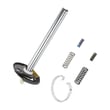
| Won’t spin or agitates poorly | Drive connection worn | Coupling 285753A | Medium |
| Won’t drain or leaves water | Drain pump issue or blockage | Water pump WP3363394 | Medium |
| Spins weak, smells, or slips | Clutch worn | Clutch 285785 | Medium |
| Agitator “clicks” or won’t move clothes well | Agitator dogs worn | Agitator dog 80040 | Easy |
Why it matters
Repairing a solid Kenmore washer can restore cleaning and spinning performance for years, and it avoids the cost and hassle of delivery, installation, and learning a new machine’s cycles. The best value repairs are the simple mechanical wear items.
What we recommend doing first
- Confirm the symptom (no spin, no drain, no agitation, leaking, loud noise).
- Check for simple causes (overload, unbalanced load, kinked drain hose, clogged pump inlet).
- Use the installation guide to verify basics like drain standpipe height, hose routing, and water supply setup.
Last updated: February 2026
What is the average lifespan of a Kenmore washer?
A Kenmore washer typically lasts 10 to 15 years with normal household use. For Kenmore model 11082980130, routine care (leveling, correct loading, and prompt leak fixes) helps you reach the high end of that range and avoid early wear.
What affects washer lifespan the most
- Overloading or consistently washing heavy items can strain the drive system and suspension.
- Unbalanced loads increase vibration and can wear the basket drive and springs.
- Hard water can speed up valve and pump wear from mineral buildup.
- Small leaks can damage bearings, the drive area, and nearby electrical parts.
- Skipped maintenance (hoses, cleaning, leveling) shortens service life.
Common wear items (and what they usually look like when failing)
| Symptom | Likely area | Example model 11082980130 part to check |
|---|---|---|
| Agitator moves poorly or “ratchets” | Agitator drive | Agitator dog 80040 |
| Won’t spin or makes grinding during spin | Clutch or drive components | Clutch 285785 |
| Won’t drain, hums, or leaves water in tub | Drain pump | Water pump WP3363394 |
| Leaks during fill or won’t fill correctly | Water inlet valve | Washer valve 285805 |
Maintenance steps that add years
- Keep the washer level and stable; re-check after moving it.
- Use the right load size and distribute bulky items evenly.
- Replace fill hoses if they’re bulging, cracked, or leaking.
- If you notice oil, burning smell, or loud spin noise, stop using the washer and inspect the drive area.
- Address slow draining early to prevent pump and motor strain.
Why it matters
A washer that is maintained and repaired early usually avoids secondary damage. For example, a minor draining issue can turn into a bigger drive-motor or gearcase problem if the washer repeatedly tries to spin with water still in the tub.
For model-specific setup and safety details, follow the 11082980130 installation guide.
Last updated: February 2026
What is the capacity of the Kenmore 11082980130 washer?
The Kenmore 11082980130 washer is a standard-capacity, top-load design; most Kenmore 110 (Whirlpool-built) direct-drive washers in this style fall in the about 2.8 to 3.5 cu. ft. range. For the exact rated capacity for your unit, use the specs section in the 11082980130 installation guide.
How to find the exact capacity for your washer
Use these checks in order; they are the fastest ways to confirm the correct number for your specific configuration.
- Review the specifications section in the 11082980130 installation guide
- Check the model and serial tag (commonly under the lid or around the lid opening)
- Look for “capacity” or “basket volume” in any included product literature
- If you are comparing to another washer, match by full model number (all digits)
What capacity means for real-world loads
Capacity is the tub volume, not a weight limit. For a standard-capacity top-load washer like the 11082980130, good loading habits matter more than the exact cubic feet.
- Load loosely to the top of the basket, not packed down
- Keep bulky items (comforters, jackets) to one item at a time
- Balance mixed loads to reduce vibration and improve spin
Quick reference: common top-load capacity classes
| Capacity class | Typical cu. ft. range | Typical use |
|---|---|---|
| Compact | 1.5 to 2.5 | Small loads, tight spaces |
| Standard | 2.8 to 3.5 | Everyday family laundry |
| Large | 3.6 to 4.5+ | Fewer cycles, bigger items |
Why it matters
Overloading reduces cleaning and can strain the drive system and drain components. Keeping loads within the washer’s practical capacity helps protect parts such as the coupling 285753A and the water pump WP3363394.
Last updated: February 2026
Who made the Kenmore 80 series washer?
Most Kenmore 80 Series top-load washers, including model 11082980130, were built for Kenmore by Whirlpool. That is why you will often see Whirlpool-style direct-drive components and compatible parts used throughout this washer.
How to confirm it on your specific washer
We recommend checking the identification details on the machine and matching them to the documentation for model 11082980130.
- Look for the model tag under the lid or on the rim of the washer opening
- Confirm the model number starts with 110 (commonly associated with Whirlpool-built Kenmore units)
- Match the model number exactly to the 11082980130 installation guide
- Use the parts list to verify Whirlpool-style drive and drain components
- If you are ordering parts, match by model number first, then by part ID
Why Whirlpool manufacturing matters for parts and repairs
Knowing Whirlpool built this Kenmore washer helps you troubleshoot common direct-drive symptoms and choose the right replacement parts.
Common Whirlpool-built Kenmore top-load repair areas include:
- Agitation problems (often tied to the agitator mechanism)
- No spin or weak spin (often tied to clutch or drive components)
- No drain or slow drain (often tied to the drain pump)
- Leaks at the tub or pump connections
Quick examples of parts you may see on this design
| Symptom | Common area to check | Example part for this model |
|---|---|---|
| Won’t drain | Drain pump | Water pump WP3363394 |
| Won’t spin or slips | Clutch/drive | Clutch 285785 |
| Agitator not moving properly | Agitator mechanism | Agitator dog 80040 |
Why it matters
When a Kenmore washer is Whirlpool-built, the repair approach, direct-drive layout, and many replacement parts follow Whirlpool’s long-running design. That usually makes diagnosis more straightforward and parts availability better over the life of the washer.
Last updated: February 2026