Owner’s manual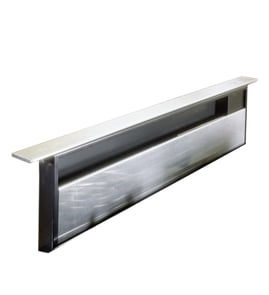



Do downdraft vents need to be vented outside?
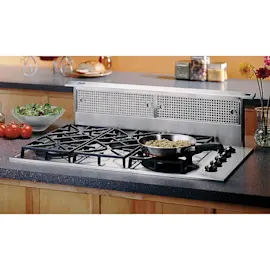
Yes. For the KitchenAid KXD4636YSS0 retractable downdraft vent system, the venting system must terminate to the outside for proper operation; it should not exhaust into an attic or any other enclosed space (see the KXD4636YSS0 owner's manual).
What “vented outside” means for this model
The ductwork needs to carry cooking smoke, vapors, and odors from the downdraft vent to an exterior wall or roof cap.
- Terminate the duct at an exterior wall cap or roof cap
- Do not terminate the duct in an attic, crawlspace, or other enclosed area
- Use heavy (rigid) metal vent for best performance
- Keep duct length and elbows to a minimum to maintain airflow
- Seal duct joints and the exterior opening to prevent leaks
Ducting do’s and don’ts (quick reference)
| Item | Recommended | Avoid |
|---|---|---|
| Duct material | Heavy (rigid) metal vent | Plastic or metal foil vent |
| Termination point | Outside (wall or roof cap) | Attic or enclosed area |
| Elbows | Up to three 90° elbows | Back-to-back elbows |
| Wall cap style | Proper vent cap | 4-inch laundry-type wall caps |
Why it matters
Downdraft systems rely on ducted airflow to pull smoke and odors down and out. If the duct does not vent outdoors, performance drops sharply and moisture, grease, and odors can build up in the home.
Related part that supports good airflow
If airflow seems weak even with proper ducting, a clogged or damaged grease filter is a common cause. For this model, check and clean or replace the downdraft vent grease filter W10422877 as needed.
Last updated: January 2026
Do downdraft stove vents work?
Yes, a downdraft vent can work for everyday cooking, but it is most effective when you use it the way KitchenAid designed it for model KXD4636YSS0: start the vent before cooking, use the right pan placement, and adjust blower speed to match the heat and smoke.
How to get the best performance from a downdraft vent
We see the biggest performance gains when airflow is started early and the cooking setup helps the vent “capture” smoke and steam.
- Turn the vent on before you start cooking.
- Use the rear, larger element/burner area for tall pots and high-smoke cooking.
- Increase the blower speed as smoke and steam increase.
- Expect to use a slightly higher heat setting than normal when the vent is running.
- On gas cooktops, reduce blower speed or increase flame if the flame becomes unstable.
For the exact operating steps and usage notes for KXD4636YSS0, follow the KXD4636YSS0 owner's manual.
What “works” means for downdraft ventilation
Downdraft systems pull air sideways and down, so results depend heavily on capture and airflow. They typically perform best for:
- Light to moderate sautéing and simmering
- Odors and low to medium steam
- Cooktops where an overhead hood is not practical
They are typically less effective for:
- High-heat searing and wok cooking
- Very tall stockpots on front burners
- Heavy smoke events (for example, charring)
Quick comparison: downdraft vs. overhead hood
| Feature | Downdraft vent (like KXD4636YSS0) | Overhead range hood |
|---|---|---|
| Best at | Everyday vapors and odors near the intake | Capturing rising heat, smoke, and grease |
| Most sensitive to | Pan placement and timing | Hood height and coverage |
| Common use case | Island or open sightline kitchens | Most standard cooktop installs |
Why it matters
Using the vent correctly improves capture, reduces lingering odors, and helps keep grease from settling on cabinets and nearby surfaces. It also helps avoid gas flame issues by matching blower speed to burner settings.
Last updated: January 2026
What are the pros and cons of downdraft extractors?
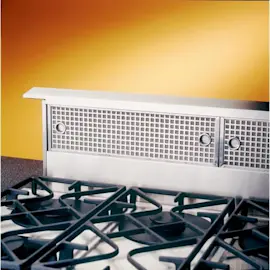
Downdraft extractors like the KitchenAid KXD4636YSS0 are ideal when you want ventilation without an overhead hood; the vent rises when needed to help remove smoke, cooking vapors, and odors. The tradeoffs are more installation planning and reduced capture with tall cookware.
Pros of a downdraft extractor
- Saves overhead space and keeps sightlines open (great for islands and open layouts)
- Retractable design stays out of the way when not cooking
- Helps remove smoke, vapors, and odors from the cooktop area
- Can be a clean, built-in look compared with a canopy hood
Cons and common limitations
- Tall pots can reduce capture; placing large or tall utensils on the rear element/burner improves results
- You may need a higher heat setting than normal when the vent is running
- On gas cooktops, airflow can affect flame stability; reducing blower speed or increasing the flame setting improves performance
- Installation is more complex; duct routing, blower configuration, and electrical connections must be planned (see the KXD4636YSS0 owner’s manual)
Quick comparison: downdraft vs. overhead hood
| Feature | Downdraft extractor (retractable) | Overhead hood |
|---|---|---|
| Visual impact | Low | Medium to high |
| Best for | Islands, open layouts | Most kitchens |
| Tall cookware capture | Often weaker | Often stronger |
| Gas flame interaction | Possible | Less common |
| Install complexity | Higher | Varies (often simpler) |
Tips to get the best performance
- Turn the vent on before you start cooking
- Use the rear cooking zone for tall stockpots and large pans
- If a gas flame wavers or igniter keeps sparking, reduce blower speed or increase the flame setting
- Keep airflow strong by cleaning the grease filter regularly; replace it if it is bent or heavily loaded (example: downdraft vent grease filter W10422877)
Why it matters
Downdraft ventilation is the right choice when an overhead hood is not practical, but performance depends on cookware height, burner placement, and keeping filters clean so the blower can move air efficiently.
Last updated: January 2026