Owner’s manual
 Error Codes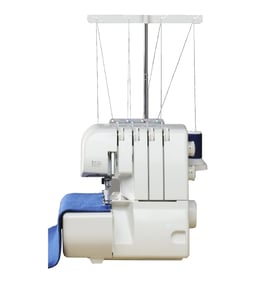

How do I know what model my Kenmore sewing machine is?
Your Kenmore sewing machine’s model number is printed on the machine’s nomenclature plate. On Kenmore 385-series machines, the model number typically starts with 385.; for your overlock sewing machine, the full model is 38516642090. Use the owner's manual to confirm the exact plate location and how to record the model and serial number.
Where to look for the model number
Check these common spots first (power unplugged):
- The back of the machine on a label or metal plate (common for overlock/serger models)
- The underside/base of the machine
- Inside or near the front cover or side access panel
- Near the power cord inlet or foot control connection
- On the original packaging or purchase paperwork (if you still have it)
What the number should look like (Kenmore 385-series)
Most Kenmore machines in this family show a prefix and then the full model.
| What you see on the plate | What it means | What to do |
|---|---|---|
385. |
Kenmore model family prefix | Keep reading the rest of the digits |
38516642090 |
Full model number | Use this for parts lookup and service |
| Serial number | Unique ID for your exact unit | Record it for your files |
Why it matters
We use the model number to match the correct parts diagrams, threading and tension instructions, and maintenance steps (cleaning, oiling, and adjustments). Using the wrong model can lead to ordering the wrong part or setting the machine up incorrectly.
Quick tips before you write it down
- Copy the model number exactly as printed, including all digits
- Record the serial number too; it is often requested for service history
- If the plate is hard to read, take a clear photo and zoom in
Last updated: February 2026
Is Kenmore sewing machine 38516642090 low shank?
We treat the Kenmore 38516642090 as an overlock (serger) model, and “low shank” is a presser-foot standard used for many regular sewing machines, not a reliable fit label for overlock feet. For the correct presser foot compatibility, use the foot types and accessory guidance in the owner's manual.
How to confirm the right presser foot for this model
Use these checks to avoid buying a foot that will not mount correctly:
- Match the foot to an overlock/serger attachment style (not a standard zigzag machine foot)
- Compare the mounting method (snap-on vs screw-on) shown for your machine
- Verify the foot is intended for Kenmore 385 overlock models, not just “Kenmore 385 sewing machines”
- Confirm the foot clears the upper and lower looper area and does not interfere with the knives
- Use the model and serial number from the machine’s nomenclature plate when cross-checking accessories
What “low shank” usually means (and why it can mislead here)
“Low shank” describes the distance and geometry between the presser bar and the needle plate on many conventional sewing machines. Overlock machines use different presser-foot designs because they sew with loopers, trimming knives, and a different stitch formation.
| Item | Regular sewing machine | Overlock (serger) like Kenmore 38516642090 |
|---|---|---|
| Common fit label | Low shank / high shank | Model-specific overlock feet |
| Stitch formation | Needle + bobbin | Needles + loopers |
| Clearance needs | Needle plate area | Loopers, knives, overedge path |
Why it matters
Using the wrong foot can cause poor feeding, skipped stitches, fabric damage near the knife area, or the machine locking up. Confirming the correct overlock foot style protects stitch quality and helps prevent unnecessary service.
If you are troubleshooting stitch quality after changing feet, our DIY content on sewing machine skipping stitches can help you narrow down needle, threading, and tension causes.
Last updated: February 2026
What year is the Kenmore sewing machine model 38516642090?
Kenmore model 38516642090 is an overlock (serger) in the Kenmore “385” family; that “385” prefix identifies the series, not a single production year. To pinpoint the exact year for your specific machine, use the serial number and identification plate locations shown in the owner's manual.
How to find the year for your exact machine
Use the machine’s serial number, not just the model family.
- Locate the nomenclature plate (ID plate) on the machine (the manual notes it’s on the machine and references the plate location pages).
- Write down the full model number and serial number exactly as shown.
- Check the front pages of the manual for any print codes or revision dates.
- Compare your serial number format to Kenmore 385-era ranges (many 385 machines span multiple decades).
- If you are troubleshooting an electronic display or code, match the code set to your machine type using Kenmore 385 error codes.
What “385” means (and why it matters)
The “385” prefix is a Kenmore model family used across many years. That is why two machines that both start with 385 can be from different decades.
Quick guide
| What you have | What it tells you | What it does not tell you |
|---|---|---|
| Model number 38516642090 | Exact model variant within the 385 family | The exact build year by itself |
| Serial number | Best identifier for production timing | Nothing unless you decode it |
| Owner’s manual edition/print info | Helps narrow the era | Not always the build date |
Why the year matters
The production year affects which accessories and service parts fit (needles, loopers, knives, belts), and it helps when you’re setting up threading, tension adjustments, cleaning, and oiling procedures for the correct version of the Kenmore overlock.
Last updated: February 2026
What is the difference between a sewing machine and an overlock sewing machine?
A standard sewing machine is built to construct garments with straight and zigzag stitches, while an overlock (serger) like the Kenmore 38516642090 is designed to trim fabric, overedge raw edges, and sew seams in one pass for a clean, professional finish.
What an overlock (serger) does differently
An overlock machine is purpose-built for seam finishing and knitwear. The Kenmore overlock manual describes overlocking as trimming, overedging, and seaming “all in one operation,” which is especially useful for shirts, blouses, swimsuits, and knit sportswear.
- Trims the seam allowance as you sew (uses a cutting knife)
- Wraps thread around the fabric edge to prevent fraying
- Uses multiple threads/loopers to form a stretchy, durable seam
- Produces a thread “chain” at the start and end of a seam that you secure
- Excels at fast seam finishing and professional-looking edges
For model-specific operation details (threading, tension, cleaning, oiling, and seam securing methods), use the owner's manual.
What a regular sewing machine is better for
A conventional sewing machine is the better choice when you need construction and detail work beyond edge finishing.
- Topstitching and decorative stitching
- Buttonholes and zipper installation
- Precise cornering and pivoting
- Sewing on patches, elastic, and trims with controlled stitch placement
- General-purpose repairs and alterations
Quick comparison
| Feature | Regular sewing machine | Overlock (serger) like Kenmore 38516642090 |
|---|---|---|
| Builds garments | Yes | Yes, mainly seams |
| Finishes raw edges | Sometimes (zigzag/overcast) | Yes, primary purpose |
| Trims fabric while sewing | No | Yes |
| Best for knits/stretch | Good | Excellent |
| Threading complexity | Lower | Higher (multiple threads/loopers) |
Why it matters
Choosing the right machine saves time and improves results. An overlock machine gives you strong, stretchy seams and clean edges in one step, while a regular sewing machine handles construction details and finishing techniques a serger cannot do.
Last updated: February 2026
What is an overlock sewing machine?
An overlock (serger) sewing machine, like the Kenmore 38516642090, stitches a seam while trimming and overcasting the fabric edge in one pass. It creates a clean, durable finish that helps prevent fraying, especially on knits and garments.
What an overlock machine does (and why it is different)
Overlock machines are built to finish raw edges as you sew, using loopers and multiple threads to wrap the fabric edge.
- Trims the seam edge with a cutting knife as you sew
- Overedges the fabric to reduce fraying and unraveling
- Uses multiple threads (commonly 3 or 4) for strength and stretch
- Produces a flatter seam allowance that is easy to press
- Leaves a thread chain at the start and end of a seam (normal operation)
Common uses for an overlock (serger)
The Kenmore overlock is designed for garment construction and edge finishing where a standard sewing machine stitch is not ideal.
| Fabric or project | Why an overlock stitch helps |
|---|---|
| Knits and stretch fabrics | Seam stretches without popping |
| Shirts, blouses, swimwear | Clean, professional-looking inside seams |
| Raw-edge finishing | Prevents fraying on woven fabrics |
| Fast seam assembly | Trims and finishes in one step |
How to keep seams from unraveling
Because an overlock stitch forms a chain, you typically secure the seam ends so the stitching does not loosen.
- Leave a thread chain about 5 cm (2 in.) at the beginning and end
- Knot the thread tails together
- Weave the chain back into the stitches with a large-eye needle
- Apply a small amount of seam sealant at the edge, then trim the chain
For model-specific threading, tension adjustment, and care steps, follow the owner's manual.
Why it matters
Using an overlock machine correctly gives you stronger seams, cleaner edges, and better results on stretch fabrics. Proper threading, tension, and end-securing also prevents skipped stitches, loose seams, and thread breakage.
Last updated: February 2026