Owner’s manual
 Error Codes


How do I reset my Kenmore freezer?
To reset your Kenmore freezer model 25328042808, unplug it from the wall outlet for 1 minute, then plug it back in; the control runs a self-check and returns to normal operation. For power-surge or “weird display” issues, this reset is the first fix to try.
- Unplug the freezer from the wall outlet.
- Wait 1 full minute.
- Plug the freezer back in.
- Let the control complete its self-check.
- Allow several hours for temperatures to stabilize after any setting changes.
For model-specific control details (including lock/unlock and temperature settings), use the 25328042808 owner's manual.
Some versions of this Kenmore upright freezer use an electronic temperature control:
- If the display shows “0”, the freezer is OFF; press the UP symbol until you reach your desired setting.
- If “L” appears, the control is locked; press Alarm Reset for about 3 seconds to unlock.
| What you see | What it means | What to do |
|---|---|---|
0 |
Freezer is off | Press UP to turn it on and set temperature |
L |
Control lock is on | Hold Alarm Reset ~3 seconds to unlock |
| Temp flashing and beeping | Temperature too high | Confirm power, close door, press Alarm Reset to silence |
A proper reset clears control glitches caused by power interruptions and helps the freezer resume normal cooling logic. After resetting, give the cabinet time to pull down to temperature before judging performance.
Last updated: January 2026
How many cubic feet is Kenmore freezer Model 25328042808?
The Kenmore upright freezer model 25328042808 is typically in the 15 to 17 cubic foot class. For the exact capacity for your specific unit, we recommend checking the model’s rating information and the specifications section in the 25328042808 owner's manual.
Capacity is usually listed on the model and serial tag or in the specifications section of the manual.
- Look for the model/serial plate inside the freezer (commonly on the upper left interior wall on upright models).
- Check for a capacity or cu. ft. listing on the rating label.
- Use the exact model number (25328042808) when comparing specs.
- If the label is hard to read, take a photo and zoom in to find the capacity line.
Cubic feet is the total interior volume, not the usable space after shelves, bins, and the evaporator cover are accounted for.
| Capacity class | What it usually fits well | Typical use case |
|---|---|---|
| 15 to 17 cu. ft. | Bulk meats, frozen meals, seasonal items | Family overflow freezer |
| Under 15 cu. ft. | Smaller bulk loads | Apartment or garage backup |
| Over 17 cu. ft. | Large bulk storage | Big households, hunters, batch cooking |
Knowing the cubic feet helps you plan food storage and freezing loads. For example, Kenmore guidance commonly limits freezing to about 3 pounds of fresh food per cubic foot at one time during loading, which helps the freezer pull down temperature efficiently.
Last updated: January 2026
What causes an upright freezer to stop freezing?
For Kenmore upright freezer model 25328042808, the most common reasons it stops freezing are restricted airflow (overpacking or blocked vents), poor heat release (dirty condenser area or not enough clearance), or a door that is not sealing. Start with temperature control, door seal, and airflow checks in the 25328042808 owner's manual.
- Confirm the temperature control is set correctly; if it was bumped warmer, cooling can stop.
- Allow a full cool-down period after plugging in; safe storage cooling takes about 4 hours.
- Avoid lining shelves with foil, wax paper, or paper towels; liners block cold air circulation.
- Reduce door openings and long searches; warm air entering raises temperature fast.
- Make sure the freezer is level so the door closes and seals properly.
Cold air has to circulate freely in an upright freezer. If airflow is blocked, the cabinet can look “on” but food softens.
| What you see | Likely cause | What to do |
|---|---|---|
| Food soft on top, colder below | Warm air entering from frequent openings | Organize food, open door less, close promptly |
| Frost buildup and warmer temps | Door not sealing or door misaligned | Check gasket contact, level the unit |
| Temps rise after adding groceries | Too much unfrozen food at once | Freeze smaller batches; distribute packages |
A small air leak can stop the freezer from holding temperature.
- Inspect the gasket for gaps, tears, or stiffness.
- Clean the gasket and the cabinet sealing surface.
- If the door does not self-close easily, re-level the freezer (front slightly higher helps the door close).
- If the gasket is damaged, replace the freezer door gasket 5304507199.
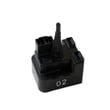
If the freezer has power but won’t cool and the compressor struggles to start (clicking, short cycling), the start components are common suspects.
- Consider the freezer start relay 297259515 if the compressor will not start reliably.
- If the compressor starts but cooling is still weak, airflow or sealed-system issues may be involved.
A freezer that is not freezing can thaw food quickly; correcting door sealing, airflow, and proper cool-down/loading prevents temperature swings and reduces frost and moisture problems.
Last updated: January 2026