 Installation guide
 Owner’s manual


How many cubic feet is a Kenmore Model 11024692300 washer?
The Kenmore washer model 11024692300 is a top-load design; washers in this Kenmore 110 series typically fall around 3.2 to 3.5 cu. ft. capacity. For the exact capacity for your specific 11024692300, we recommend confirming it in the 11024692300 owner's manual.
How to confirm the exact capacity for model 11024692300
Capacity is usually listed in the specifications section or product information pages of the manual.
- Check the Specifications or Product features section in the 11024692300 owner's manual
- Look for terms like “capacity,” “basket volume,” or “tub capacity”
- If your washer has a model/serial tag under the lid, match it to 11024692300 before using any spec sheet
- If you are comparing to another washer, compare cu. ft. (not “large/extra-large” marketing terms)
Typical capacity range (what most owners can expect)
If you need a working estimate for load planning, these are common ranges for Kenmore 110 top-load washers of this style.
| Capacity (cu. ft.) | What it usually means | Best for |
|---|---|---|
| 3.0 to 3.2 | Standard basket | Everyday mixed loads |
| 3.2 to 3.5 | Larger standard basket | Towels, jeans, medium bedding |
| 3.6 to 4.0+ | Extra-large basket | Bulkier bedding, larger households |
Why it matters
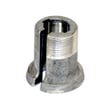
Washer capacity affects how much you can load without poor agitation, out-of-balance spinning, or longer cycle times. Using the right load size also helps protect drive components like the washer motor coupling 285753A and reduces strain during spin.
Last updated: February 2026
How to hard reset Kenmore washer?
To hard reset your Kenmore washer model 11024692300, we recommend a simple power reset first: unplug the washer (or switch off the breaker) for 1 minute, then restore power and restart a cycle. This clears minor control glitches and cycle hang-ups.
Hard reset steps (safe, no tools)
- Press the Cycle Control knob in to stop the washer.
- Unplug the washer (or turn off the circuit breaker) for 60 seconds.
- Plug back in (or turn breaker on).
- Close the lid and pull out the Cycle Control knob to start.
- If the washer still acts up, set the cycle again and try a different cycle selection.
For model-specific operating steps like stopping and restarting with the Cycle Control knob, use the 11024692300 owner’s manual.
If a hard reset does not fix it
A reset helps with temporary issues; repeated problems usually point to a part or adjustment issue.
Common symptoms and what to check next:
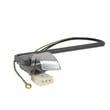
- Washer will not spin or agitate: lid switch not sensing lid closed; inspect the washer lid switch WP3949238.
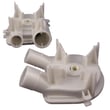
- Won’t drain or leaves water in tub: drain pump or hose restriction; inspect the washer drain pump WP3363394.
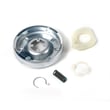
- Agitates weakly or slips: worn drive coupling; check the washer motor coupling 285753A.
- Shakes or walks: leveling feet not set, or installation not stable.
Quick troubleshooting table
| What you see | What the reset can do | What to check if it returns |
|---|---|---|
| Timer seems “stuck” | Clears a temporary pause | Lid switch, timer, cycle selection |
| No spin after refill | Clears a control hiccup | Lid switch, drain pump |
| Intermittent agitation | Sometimes restores operation | Motor coupling, clutch |
Why it matters
Resetting restores normal operation after power blips and minor control interruptions. If the same symptom returns, checking core safety and drive components (lid switch, drain pump, motor coupling) prevents repeat cycle failures and unnecessary wear.
For vibration and stability issues after moving the washer, follow the leveling procedure in the 11024692300 installation guide.
Last updated: February 2026
How to identify a Kenmore washer model?
Your Kenmore washer model number is printed on the model and serial number label. On Kenmore model 11024692300, the label is located under the washer lid; record the full model number exactly as shown so we can match the correct washer parts and diagrams. See the 11024692300 owner's manual for the label location and product record section.
Where to look on the washer
Check these common spots in this order:
- Under the lid on the rim or underside area (this is the correct location for 11024692300)
- Around the lid opening (top edge of the cabinet)
- On the rear panel near the power cord entry
- Inside the control console area (less common)
What the model number looks like
Kenmore washers often use a numeric format that starts with 110. Use the complete number, including all digits.
| Item | Example | Why it matters |
|---|---|---|
| Model number | 11024692300 | Identifies the exact design and parts list |
| Serial number | Varies | Helps date the unit and match revisions |
| Product type | Washer | Ensures you land in the right parts category |
Tips to avoid ordering the wrong part
Use these quick checks before you buy a replacement part:
- Match the entire model number, not just the first 3 digits
- Copy it directly from the label (avoid guessing from the console styling)
- If the label is worn, clean the area gently and use a flashlight at an angle
- When troubleshooting, confirm the symptom first; for example, a no-spin issue can point to a lid switch like the washer lid switch WP3949238 or a drive issue like the washer motor coupling 285753A
Why it matters
Kenmore model numbers can look similar, but internal components (lid switch, drain pump, gear case, timer) can differ by revision. Using the exact 11024692300 model number keeps your repair accurate and prevents returns.
Last updated: February 2026
How to unclog drain hose on Kenmore washer?
To unclog the drain hose on your Kenmore washer model 11024692300, unplug the washer, remove as much water as possible, then clear debris from both the standpipe end and the washer end of the hose. Reinstall the hose exactly as shown in the 11024692300 installation guide to prevent leaks and siphoning.
Safety and prep
- Unplug the washer (or switch off the breaker).
- Turn off both water faucets.
- Protect the floor with towels and a shallow pan.
- Remove tub water with a cup or wet/dry shop vacuum.
- Keep a bucket ready for hose water.
Step-by-step: clear the clog
- Pull the hooked end out of the standpipe or laundry tub; remove lint, coins, or small items.
- Straighten the hose run and rotate the hook to eliminate kinks; do not force extra hose into the standpipe.
- Move the washer forward and locate the drain hose connection at the bottom of the cabinet.
- Use pliers to open the clamp, slide it back, then twist the hose back and forth while pulling it off.
- Flush the hose with hot tap water or run a small drain snake through it until water flows freely.
- If the hose is clear but draining is still slow, check the pump inlet for debris.
Reinstall the hose correctly
Use these checks from the 11024692300 installation guide:
| Check | Correct setup | Prevents |
|---|---|---|
| Hooked end | Keep the hooked end, do not straighten | Backflow, siphoning |
| Standpipe fit | Secure but leaves an air gap | Siphoning |
| Excess hose | Do not force into standpipe or lay in tub | Slow drains, clogs |
When a part is the real problem
A clog often jams the pump impeller. If the washer still will not drain after the hose is clear, the washer drain pump WP3363394 is the most common fix.
Why it matters
A partially blocked drain path causes slow draining, standing water, and weak spin performance. Correct hose routing and an air gap help the pump move water efficiently.
Last updated: February 2026
Is it worth repairing a Kenmore washing machine?
Yes, repairing a Kenmore washer is usually worth it when the fix restores reliable washing and spinning for far less than replacing the machine. For Kenmore model 11024692300, common wear parts are serviceable, and a targeted repair often extends the washer’s usable life.
How we decide if repair makes sense
Use these practical checkpoints before spending money on parts or labor:
- Total repair cost vs. replacement: If the repair is clearly less than a comparable new washer, repair wins.
- What failed: Simple mechanical failures (drain, lid switch, coupling) are typically good repair candidates.
- How the washer behaves: No-spin, no-drain, or won’t-start problems are often isolated to one part.
- Condition of the tub and basket: Excessive rust, severe leaks, or major structural damage pushes toward replacement.
- Downtime tolerance: If you need same-day laundry, a quick part swap can beat shopping and delivery.
High-value repairs for this model (common examples)
These parts often solve the most common symptoms on direct-drive Kenmore top-load washers:
| Symptom | Likely area | Example part for 11024692300 |
|---|---|---|
| Won’t drain or leaves water in tub | Drain system | Washer drain pump WP3363394 |
| Won’t spin or agitates poorly | Drive connection | Washer motor coupling 285753A |
| Won’t start or stops when lid opens | Safety interlock | Washer lid switch WP3949238 |
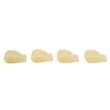
| Agitator “ratchets” or doesn’t move clothes well | Agitator dogs/cam | Agitator dog 80040 |
What to check first (before buying parts)
We recommend these quick checks to avoid replacing the wrong component:
- Confirm the washer fills, agitates, drains, and spins in at least one cycle.
- Listen for the motor: hums but won’t move often points to a coupling or jam.
- Inspect the drain hose for kinks and verify the standpipe is not backing up.
- If it will not spin, test lid closure and actuator feel; a lid switch issue is common.
- Follow the safety and service guidance in the 11024692300 owner’s manual before attempting any repair.
Why it matters
A well-chosen repair prevents repeat breakdowns and keeps operating costs predictable. The manual also emphasizes safe servicing practices and only performing repairs you understand and have the skills to carry out, which helps you avoid damage and injury.
Last updated: February 2026
What is the average lifespan of a Kenmore washer?
A Kenmore washer typically lasts 10 to 15 years. For your Kenmore 11024692300, you can usually reach the high end of that range by avoiding overloads, using the right detergent amount, and keeping the tub and hoses in good condition (see the 11024692300 owner's manual).
What affects washer lifespan the most
- Load size and balance: loads should move freely during washing; chronic overloading strains the drive system.
- Water quality: hard water speeds up mineral buildup in valves and hoses.
- Drain performance: slow draining makes the pump work harder and can leave residue behind.
- Spin stress: repeated out-of-balance spins wear suspension and drive components.
- Routine care: basic cleaning and inspection prevents small issues from becoming major repairs.
Common wear items that can shorten life
If the washer stops agitating, won’t spin, or won’t drain, these parts are frequent culprits on many Kenmore top-load designs:
| Symptom | Common cause | Example part for this model |
|---|---|---|
| Won’t agitate well | Worn agitator dogs/cam | Agitator dog 80040 |
| Won’t drain | Pump jammed or failing | Washer drain pump (check parts list) |
| Won’t spin / stops mid-cycle | Lid switch not closing | Washer lid switch WP3949238 |
| Loud during spin / poor spin | Clutch or gearcase wear | Clutch 285785 |
Simple habits that add years
- Keep loads evenly distributed; mix large and small items.
- Use only the needed detergent; excess suds can cause residue and odors.
- Periodically run a hot wash (empty) to help reduce buildup.
- Inspect fill hoses for bulges or cracking and replace as needed.
- Address new noises early; a small drive issue can become a gearcase repair.
Why it matters
Washer lifespan is mostly about reducing mechanical stress on the drive and spin system. Good loading habits and quick fixes help protect higher-cost components like the drive motor and gearcase.
Last updated: February 2026





