Installation guide
 Owner’s manual
 Error Codes


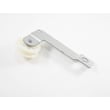
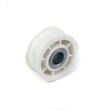
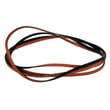
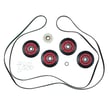
Can I search for Whirlpool parts by model?
Yes. For Whirlpool dryer model WED9610XW0, searching by the full model number is the most accurate way to get compatible replacement parts because it ties your results to the correct parts list and diagrams for your exact dryer.
How to search by model number (best practice)
- Use the complete model number: WED9610XW0 (not a partial match)
- Confirm the model number from the dryer’s ID tag before ordering
- Use the parts diagrams to match the part’s location and description
- Compare the part name and part ID, not just how it looks
- When in doubt, cross-check the part in the WED9610XW0 owner’s manual
What you’ll typically find when you search WED9610XW0
| What you see | What it helps you do | Example for this model |
|---|---|---|
| Parts list | Confirms the exact replacement item | Heating, drum support, door parts |
| Diagrams (exploded views) | Identifies where the part fits | Drum, blower housing, lint duct |
| Part ID and description | Prevents ordering the wrong version | Dryer heating element WP8544771 |
Why it matters
Whirlpool often uses similar-looking parts across multiple 27-inch electric dryers. Searching by WED9610XW0 helps avoid mismatches that can cause poor drying, noise, or repeat failures after installation.
Quick examples of model-matched parts
- Dryer heating element WP8544771 (no heat or weak heat symptoms)
- Dryer thermistor WP8577274 (temperature sensing issues)
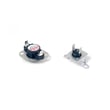
- Dryer thermal cut-off fuse kit 279973 (overheating or no-heat protection)
Last updated: February 2026
What's the life expectancy of a Whirlpool Duet dryer?
A Whirlpool Duet-style electric dryer like model WED9610XW0 typically lasts about 10 years with normal household use. With consistent vent cleaning, correct cycle selection, and prompt repair of wear items (belt, rollers, idler), many dryers reach 12 to 15 years.
Typical lifespan and what changes it
- Average: ~10 years for an electric dryer
- Often achievable with good care: 12 to 15 years
- Shortens lifespan: restricted venting, frequent overloads, high-heat use on every load
- Extends lifespan: strong airflow, level installation, routine lint removal
Quick checklist to help your dryer last longer
- Clean the lint screen every load and wash the screen film buildup periodically.
- Keep the exhaust duct short, smooth, and free of lint; confirm strong airflow outside.
- Avoid overloading; heavy loads strain the drive system and drum supports.
- Use the right cycle (sensor cycles when available) to reduce unnecessary heat time.
- If you hear squealing or thumping, service the drum support and belt path early.
Common wear items vs. what you’ll notice
| Symptom | Most common wear area | What we recommend |
|---|---|---|
| Squealing, rumbling | Drum rollers/supports, idler | Inspect and refresh wear parts with a kit like dryer repair kit 4392067 |
| Long dry times | Airflow restriction, blower wheel, heater circuit | Check venting first; then inspect blower and heat components |
| No heat | Heater circuit components | Test safely; replace failed parts such as dryer heating element WP8544771 when confirmed |
Why it matters
A dryer usually “wears out” from heat stress and friction, not just age. Keeping airflow strong and replacing inexpensive wear parts early helps protect higher-cost components like the drive motor and control.
For model-specific use, maintenance, and cycle guidance, follow the WED9610XW0 owner's manual.
Last updated: February 2026
What are the common problems with Whirlpool dryers?
Common problems we see on the Whirlpool WED9610XW0 electric dryer include a no-start condition (power, door, or control issue), no heat (240V supply or a failed heat-safety part), and unusual noises or vibration from an unlevel install or worn drum support components. See the WED9610XW0 owner's manual for model-specific troubleshooting steps and diagnostic codes.
Most common symptoms (and what they usually mean)
- Dryer will not run: door not fully closed, START not pressed firmly, or a power supply issue
- Drum turns but no heat: one leg of power is missing (common with electric dryers) or a heat circuit component has opened
- “L2” or low-voltage type message: the dryer can run but the heater may not energize due to home power supply issues
- “PF” power failure message: cycle was interrupted; restart the cycle
- Unusual thumping or rattling: small items caught at the drum edge, or the dryer sat unused for a while
- Vibration or banging: dryer not level, or load is balled up
Quick checks we recommend first
- Confirm the dryer is connected to the correct 240-volt electric dryer supply.
- Check both household fuses or breakers (many electric dryers use two).
- Make sure the door is fully closed and the START button is pressed firmly.
- Run a Timed Dry heated cycle (not Air Only) and check for heat after about 5 minutes.
- If noise is the complaint, check pockets and inspect the drum edges for coins, buttons, or clips.
Parts that commonly fix these problems
| Symptom | Common part involved | Example part for WED9610XW0 |
|---|---|---|
| No heat | Heating circuit component | Dryer heating element WP8544771 |
| Squealing, rumbling, poor tumbling | Drum support and belt-drive wear items | Dryer repair kit 4392067 |
| Temperature issues (overdrying, underdrying) | Temperature sensing | Dryer thermistor (model-specific) |
Why it matters
A dryer that runs with no heat often points to a power supply problem (one breaker tripped) or a safety device opening due to overheating. Catching that early helps prevent repeat failures and improves drying performance.
Last updated: February 2026