Installation guide
 Owner’s manual
 Error Codes
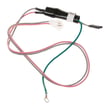

Do GE dryers have a thermal fuse?
Yes. GE electric dryers such as model GFDN160EJ0WW use temperature-safety devices (commonly called a thermal fuse or thermal cut-off) to shut the dryer down if it overheats, and overheating is most often caused by restricted airflow. For model-specific safety and venting requirements, use the GFDN160EJ0WW installation guide.
What a thermal fuse does (and what it looks like in symptoms)
A thermal fuse is a one-time safety device. When it opens, it cuts power to key circuits so the dryer cannot run normally until the cause of overheating is fixed.
Common symptoms include:
- Dryer will not start (no motor run)
- Dryer starts but stops quickly
- No heat on an electric dryer (depending on design)
- Repeated failures after replacement (airflow problem not corrected)
What usually causes it to blow
On the GFDN160EJ0WW, the most common root cause is poor venting or lint buildup. The manual and install instructions emphasize proper exhausting and avoiding plastic or foil duct.
Check these airflow items first:
- Clean the lint filter before every load (and make sure it seats fully)
- Inspect the exhaust hood outside; flaps should move freely and be clear of lint or nests
- Replace crushed, kinked, or excessively long vent runs
- Use 4-inch rigid metal duct or UL-listed flexible metal duct (no plastic)
- Make sure internal duct joints are secured and do not separate
Quick troubleshooting path (safe, practical)
- Unplug the dryer (or switch off the breaker) before opening panels.
- Verify the home power supply: electric dryers can tumble with one breaker tripped but not heat.
- Restore airflow: clean lint screen, blower area (if accessible), and the full vent to the outside.
- If the dryer still will not run or heat, test the thermal fuse and thermostats with a meter.
Related parts that often get checked during an overheat/no-heat repair
These parts are not the thermal fuse, but they are commonly involved in heat and airflow control:
| Part | What it affects | When it’s suspect |
|---|---|---|
| GE dryer heater assembly WE11X21156 | Heat production | No heat, weak heat |
| Dryer Heating Element Control Thermistor (WE4M398) | Temperature sensing | Overheating, temp errors |
| Outlet Control (WE4M448) | Exhaust temperature sensing/control | Overheating, cycling issues |
Why it matters
A blown thermal fuse is a warning sign. Replacing the fuse without fixing venting and lint restrictions can lead to repeat failures, longer dry times, and overheating.
Last updated: February 2026
How to reset GE dryer not heating?
Resetting a GE GFDN160EJ0WW electric dryer is simple: unplug the dryer (or switch both dryer breakers off) for 1 minute, then restore power and start a heated cycle. If it still tumbles but won’t heat, the issue is usually power supply, airflow, or a failed heating component.
Reset steps (safe and effective)
- Press Power to turn the dryer off.
- Unplug the power cord (or turn both breakers off at the panel).
- Wait 60 seconds.
- Restore power.
- Press Power, choose a heated cycle (not Air Fluff/No Heat), then press Start/Pause.
- If the display is dark, press Power to “wake” the controls.
For control and cycle details, use the GFDN160EJ0WW owner's manual.
What to check next if it still won’t heat
1) Power supply (most common on electric dryers)
Electric dryers can run but not heat if only one breaker trips.
- Reset both breakers (or replace both fuses if applicable)
- Confirm the outlet is fully seated and the cord is secure
- If you have a meter, verify proper voltage at the receptacle (a technician can do this quickly)
2) Airflow and venting
Restricted exhaust can cause poor heating and long dry times.
- Clean the lint screen
- Inspect the vent hose for kinks or crushing
- Clear lint buildup in the duct and outside hood
- Make sure duct joints are secured properly
Venting and setup requirements are covered in the GFDN160EJ0WW installation guide.
3) Heating system parts
If power and airflow are good, a failed heater circuit part is likely.
| Symptom | Common suspect | Example part for this model |
|---|---|---|
| Tumbles, no heat | Heater assembly or element | GE dryer heater assembly WE11X21156 or dryer heating element WE11M10001 |
| Overheats or shuts heat off early | Thermistor | Dryer heating element control thermistor WE4M398 |
Why it matters
A “reset” clears minor control glitches, but no-heat problems on an electric dryer are usually caused by a tripped breaker, blocked exhaust, or a failed heater/thermistor. Fixing the root cause restores normal drying and helps prevent repeat overheating issues.
Last updated: February 2026
What is the life expectancy of a GE dryer?
A GE electric dryer like model GFDN160EJ0WW typically lasts about 10 years with normal household use. Consistent airflow (clean lint filter and venting), avoiding overloads, and addressing unusual noises or heat issues early are the biggest factors in reaching that lifespan.
What affects dryer lifespan the most
- Airflow and lint control: Clean the lint filter before every load and keep the exhaust vent clear.
- Load size: Overloading strains the drive motor, drum belt, and drum support parts.
- Heat management: Restricted airflow can overheat the heater circuit and thermostats.
- Wear parts condition: A worn belt, idler pulley, or drum glides can cause slipping, squealing, or thumping.
- Routine cleaning: Annual internal lint removal by a qualified technician helps prevent heat and airflow problems.
Maintenance checklist for GFDN160EJ0WW
We recommend following the care steps in the GFDN160EJ0WW owner’s manual. Key habits include:
| Task | How often | Why it matters |
|---|---|---|
| Clean lint filter | Every load | Maintains airflow and drying performance |
| Check venting for restriction | Monthly | Prevents long dry times and overheating |
| Avoid overloading | Every load | Reduces strain on belt, motor, and drum supports |
| Internal lint vacuum (technician) | Yearly | Helps protect heater and airflow path |
When a “worn part” is shortening life
If the dryer runs but makes noise, stops tumbling, or dries inconsistently, common wear items are often involved. For this model, these parts are frequently replaced:
- GE dryer drum belt WE03X29897 (drum stops turning or slips)
- Dryer idler pulley WE03X31620 (squealing, belt tension issues)
- Dryer drum glide bearing, upper WE03X37320 (scraping, thumping, drum drag)
- Dryer heating element WE11M10001 (no heat or weak heat in an electric dryer)
Why it matters
A dryer that is kept clean and ventilated dries faster, runs cooler, and puts less stress on the heater assembly, motor, and drum support system. That combination is what most often separates a 6 to 8 year dryer from a 10 year dryer.
Last updated: February 2026