Owner’s manual
 Error Codes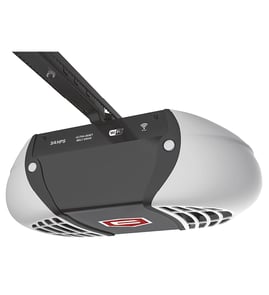



How do I know what model Craftsman garage door opener I have?
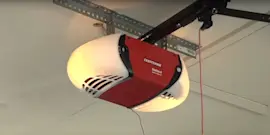
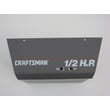
Your Craftsman garage door opener’s model number is printed on the opener’s ID label on the motor unit (the power head mounted to the ceiling). For this unit, the owner documentation shows the model as 139.5364812; use that exact number when looking up parts and programming steps in the owner's manual.
Where to look for the model number
Check these common label locations on the motor unit:
- Behind the light lens cover (near the bulb area)
- On the front or side panel near the control buttons
- Near the wiring terminals or logic board cover
- On the back of the motor housing (facing the garage door)
What to write down (and why)
Record the details exactly as shown on the label.
| Item on label | Example | Why it matters |
|---|---|---|
| Model number | 139.5364812 | Matches the correct parts list and manual |
| Serial number | Varies | Helps identify production run and compatible accessories |
| Motor type/drive | Chain or belt (varies by unit) | Helps when choosing repair procedures and replacement parts |
If the label is missing or unreadable
Use these practical checks to identify the opener family so you can proceed with troubleshooting:
- Look for a LEARN button on the motor unit (used to program remotes)
- Note the number of light bulbs and lens style
- Check whether you have Safety reversing sensors at the bottom of the door tracks
- Compare your wall control style (push button vs. bar)
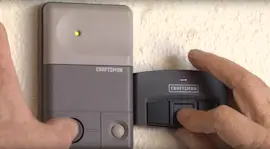
For programming and remote pairing steps, follow the how to program garage door opener remotes video.
Why it matters
Using the exact model number prevents ordering the wrong parts and ensures you follow the correct setup steps for features like Security+ remote programming, safety sensor alignment, and travel or force adjustments.
Last updated: February 2026
Is it worth repairing a 20 year old garage door opener?
In most cases, repairing a 20-year-old garage door opener is not worth it because it is beyond the typical 10 to 15 year lifespan. For a Craftsman 1395364812 1/2-hp garage door opener, replacement usually delivers better reliability and makes it easier to keep critical safety features properly adjusted and tested.
When a repair still makes sense
A repair is worth doing when the fix is simple, low-cost, and you can confirm safe operation afterward.
- The opener runs but needs minor adjustment (travel limits or force)
- The door reverses incorrectly and you can correct it with proper testing
- The issue is clearly external to the opener (binding door, dry rollers, poor balance)
- You need a short-term fix while planning a replacement
When replacement is the better investment
If you are seeing repeated failures, intermittent operation, or safety reversal problems that keep coming back, replacement is the smarter long-term move.
- The motor struggles, stalls, or overheats
- The opener works sometimes, then stops responding
- The door will not consistently reverse during the monthly safety test
- You have to keep increasing force settings to get the door to move
- Multiple components are worn (drive system, sensors, logic board)
Safety checks we recommend before spending money
Your owner’s manual calls out a monthly safety reversal test and a specific reversal standard: the door must reverse when it contacts a 1-1/2 inch object (or a 2x4 laid flat). Use the owner's manual to follow the adjustment and test steps exactly.
| Check | What you are looking for | What it points to |
|---|---|---|
| Safety reversal test | Door reverses on a 1-1/2 inch object | Safe travel/force setup |
| Door balance | Door stays near mid-travel when disconnected | Door hardware is OK |
| Force setting trend | Force keeps needing increases | Binding door or failing drive/motor |
Why it matters
A garage door opener is only as safe as its reversal system and door condition. If the door is not properly balanced and lubricated, it may not reverse when required, which increases the risk of injury and also accelerates wear on the opener.
For troubleshooting patterns (including light flashes and diagnostic behavior), use our Craftsman error codes guide to narrow down whether you are dealing with sensors, travel limits, or a control issue.
Last updated: February 2026
What are the common problems with Craftsman garage door openers?
Common problems on the Craftsman 1395364812 1/2-hp garage door opener are safety sensor issues that prevent closing (often with blinking opener lights), remote or wall-control problems, and door or drive-system conditions that make the opener stop or reverse. Our owner's manual also emphasizes testing the safety reversing sensors and keeping the door properly balanced and lubricated.
Most common symptoms and what they usually mean
- Door will not close; opener lights blink: the safety reversing sensors are misaligned, blocked, or not connected.
- Remote will not run the opener: remote needs programming, battery replacement, or the opener is reporting a diagnostic condition.
- Door starts down then reverses: sensor beam is interrupted, or the door is binding and triggering reversal.
- Door stops while opening: door travel is obstructed or the door is hard to move.
- Intermittent operation: loose wiring at sensors or wall control, or a failing control component.
Quick checks we recommend first (safe, no special tools)
- Check the safety sensor LEDs: both sensors should show an indicator light; clean the lenses and remove any obstruction.
- Confirm sensor alignment: sensors should face each other and sit low near the floor (typically within about 6 inches).
- Test the Protector System: try closing the door with an object in the doorway; the door should not close and the opener lights should flash.
- Reprogram the remote: follow the programming steps in the manual if the remote will not activate the door.
- Manually check door movement: with the door disconnected from the opener, the door should move smoothly and stay balanced; binding or a heavy door causes reversals.
Common problems at a glance
| Problem area | Typical symptom | What to do first |
|---|---|---|
| Safety reversing sensors | Won’t close; lights blink | Clear, align, verify LEDs, re-test |
| Remote/keypad | No response | Replace battery, reprogram |
| Door balance/binding | Reverses or stops | Inspect rollers/tracks; address door hardware issues |
| Wiring/wall control | Intermittent or dead control | Check connections; look for pinched/broken bell wire |
Why it matters
The safety reversing sensors are designed to prevent serious injury; if they are misaligned or obstructed, the opener is designed to stop closing. A door that is not balanced or not lubricated can also keep the opener from reversing correctly and can lead to repeated shutdowns.
For diagnostic light patterns and model-specific troubleshooting steps, use Craftsman error codes.
Last updated: February 2026
Where can I buy Craftsman garage door opener parts?
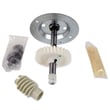
You can buy replacement parts for your Craftsman 1395364812 1/2-hp garage door opener from the parts list for this model on Sears PartsDirect. Use the diagrams to match the exact part you need, then confirm compatibility using the model number 1395364812.
How we recommend finding the right part
- Start with the model number 1395364812 to avoid ordering the wrong item.
- Use the exploded-view diagrams to identify the exact component location.
- Compare the part description to what you see on the opener (motor unit, rail, trolley, sensors, etc.).
- Check your documentation for accessory and hardware names used for your opener.
- If you are troubleshooting first, look up the symptom or blink pattern before ordering parts.
Common parts and accessories people replace
Many Craftsman openers of this type commonly use parts and accessories like these (availability varies by model and revision):
| What you need | What it affects | Typical symptom |
|---|---|---|
| Safety reversing sensors | Door closing safety | Door will not close, lights blink, sensor LEDs off or flicker |
| Remote control / wall control | Operation and programming | Remote will not work, wall button intermittent |
| Rail, trolley, chain/belt components | Door travel | Motor runs but door does not move, jerky travel |
| Light lens / light control accessories | Lighting | Light cover broken, light behavior issues |
Before you order: quick checks that prevent wrong-part purchases
- Unplug the opener before inspecting wiring, covers, or internal components.
- Confirm the door is properly balanced; a binding or heavy door can mimic opener failure.
- Inspect the safety sensor alignment and the gap at the floor (most setups keep the beam very close to the floor).
- If the opener is not reversing correctly, test the safety reversal monthly using a 1-1/2 inch high object (or a 2x4 laid flat).
Why it matters
Garage door opener parts are model-specific, and small differences in sensors, controls, and drive components can prevent proper operation or safety reversal. Using the correct parts for Craftsman 1395364812 helps restore reliable opening and closing and keeps the safety system working as designed.
For model-specific diagrams, programming notes, and safety instructions, use the owner's manual. For troubleshooting blink patterns and diagnostics before buying parts, use Craftsman error codes.
Last updated: February 2026