Owner’s manual
 Error Codes


What is the life expectancy of a GE washing machine?
Most GE washers, including the GE GTW490ACJ4WS, typically last 10 to 14 years with normal household use. Consistent maintenance (especially replacing water supply hoses on schedule and keeping the washer level) is what most often separates a 10-year washer from a 14-year washer.
What affects lifespan the most
- Usage frequency and load size: daily heavy loads wear the drive system, clutch, and suspension faster.
- Water supply hose condition: GE recommends replacing fill hoses every 5 years to reduce failure risk.
- Leveling and vibration control: an unlevel washer can increase cabinet rubbing and stress the suspension.
- Detergent choice and dosing: using HE detergent and avoiding overuse helps reduce residue and strain.
- Drain performance: slow draining can overwork the drain pump and extend cycle stress.
Maintenance schedule we recommend
| Item | Typical interval | Why it matters |
|---|---|---|
| Replace water supply hoses | Every 5 years | Prevents hose failure and water damage risk |
| Check leveling legs | Every 6 to 12 months | Reduces vibration, squeaks, and suspension wear |
| Run a cleaning/maintenance routine | Monthly | Helps reduce odor, residue, and performance issues |
| Inspect drain hose routing | Yearly | Prevents siphoning, kinks, and slow drain problems |
Parts that commonly determine “end of life”
If the washer is otherwise in good shape, replacing a few wear parts can extend service life.
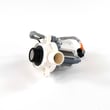
- Drain issues: consider the washer drain pump assembly WH23X28418
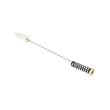
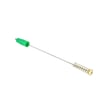
- Excessive shaking or banging: suspension components such as washer suspension rod and spring assembly WH16X26911
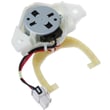
- No-spin or shifting problems: the mode shifter and speed sensing system are common checkpoints
Why it matters
A washer that is maintained on a simple schedule usually runs quieter, drains more reliably, and avoids the kind of vibration and water-leak events that shorten lifespan. Following the operating and care guidance in the GTW490ACJ4WS manual helps you get the full expected service life.
Last updated: January 2026
What is the difference between 4.5 cu ft and 5.0 cu ft washer?
A 5.0 cu. ft. washer holds about 0.5 cu. ft. more than a 4.5 cu. ft. washer, which typically means fewer loads and easier washing of bulky items. With your GE GTW490ACJ4WS, load size and water level are managed by automatic sensing or manual load-size selection, so capacity mainly affects how much you can load while still allowing good turnover.
What that extra 0.5 cu. ft. changes in real use
- Fewer loads per week: you can combine items that might take two loads in a smaller tub.
- Bulky items fit more comfortably: comforters, pillows, and large towels have more room to move.
- Better turnover (less packing): clothes can circulate more freely, which helps cleaning and rinsing.
- Less chance of out-of-balance: overstuffing is a common cause of banging and walking.
- Potentially longer dry times if you overload: bigger tubs tempt bigger loads, which can come out wetter if packed.
How this relates to GE high-efficiency load sensing
Your GTW490ACJ4WS uses Automatic Load Sensing to determine the wash action and water amount for the load. It can also allow manual load size selections (Small through Super) for specialty loads like bulky, lightweight comforters or pillows. For best results, match the load size to the tub space and avoid compressing laundry. See the GTW490ACJ4WS owner's manual for the loading guidance and how Precise Fill and manual load size work.
Quick comparison
| Feature | 4.5 cu. ft. washer | 5.0 cu. ft. washer |
|---|---|---|
| Capacity difference | Baseline | About 11% more space |
| Best for | Typical family loads | Larger families, bulky bedding |
| Overload risk | Moderate | Higher (because it looks like it can take “one more item”) |
| Cleaning performance | Strong when not packed | Strong when not packed; more room helps turnover |
Why it matters
Capacity is only helpful when you keep enough open space for agitation and rinsing. In a high-efficiency top-load washer like the GE GTW490ACJ4WS, proper loading helps the washer sense accurately, keeps water levels appropriate, and reduces vibration and out-of-balance spin issues.
Last updated: January 2026
What is the most common problem with GE washers?
On the GE GTW490ACJ4WS washer, the most common customer-reported issues are spin problems (wet clothes at the end of the cycle) and drain or fill interruptions. Many “failures” are actually load-balance, lid, or water-supply conditions the washer is designed to detect and pause for.
What we see most often on this model
- Out-of-balance loads: the washer may not reach full spin speed; the Spin light can blink and clothes may come out wetter.
- Fill problems: the Fill light can blink if water is not entering; the washer can go into a 4-minute lockout.
- Lid-related no-start: the washer will not fill or start with the lid open; Lid Locked can flash after repeated cycles without opening the lid.
- Drain complaints: kinked or improperly routed drain hose can prevent draining.
- Normal “pause” behavior: brief pauses during sensing, wash, or spin can be normal.
For cycle behavior, indicator lights, and troubleshooting steps specific to GTW490ACJ4WS, use the GTW490ACJ4WS owner’s manual.
Quick checks before replacing parts
- Redistribute the load evenly; then run Drain & Spin if items are still wet.
- Confirm both hot and cold supply valves are fully open.
- If the Fill light is flashing, wait out the 4-minute lockout, then restart.
- Make sure the lid closes fully and latches; open and close the lid once if Lid Locked is flashing.
- Inspect the drain hose for kinks; keep the drain outlet under 8 ft (2.44 m) above the floor.
When it’s likely a part issue
If the washer repeatedly won’t drain, won’t spin, or stops mid-cycle after you’ve done the checks above, these parts are common suspects on a top-load GE washer:
| Symptom | Common suspect | Example part for GTW490ACJ4WS |
|---|---|---|
| Won’t drain, humming, water left in tub | Drain pump | Washer drain pump assembly WH23X28418 |
| Excessive shaking, banging, off-balance every load | Suspension | Washer suspension rod and spring assembly WH16X26911 |
| Won’t start or won’t unlock consistently | Lid lock | Washer lid lock WH08X37938 |
Why it matters
Spin, fill, and drain problems are often caused by simple conditions (load balance, lid position, water valves, drain hose routing). Fixing those first prevents unnecessary part replacement and gets the washer back to normal operation faster.
Last updated: January 2026