Installation guide
 Owner’s manual
 Error Codes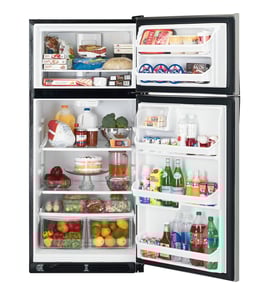



What is the top part of a fridge called?
In a Kenmore top-mount refrigerator like model 2537050561A, the top compartment is the freezer. It is the section designed to keep foods frozen and, on some models, it also houses the ice maker and ice bucket (or an ice tray).
What you will typically find in the top (freezer) section
Depending on the exact configuration, the freezer area can include:
- Ice maker and ice bucket (some models)
- Ice tray (if no ice maker is installed)
- Freezer shelf or auxiliary freezer shelf
- Air vents that circulate cold air to both compartments
- An auxiliary freezer control (separate from the main refrigerator control)
For a labeled diagram of the compartments and common features, check the owner's manual.
Freezer vs. refrigerator: quick comparison
| Compartment | Usual location on 2537050561A | Main purpose | Typical items |
|---|---|---|---|
| Freezer | Top | Long-term frozen storage | Frozen foods, ice |
| Fresh food (refrigerator) | Bottom | Chilled storage | Produce, dairy, leftovers |
Why it matters
Knowing that the top section is the freezer helps when you are adjusting temperatures and troubleshooting cooling issues. On this style of refrigerator, changing the main refrigerator control can affect temperatures in both compartments, and good airflow (not blocking vents with food) is key to steady cooling.
Last updated: February 2026
How to tell cubic feet of Kenmore refrigerator by model number?
For Kenmore model 2537050561A, the model number by itself usually does not state the exact cubic-foot capacity. The most reliable way is to look up the capacity in the 2537050561A owner's manual or calculate it from the interior compartment measurements.
Option 1: Find capacity in the manual (fastest)
The Use & Care Guide for Kenmore 253-series top-mount refrigerators explains where to find the model/serial plate inside the fresh food compartment; once you confirm the exact model, use the specifications section in the 2537050561A owner's manual to match capacity for your unit.
What to do
- Open the refrigerator (fresh food) compartment.
- Locate the serial plate inside the compartment (commonly on a side wall or upper area).
- Confirm the model number is 2537050561A.
- Check the specs/capacity listing in the manual.
Option 2: Calculate cubic feet from interior measurements
If you cannot find a capacity listing quickly, we use this standard volume conversion:
- Measure usable interior dimensions in inches (not the outside cabinet)
- Multiply:
height × width × depthto get cubic inches - Convert to cubic feet:
cubic inches ÷ 1728
Measurement tips (so the math is meaningful)
- Measure the refrigerator section and freezer section separately, then add them.
- Measure to the inside liner, not to the door bins.
- Use the average depth if the back wall has a hump or channels.
- Subtract obvious unusable space (large air ducts, big light housings) for a closer “usable” estimate.
Quick reference table
| What you measure | What you get | Best for |
|---|---|---|
| Interior fridge + freezer space | Approximate total cubic feet | Comparing sizes, planning storage |
| Manual specification | Rated capacity (manufacturer spec) | Exact capacity for model matching |
Why it matters
Cubic feet helps you choose correctly sized shelves, bins, and storage components, and it also helps when comparing replacement refrigerators or planning food storage. For parts fit, we always recommend matching by model number 2537050561A rather than capacity.
Last updated: February 2026
How do I know what model Kenmore refrigerator I have?
Your Kenmore refrigerator’s model number is printed on the serial plate inside the fresh food (refrigerator) compartment. Once you have that number (for example, 2537050561A), you can match the correct parts, diagrams, and instructions in the owner's manual.
Where to find the model number (most common spots)
Look for a sticker or metal plate inside the refrigerator compartment:
- On an inside side wall (upper or mid-level)
- On the ceiling area inside the fresh food section
- Behind or near the crisper drawers
- Near the door opening frame (hinge side)
- Occasionally behind the kick plate or lower front grille
What the model number looks like (Kenmore format)
Kenmore model numbers are typically a prefix plus additional digits. For many Kenmore top-mount refrigerators, you will see a 253. prefix on the serial plate, followed by the rest of the model identifier.
| What you see | What it means | Why it matters |
|---|---|---|
| Model number | Identifies the exact refrigerator design | Ensures parts fit and diagrams match |
| Serial number | Identifies the production unit | Helps when checking age and service history |
| Purchase date (your records) | When you bought it | Useful for maintenance and warranty paperwork |
Tips for reading and recording it correctly
Use these steps so you do not end up ordering the wrong refrigerator parts:
- Write the model number exactly as shown (include letters and all digits)
- Record the serial number too; it is on the same plate
- Take a clear photo of the plate before it gets worn or smudged
- Clean the plate gently with soap and water only
- Use the model number when searching for parts like a door gasket, evaporator fan motor, or light bulb
Why it matters
Kenmore refrigerators can look similar across different series, but parts like door gaskets, shelves, and fan motors vary by model. Using the exact model number keeps you aligned with the correct parts list and the correct operating and installation instructions.
Last updated: February 2026
What does er rf mean on a Kenmore 2537050561A refrigerator?
On a Kenmore 2537050561A top-mount refrigerator, the ER RF code points to a problem with the refrigerator evaporator fan circuit (the fan that moves cold air through the fresh food section). The most common causes are a fan that cannot spin, a failed fan motor, or a wiring/control issue preventing proper voltage to the fan.
What to check first (quick, safe checks)
- Make sure food packages are not blocking the air vents; good airflow matters because a fan circulates air in both compartments.
- Listen for the evaporator fan: it typically runs when the compressor is running (door switch may need to be pressed to hear it).
- Look for frost or ice buildup around the rear freezer panel; heavy frost can stop the fan blade.
- Confirm the temperature controls are not set to “0” (that stops the compressor and cooling, but the unit still has power).
- Unplug the refrigerator for a few minutes, then restore power to see if the code clears and the fan restarts.
Likely causes and what they mean
| What you notice | Most likely cause | What to do next |
|---|---|---|
| Loud buzzing, grinding, or fan tries to start | Fan blade hitting ice or debris | Defrost/clear obstruction; recheck airflow |
| No fan sound, warm refrigerator section | Failed evaporator fan motor | Replace the fan motor: refrigerator evaporator fan motor 242077705 |
| Fan runs sometimes, code returns | Loose connection or intermittent wiring | Inspect harness connections at fan and control |
| Fan never runs and cooling is poor | Control not sending power to fan | Test fan voltage and control output (service-level check) |
Why it matters
That evaporator fan is what distributes cold air. When it stops, the freezer may still feel cold for a while, but the refrigerator section warms up, temperatures swing, and the compressor can run longer than normal.
Helpful references for this model
- Use the owner's manual for temperature control guidance and airflow tips (keeping vents clear helps prevent fan-related cooling problems).
Last updated: February 2026
What causes a Coldspot 2537050561A to stop cooling?
A Kenmore 2537050561A top-mount refrigerator usually stops cooling because airflow or heat removal is blocked (dirty condenser area, frost buildup on the evaporator), a door is not sealing, or a cooling component such as a fan motor or defrost heater is failing. Use the owner's manual troubleshooting guide to narrow it down.
Quick checks we recommend first
- Confirm the refrigerator has power and the interior light works.
- Make sure both doors close fully and are not being held open by food containers.
- Set controls to a normal mid-range setting; then allow 24 hours for temperatures to stabilize after changes.
- Listen for fans: you should typically hear an evaporator fan in the freezer and a condenser fan near the compressor.
- Check for heavy frost on the freezer back wall (a common sign of a defrost problem).
- Clean dust from the condenser area (restricted airflow makes the unit run longer and cool poorly).
Most common causes (and what they look like)
| What you notice | Likely cause | What to do next |
|---|---|---|
| Freezer cold, fresh food warm | Airflow issue (blocked vents, iced evaporator) | Clear vents; check for frost buildup; inspect evaporator fan operation |
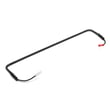
| Frost or ice sheet on freezer back wall | Defrost system problem | Defrost and test components; consider refrigerator defrost heater 242044008 |
| Warm temps and little or no airflow in freezer | Evaporator fan not running | Check fan for noise/spin; consider refrigerator evaporator fan motor 242077705 |
| Runs a lot, temps still warm | Dirty condenser, poor door seal, hot room, frequent door openings | Clean condenser; reduce door openings; inspect gaskets |
Door seal and “runs too long” issues
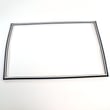
Our manual notes that if a door is slightly open or a gasket is dirty, worn, cracked, or poorly fitted, the refrigerator can run longer to try to maintain temperature. Cleaning the gasket and ensuring the cabinet is level often restores a good seal.
- If you have a white fresh food door gasket, use frigidaire refrigerator door gasket (white) 242193206.
- If you have a black fresh food door gasket, use frigidaire refrigerator door gasket (black) 242193212.
Why it matters
When airflow is restricted or warm air leaks in, the refrigerator cannot move cold air where it is needed. That leads to warm compartments, longer run times, and frost buildup that can eventually stop cooling altogether.
Last updated: February 2026