Owner’s manual
 Error Codes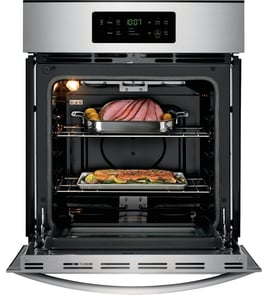



What is the best brand for electric wall ovens?
There is no single “best” brand for every kitchen; the best electric wall oven brand is the one that fits your cooking needs, cutout size, and serviceability. For Kenmore model 91141185991, we recommend using your feature needs (self-clean, convection, controls) and long-term parts support as the deciding factors; start with the 91141185991 owner's manual.
How we recommend choosing the “best” brand
When customers compare Bosch, GE, Café, Thermador, Kenmore, and others, the most reliable way to decide is to score brands on the same practical criteria.
- Fit and installation match: confirm the cabinet cutout and electrical requirements before you buy.
- Cooking performance: look for even baking, stable temperature control, and convection features you will actually use.
- Controls and usability: clear display, predictable timers, and easy-to-clean control panel.
- Service and parts availability: common wear parts (sensor, elements, door parts) should be easy to source.
- Cleaning features: self-clean options and door gasket quality matter for heat retention and cleanup.
What matters most for your Kenmore 91141185991
Your 91141185991 is a 30-inch double, self-cleaning, built-in electric wall oven. If you are comparing brands to replace it, prioritize a model that matches your space and offers dependable temperature regulation.
Quick comparison checklist (brand-agnostic)
| What you care about | What to look for | Why it helps |
|---|---|---|
| Consistent baking | Strong temperature sensing and calibration options | Fewer hot spots and better results |
| Quiet operation | Quality cooling fan design | Less noise, better heat management |
| Long-term ownership | Readily available replacement parts | Lower downtime and easier repairs |
| Easy cleaning | Self-clean cycle plus durable door gasket | Less scrubbing and better sealing |
Why it matters
Wall ovens are built-in appliances; a “top-rated” brand is not a win if it does not fit your cabinet cutout or if common parts are hard to get later. Matching size, features, and parts support typically delivers the best long-term value.
Last updated: January 2026
Are electric wall ovens 110 or 220?
Most Kenmore electric built-in ovens like model 91141185991 are wired for a 240-volt (often called 220-volt) circuit, not a standard 120-volt (110-volt) outlet. These ovens are typically hardwired or connected to a dedicated 2-pole breaker to supply the heating elements properly.
What to expect for power requirements
Most U.S. electric wall ovens use a dedicated 240V circuit because bake and broil elements need higher wattage than a 120V circuit can safely provide.
- Dedicated 240V (2-pole) breaker is typical
- Many installations are hardwired (no plug)
- Wire size and breaker size depend on the oven’s rated amperage
- A 120V circuit is commonly used for gas ovens, not electric wall ovens
- If your home wiring is older, verify the circuit before installing a replacement oven
How to confirm for your specific oven
Use the electrical rating information for model 91141185991 to match the correct circuit and wiring method.
- Check the rating label (commonly on the front frame behind the oven door).
- Confirm the breaker type in your electrical panel (look for a 2-pole breaker).
- Follow the electrical requirements and wiring notes in the 91141185991 owner's manual.
Quick comparison: 120V vs 240V appliances
| Item | Typical voltage | Typical connection | Common examples |
|---|---|---|---|
| Standard household circuit | 120V | 1-pole breaker | Microwave, toaster oven |
| High-heat cooking circuit | 240V | 2-pole breaker | Electric wall oven, electric range |
Why it matters
Using the correct voltage and dedicated circuit prevents nuisance breaker trips, slow preheating, and overheating of wiring. It also helps protect key components like the bake element, broil element, and oven temperature sensor.
Last updated: January 2026
Do you need an electrician to install a wall oven?
You do not always need an electrician to install a Kenmore wall oven like model 91141185991, but you do need to be fully comfortable working with a dedicated high-voltage circuit and following all safety steps. If you are unsure about wiring, we recommend hiring a licensed electrician.
What the installation typically involves
Most electric built-in wall ovens require correct electrical supply, secure mounting, and safe handling of the unit.
- Turning off power at the main breaker before any work
- Verifying the circuit size and wiring match the oven’s requirements
- Making proper junction box connections (tight, correct wire nuts, correct grounding)
- Sliding the oven into the cabinet cutout without pinching wires
- Securing the oven to the cabinet per the manufacturer’s instructions
For model-specific guidance, follow the 91141185991 owner's manual.
When we recommend hiring an electrician
Hire an electrician if any of these apply:
- You need to run a new circuit or upgrade the breaker
- The junction box wiring is damaged, aluminum, or confusing
- You are not 100% sure about grounding and strain relief
- The oven trips the breaker or shows signs of overheating at connections
- Local code or permitting requires a licensed installer
Safety notes that matter for this model
Your 91141185991 manual emphasizes disconnecting electrical power at the main circuit breaker or fuse box before servicing tasks such as replacing the oven light bulb. That same safety rule applies during installation and wiring work.
Quick decision guide
| Situation | Best choice |
|---|---|
| Existing correct circuit and junction box, you have electrical experience | DIY installation is reasonable |
| Any wiring changes needed, uncertainty about connections, or code concerns | Hire an electrician |
| Breaker trips, burning smell, or hot wiring | Stop and have it serviced |
Why it matters
A wall oven draws high current; a loose connection or incorrect wiring can cause nuisance breaker trips, poor performance, or heat damage at the junction box. A correct install protects the control, heating elements, and your home’s wiring.
Last updated: January 2026
Are all 30 inch wall ovens the same size?
No. “30-inch” wall ovens are grouped by a nominal width, but the exact outside dimensions and the required cabinet cutout can vary by brand and design. For the Kenmore 91141185991 (a 30-inch double electric built-in oven), always confirm the cutout and clearance requirements in the 91141185991 owner's manual.
What “30-inch” usually means
A 30-inch wall oven is typically designed to fit a 30-inch class cabinet opening, but manufacturers may change:
- Overall width (trim and door can add width)
- Cutout width (the cabinet opening you must have)
- Cutout height (single vs. double ovens vary a lot)
- Depth behind the face (chassis depth and required rear clearance)
- Required side, top, and bottom clearances for airflow
How to measure so you buy the right replacement
Use these measurements before ordering a new wall oven or planning cabinetry changes:
- Cabinet cutout width, height, and depth (measure the opening, not the old oven)
- Front trim overlap (how much the oven face covers the cabinet edges)
- Door swing clearance (space in front for the door to open fully)
- Electrical location (junction box placement and slack in conduit)
Quick comparison: “overall size” vs “cutout size”
| Measurement | What it describes | Why it matters |
|---|---|---|
| Overall width/height/depth | The oven’s exterior dimensions | Helps confirm it will physically fit and sit flush |
| Cutout width/height/depth | The cabinet opening dimensions | Determines whether installation is possible without modifying cabinets |
| Trim overlap | The face frame coverage | Prevents gaps and ensures a finished look |
Why it matters
A wall oven that is “30-inch” but has a different cutout height or trim overlap can require cabinet modification, cause fit issues, or restrict airflow. Verifying the Kenmore 91141185991 specs first prevents installation surprises.
Last updated: January 2026