Installation guide
 Owner’s manual
 Error Codes


What's better, top mount or bottom mount fridge?
For most households, a bottom-mount refrigerator like the GE CFCP1NIYASS is better for everyday convenience because fresh food sits at eye level and the freezer is in a pull-out drawer. A top-mount is often the better pick when you want a simpler layout and typically lower purchase cost.
| Feature | Top-mount (freezer on top) | Bottom-mount (freezer drawer) |
|---|---|---|
| Fresh-food access | You bend more | You bend less |
| Freezer access | Easy reach | Drawer style, easier to organize |
| Organization | Basic shelves and bins | Often more baskets and dividers |
| Energy use | Often slightly lower | Often slightly higher |
| Best for | Budget, simplicity | Convenience, meal-prep, frequent fridge use |
- If you use the refrigerator section far more than the freezer, bottom-mount is the better daily experience.
- If you have a tight installation space, focus on clearances and door swing before choosing style.
- If you want easier freezer organization (bags, boxes, bulk items), bottom-mount drawers help.
- If you want the simplest design with fewer moving drawer parts, top-mount is usually simpler.
- If you are installing near walls or cabinets, plan for airflow and hookups.
Your GE CFCP1NIYASS installation guidance calls out clearances for air circulation and connections. Typical guidance includes:
- Sides: about 1/8 inch
- Top: about 1 inch
- Back: about 1 inch (standard depth) or about 1/2 inch (counter depth)
We also recommend following the moving and leveling steps so you do not damage flooring and so the refrigerator sits stable and seals correctly. See the installation guide for the exact clearance and setup steps for this model.
Choosing top-mount vs. bottom-mount affects daily ergonomics, how well you can organize groceries, and whether the refrigerator fits your space with proper ventilation. Good clearances and leveling also help temperature stability and reduce wear on components.
Last updated: February 2026
Is GE CFCP1NIYASS considered high end?
Yes. The GE CFCP1NIYASS is typically considered a premium, high-end refrigerator within GE’s lineup because it is positioned above standard GE models and is commonly associated with upgraded design, finishes, and features compared to entry-level refrigerators. For model-specific feature details, we use the owner's manual.
A refrigerator is usually considered high end when it combines premium styling with higher feature density and higher replacement-part complexity (controls, sensors, ice and water systems).
Common high-end indicators you’ll see on models like CFCP1NIYASS include:
- More advanced temperature management (multiple sensors and control boards)
- Built-in ice maker and filtered water system
- More complex airflow and fan systems for even cooling
- Higher-cost sealed-system components (compressor, condenser, evaporator)
These parts commonly show up on higher-feature refrigerators and are available for CFCP1NIYASS:
- Temperature sensor WR55X10025 (helps regulate compartment temperatures)
- Refrigerator electronic control board WR55X10956 (manages cooling logic and components)
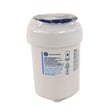
- GE refrigerator water filter MWFP (supports filtered water and ice)
- Refrigerator ice maker kit WR30X35285 (automatic ice production)
| Area | What it suggests | Example part on this model |
|---|---|---|
| Temperature control | More precise cooling and monitoring | WR55X10025 sensor |
| Electronics | More features and diagnostics | WR55X10956 control board |
| Water system | Filtered water and ice capability | MWFP filter |
| Ice system | Convenience features | WR30X35285 ice maker kit |
“High end” usually means more convenience and performance features, but it also means repairs often involve sensors, boards, and water/ice components. Using the correct model-matched parts helps keep temperatures stable and prevents repeat issues.
Last updated: February 2026
What is the most common problem with a GE refrigerator?
The most common GE refrigerator problem is not cooling correctly (fresh food section warm, freezer warming, or temperatures swinging). For the GE CFCP1NIYASS (a French-door style with a bottom freezer), start with control settings, door sealing, and airflow; then move to fan, sensor, and defrost checks in the CFCP1NIYASS owner's manual.
- Not cooling or too warm: make sure the temperature controls are not set to Off (0); allow up to 24 hours after plugging in for full cool-down.
- Long run times: normal with frequent door openings, hot weather, or large food loads.
- Door not closing or popping open: level the refrigerator; check that packages are not holding the doors open.
- Water dispenser slow or tastes off: replace a clogged filter and purge air from the water system.
- Odors and moisture: wrap strong-smelling foods, clean the interior, and reduce long door openings.
| Symptom | What it usually points to | Parts that often apply |
|---|---|---|
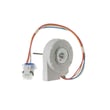
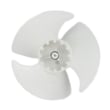
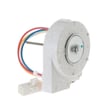
| Fresh food warm, freezer OK | Airflow problem or evaporator fan not moving air | Rca refrigerator evaporator fan motor WR60X10185 |
| Temps inconsistent | Sensor or control issue | Temperature sensor WR55X10025, refrigerator temperature control board WR55X10684 |
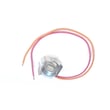
| Frost buildup, then warming | Defrost system problem | Refrigerator defrost bi-metal thermostat WR50X10069 |
| No water or slow water | Clogged filter or inlet valve issue | GE refrigerator water filter MWFP, refrigerator water valve WR57X33326 |
Cooling complaints often come from airflow, door sealing, or control and sensor issues, not the sealed system. Starting with the basic checks helps protect food and prevents replacing parts that are still good.
- Set refrigerator and freezer controls to normal settings (not Off/0).
- Confirm doors close fully and the gasket seals all the way around.
- Keep food away from rear air vents for proper circulation.
- If recently plugged in or heavily loaded, allow time to stabilize.
- For dispenser issues, replace the filter and dispense water for a couple minutes to purge air.
Last updated: February 2026