

How to identify a Kenmore washer model?
Your Kenmore washer model number is printed on the appliance’s model and serial tag; for Kenmore washers it often starts with 110 (like 11026292693). On most top-load Kenmore washers, we find it under the lid near the tub opening; on many front-load models, it’s inside the door opening.
- Top-load washer: Lift the lid and check the rim under the lid, around the tub opening
- Front-load washer: Open the door and check the door opening frame
- All styles: Check the back panel near the power cord, or behind/under the control console
- Look for a model/serial label, not a wiring diagram sticker
Kenmore model numbers are usually a long string of numbers (often 10 to 12 digits). For this washer, the model is 11026292693.
| What you see on the tag | What it means | Why it matters |
|---|---|---|
| Model number (example: 11026292693) | Identifies the exact washer design | Ensures parts match your washer |
| Serial number | Production code and build sequence | Helps confirm manufacturing details |
| Type/style codes | Internal platform identifiers | Useful for service diagnostics |
Using the exact model number prevents common fit issues, especially for frequently replaced items like a lid switch, drain pump, or inlet valve. If your washer won’t spin or drain, confirming the model first helps us match the correct replacement part, such as the washer lid switch WP3949238 or washer drain pump WP3363394.
- Copy the model number exactly as shown (include all digits)
- If the tag is worn, take a clear photo and zoom in
- Match the model number before buying high-impact drive parts (coupling, clutch, gear case)
Last updated: February 2026
Is it worth repairing a Kenmore washing machine?
Yes, it’s usually worth repairing a Kenmore washer when the fix restores reliable washing and spinning for far less than replacing the machine. For Kenmore model 11026292693, many common failures are straightforward and part-replaceable, which often makes repair the better value.
Use this checklist to make a clear repair decision:
- Repair cost target: keep the total repair (parts + labor) under 50% of a comparable new washer.
- Failure type: choose repair when the problem is a known wear item (switch, pump, coupling, clutch).
- Leak severity: repair small, localized leaks; reconsider if the tub or cabinet is badly rusted.
- Noise and vibration: repair if it’s a suspension or drive component; reconsider if multiple major drivetrain parts are failing.
- Downtime: repair is best when parts are in stock and you can get back running quickly.
These are frequent, high-impact fixes that often restore normal operation:
- No spin or intermittent operation: replace the washer lid switch WP3949238
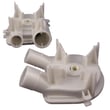
- Won’t drain or leaves water in the tub: replace the washer drain pump WP3363394
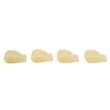
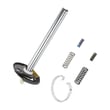
- Agitates poorly or “ratcheting” agitator: replace the agitator dog 80040
- Won’t agitate/spin but motor runs: replace the coupling 285753A
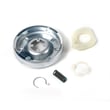
- Slow or weak spin, burning smell, or slipping: replace the clutch 285785
| Situation | Repair is the better choice | Replace is the better choice |
|---|---|---|
| One clear symptom and one likely part | Yes | No |
| Multiple major drivetrain issues at once | Sometimes | Often |
| Leaks from a hose, pump, or seal area | Yes | No |
| Severe rust, repeated flooding, or structural damage | No | Yes |
A targeted repair on a Kenmore washer can restore performance (agitation, drain, spin) without the cost and hassle of replacing the appliance. Replacing the correct failed part also prevents secondary damage, like a drain problem leading to odors or a slipping drive causing extra wear.
Last updated: February 2026
What is the average lifespan of a Kenmore washer?
A Kenmore washer typically lasts 10 to 15 years with normal household use. For Kenmore model 11026292693, lifespan depends most on load size, leveling, and timely replacement of common wear parts like the drain pump, lid switch, and drive components.
Most washers fall into these real-world ranges:
- Top-load washers: about 12 to 15 years
- Front-load washers: about 10 to 12 years
- Heavy use (large family, daily loads): often closer to 8 to 12 years
- Light use (few loads per week): often closer to 12 to 15 years
These issues cause the most premature failures:
- Running consistently overloaded cycles (stresses motor, clutch, gear case)
- Washer not level (increases vibration and wear)
- Slow draining or repeated drain clogs (overworks the pump)
- Hard water buildup (affects inlet valve and internal passages)
- Ignoring early symptoms (burning smell, grinding, leaking, no-spin)
| Symptom | Common suspect part | Example part for this model |
|---|---|---|
| Won’t drain or leaves water in tub | Drain pump | Washer drain pump WP3363394 |
| Won’t spin or stops when lid opens | Lid switch | Washer lid switch WP3949238 |
| Agitates poorly or makes clicking in agitator | Agitator dogs/cam | Agitator dog 80040 |
| Loud grinding, oil leak, weak agitation/spin | Gear case | Gear case 3360629 |
Knowing the typical lifespan helps us decide whether a repair is cost-effective. Replacing a wear part (like a pump or lid switch) often restores years of service; major drive-train repairs can make more sense when the washer is still in the middle of its expected life.
Last updated: February 2026
What is the capacity of the Kenmore Elite washer model 11026292693?
The exact wash capacity (cubic feet) for Kenmore washer model 11026292693 isn’t listed in the model data we have here, but this style of Kenmore 110 direct-drive top-load washer typically falls in the 2.5 to 3.5 cu. ft. range, depending on tub and basket configuration.
If you need a practical number for load planning, we recommend using basket size and real-world load limits.
- Measure the inside basket diameter and depth (in inches) to estimate volume.
- A “full” load should still allow hand-width clearance at the top for proper turnover.
- Bulky items (comforters, jackets) often reach the washer’s limit before the basket looks full.
- If the washer struggles to spin or goes out of balance, reduce load size and redistribute.
Capacity affects how well the washer circulates water and moves clothes through the wash action. Overloading can cause poor cleaning, longer drain times, and spin issues.
Typical load guidance for this washer type:
| Load type | What it usually looks like | Best practice |
|---|---|---|
| Small | A few shirts, light items | Fast cycles work well |
| Medium | Mixed clothes, not tightly packed | Best cleaning and rinse |
| Large | Near the top of basket | Leave space for agitation |
| Bulky | One large item plus a few smalls | Balance carefully before spin |
Using the right load size helps protect key drive and spin components and improves cleaning performance. If you’re seeing weak agitation or poor turnover, worn agitator components are common on this design, such as the agitator dog 80040.
Last updated: February 2026