Owner’s manual
 Error Codes
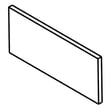

How to remove bottom grill from KitchenAid refrigerator?
On KitchenAid model KBFS22ECMS00, the bottom grill (toe kick plate) typically snaps onto the lower frame. We remove it by gripping the grill at the ends and pulling straight forward to release the retaining clips; then lift it away. Reinstall by aligning it and snapping it back into place.
Quick steps
- Unplug the refrigerator or switch off power at the breaker (recommended).
- Open both fresh food doors for better access.
- Grip the toe kick plate at the left and right ends.
- Pull straight forward firmly to pop the clips free (avoid twisting).
- If it feels stuck, work side-to-side: release one end, then the other.
- To reinstall, align the tabs/clips with the lower frame and press until it snaps in.
If the grill will not come off
- Check for hidden fasteners; some toe kicks use screws at the ends.
- Look for ice buildup or debris along the bottom edge; clear it so the plate can release.
- Use a plastic putty knife to gently pry near a clip point (avoid bending the plate).
What you can access after removing it
| Area behind the toe kick | Why you might need access |
|---|---|
| Condenser area | Cleaning dust to improve cooling and efficiency |
| Water line routing | Checking for kinks or leaks |
| Leveling legs/rollers | Adjusting door alignment and closing |
Why it matters
A properly seated toe kick helps protect components under the cabinet and supports airflow. If it is loose or not fully snapped in, you can get extra vibration noise and reduced cooling performance.
For model-specific illustrations and clip locations, use the owner's manual.
Last updated: February 2026
What is the advantage of a bottom mount fridge?
A bottom-mount refrigerator like the KitchenAid KBFS22ECMS00 keeps the fresh-food compartment at eye and waist level, so you reach everyday items with less bending. The freezer stays below, which is convenient if you use frozen foods less often.
Key benefits you will notice day to day
- Easier access to fresh foods (milk, produce, leftovers) because shelves sit higher
- Less bending and squatting, which helps reduce back and knee strain
- Better organization for frequently used items since the refrigerator section is the main focus
- Freezer drawers can hold bulky frozen items and slide out for visibility
Trade-offs to consider
Bottom-mount designs are a great fit for many kitchens, but they come with a few practical considerations:
- You bend more to reach items in the freezer drawer
- Freezer drawers can feel heavier when fully loaded
- If the door gaskets do not seal well, you can get moisture, frost, or temperature swings (check the seal and alignment)
| Feature | Bottom-mount refrigerator | Top-mount refrigerator |
|---|---|---|
| Fresh-food access | Higher, easier reach | Lower, more bending |
| Freezer access | Lower drawer | Upper door |
| Best for | Fresh-food heavy households | Frozen-food heavy households |
Why it matters
Most households open the refrigerator section far more than the freezer. With a bottom-mount layout, the most-used space is the easiest to reach, which improves comfort and can help you keep food organized and visible.
Helpful references for your KBFS22ECMS00
- Use the owner's manual for model-specific features, storage layout, and door adjustment guidance.
- If you are troubleshooting water taste or flow, a fresh refrigerator filter EDR4RXD1 often makes a noticeable difference.
Last updated: February 2026
What's the average lifespan of a KitchenAid refrigerator?
Most KitchenAid refrigerators, including the KitchenAid KBFS22ECMS00 bottom-mount style, typically last 12 to 15 years with normal household use. With consistent cleaning, correct temperatures, and timely part replacement (like filters and door gaskets), 10 to 17 years is a realistic overall range.
Typical lifespan and what affects it
A refrigerator’s life is mostly driven by compressor run time, airflow, and how well the doors seal.
- Maintenance level: clean condenser area, keep vents clear, replace filters on schedule
- Door seal condition: worn gaskets cause longer run times and moisture issues
- Cooling system health: fans, thermistors, and defrost parts keep temperatures stable
- Water system upkeep: clogged filters can reduce dispenser flow and strain the inlet valve
- Environment: hot garages and tight cabinets shorten life by trapping heat
Quick maintenance checklist to help it reach the high end of the range
- Keep fresh food around 37°F and freezer around 0°F (typical targets)
- Vacuum dust from the condenser area regularly
- Replace the water filter on schedule; use refrigerator filter EDR4RXD1
- Inspect door gaskets for gaps, tears, or hardening; replace if needed
- Listen for evaporator fan noise or weak airflow; address early to prevent warm spots
Common “wear items” vs. major repairs
| Category | Examples | Why it matters |
|---|---|---|
| Routine wear items | Water filter, door gasket | Helps efficiency and prevents leaks, frost, and odor transfer |
| Mid-level repairs | Evaporator fan motor, thermistor | Stabilizes temperatures and reduces compressor stress |
| Major repairs | Compressor, control board | Higher cost; often the deciding factor on repair vs. replace |
Why it matters
When a refrigerator runs longer to overcome poor airflow or a leaking door seal, the compressor and electronics cycle more often. That extra run time is one of the biggest reasons a premium refrigerator fails earlier than expected.
Model-specific tip
For your KitchenAid KBFS22ECMS00, we recommend following the maintenance intervals and temperature guidance in the owner's manual, then using the parts list for exact replacements when symptoms show up.
Last updated: February 2026
What is the most common problem with KitchenAid refrigerators?
The most common KitchenAid refrigerator problems are ice maker and water dispensing issues, followed closely by cooling and temperature swings. On your KitchenAid KBFS22ECMS00 bottom-mount refrigerator, these symptoms often trace back to airflow problems, a restricted water supply, or a failing sensor or fan.
Most common issues we see (and what they look like)
- Ice maker not making ice or slow ice: low water flow, frozen fill tube, or filter restriction
- Water dispenser slow or stops: clogged filter, air in the line, or inlet valve trouble
- Fridge warm but freezer cold (or vice versa): damper or evaporator fan problem
- Frost buildup and warming: defrost system issue or door not sealing
- Unusual noises: evaporator fan motor or fan blade contacting ice
Quick checks that solve a lot of calls
- Confirm temperature settings and allow 24 hours after changes.
- Make sure vents inside the fresh food section are not blocked by food packages.
- Check door closing and gasket contact all the way around.
- If water or ice is weak, replace the filter and purge the dispenser.
- Clean condenser coils (dust buildup commonly causes poor cooling).
Parts that commonly relate to these symptoms (KBFS22ECMS00)
| Symptom | Common cause | Example part for this model |
|---|---|---|
| Slow water, weak ice | Restricted filter | Refrigerator filter EDR4RXD1 |
| Warm temps, noise, poor airflow | Evaporator fan motor failing | Refrigerator evaporator motor W11024089 |
| Frost buildup, warming | Defrost heater not heating | Refrigerator defrost heater WP12729128 |
| Temps swing, inconsistent cooling | Sensor reading wrong | Refrigerator thermistor W10316760 |
| Fridge too warm, freezer OK | Damper not opening correctly | Refrigerator electronic damper WPW10594329 |
Why it matters
Ice maker and temperature problems usually get worse over time. A restricted water filter can strain the water system, and airflow or defrost issues can lead to food spoilage, heavy frost, and longer compressor run times.
Best next step for your model
Use the troubleshooting and maintenance guidance in the KBFS22ECMS00 owner's manual, then match symptoms to the parts list for your refrigerator.
Last updated: February 2026