Owner’s manual
 Error Codes



What is the capacity of the WA54R7600AC?
The Samsung WA54R7600AC top-load washer has a 5.4 cu. ft. capacity. This is the tub capacity for the WA54R7600A* platform shown in the model documentation; it helps you size loads correctly for best cleaning and spin performance. See the WA54R7600AC user manual for cycle and loading guidance.
How to use that capacity in real life
A 5.4 cu. ft. top-load washer is designed for larger loads, but performance still depends on cycle selection, fabric type, and how freely items can move.
- Load items loosely; do not pack them down
- Keep bulky items (comforters, jackets) balanced around the basket
- Use Bedding/Waterproof for bulky or water-resistant items when available
- If the load goes off-balance, pause and redistribute before spinning
- Use the right water level option (such as Deep Fill, when selected) for bulky loads
Capacity vs. what you can wash (quick guide)
| Load type | What to expect in a 5.4 cu. ft. washer | Best practice |
|---|---|---|
| Everyday mixed load | Large family-size load | Leave space at the top for tumbling |
| Towels | Large towel load | Mix sizes to reduce imbalance |
| Bulky bedding | Comforter or bedding set (varies by fill) | Use Bedding/Waterproof; redistribute if needed |
Why it matters
Using the correct load size helps prevent out-of-balance spinning, reduces wear on suspension components, and improves rinse and spin results. Overloading can also contribute to vibration and longer cycle times.
Last updated: February 2026
What is the lifespan of a Samsung washing machine?
A Samsung washing machine typically lasts 10 to 14 years. For the Samsung WA54R7600AC top-load washer, consistent maintenance (cleaning, correct detergent use, and keeping loads balanced) helps you reach that range and avoid common wear issues.
Typical lifespan and what to expect
Most modern washers fall into a similar life range; what changes the outcome is usage and upkeep.
- Typical service life: 10 to 14 years
- Heavy use (large family, daily loads): tends toward the lower end
- Light to moderate use: often reaches the upper end
- Good maintenance: reduces odor, drainage, and vibration problems
Maintenance that extends washer life
The WA54R7600AC manual calls out routine care items like Self Clean and filter cleaning. Use these habits to reduce strain on the motor, pump, and suspension.
- Run Self Clean periodically to help prevent odors and buildup
- Use the right amount of HE detergent to avoid excessive suds
- Keep loads evenly distributed to reduce out-of-balance spinning
- Clean inlet screens and internal filters as directed in the WA54R7600AC owner's manual
- Level the washer so it sits stable on the floor
Quick guide: symptoms that shorten lifespan
| Symptom | What it usually stresses | What to do first |
|---|---|---|
| Loud banging or walking | Suspension and tub support | Re-level, reduce load size, redistribute |
| Won’t drain or drains slowly | Drain pump and hoses | Check for clogs, verify drain hose setup |
| Persistent odors | Tub and internal surfaces | Run Self Clean, reduce detergent |
| Frequent “Ub” unbalanced messages | Suspension and load handling | Redistribute load, confirm stable surface |
Why it matters
Washer failures often start as small maintenance issues (suds buildup, unbalanced loads, restricted draining). Staying on top of cleaning and balance helps protect high-wear parts like the drain pump, suspension, and motor.
Last updated: February 2026
Does a Samsung washer have a filter that needs to be cleaned?
Yes. On the Samsung WA54R7600AC washer, there are filters that need periodic cleaning, most commonly the small inlet hose screens (to prevent fill problems) and the washer’s debris filtering system referenced in the manual (often called a “mesh debris filter” or “magic filter,” depending on configuration). See the WA54R7600AC owner's manual for your exact filter locations.
What filters you may need to clean
Most Samsung washers like model WA54R7600AC use one or more of these:
- Water inlet hose screens at the hot and cold valve connections (catch sand, scale, grit)
- Mesh debris filter referenced for drain issues (helps prevent slow or no drain)
- Magic filter (lint filter) if your specific configuration includes it
When to clean it (practical schedule)
A good routine that prevents odors, slow draining, and fill issues:
- Check inlet hose screens every 3 to 6 months
- Clean the debris filter any time you see a drain code (such as 5C)
- Clean more often if you wash pet bedding, linty items, or have hard water
Quick checks before you start
- Unplug the washer before servicing anything internal
- Turn off both water taps before removing hoses
- Keep a shallow pan and towels ready for water drips
Symptoms that point to a clogged filter
| Symptom | Most likely filter area | What you’ll notice |
|---|---|---|
| Slow fill or no fill | Inlet hose screens | Long fill times, water supply codes, weak flow |
| Slow drain or no drain | Mesh debris filter / drain path | Standing water, drain code 5C |
| Odors | Lint/debris buildup plus residue | Musty smell, residue in tub |
Why it matters
Keeping filters clean helps your WA54R7600AC maintain proper water flow and draining, reduces strain on the drain pump, and supports better wash performance with fewer information codes.
Last updated: February 2026
What is the most common problem with Samsung washing machines?
For Samsung top-load washers like model WA54R7600AC, the most common complaints are spin and drain problems: the washer shakes or bangs during spin, will not spin out, or stops with water left in the tub. Many are caused by load balance, leveling, or a restricted drain path.
What to check first (fast, high-impact)
- Redistribute the load; avoid washing one heavy item by itself.
- Confirm the washer is level and all feet are firmly on the floor.
- Check the drain hose for kinks and make sure the standpipe drains freely.
- Verify both water taps are fully open; clean inlet hose screens if fill is slow.
- Power reset: unplug for 1 minute, then restart the cycle.
For model-specific steps and safety guidance, use the WA54R7600AC owner's manual.
Symptom-to-cause quick guide
| Symptom | Most likely cause | Best next step |
|---|---|---|
| Won’t drain / water left in tub | Kinked hose, blockage, pump problem | Inspect hose and drain path; then check pump |
| Shakes or bangs in spin | Unbalanced load, leveling, suspension wear | Rebalance; level; inspect suspension |
| Won’t fill | Closed taps, clogged screens, low pressure | Open taps; clean screens; confirm pressure |
| Pauses or won’t start spin | Lid not closed/locking | Close lid; check lid lock function |
Parts often involved when checks don’t fix it
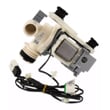
- Drain issues: Samsung washer drain pump DC31-00187A
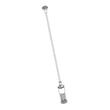
- Excessive vibration: Samsung washer suspension rod DC97-16350V
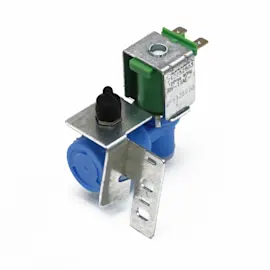
- Fill issues: Samsung washer water inlet valve DC97-15459H
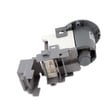
- Lid sensing/spin enable: washer lid lock DC34-00025G
Why it matters
Spin and drain issues can trigger error codes, leave clothes soaking wet, and put extra strain on the motor, suspension, and control board. Correcting balance, leveling, and hose routing prevents repeat problems.
Last updated: February 2026