Owner’s manual
 Error Codes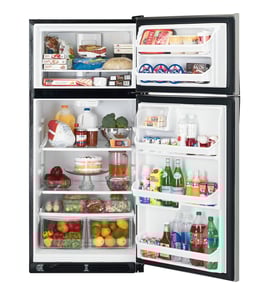




How to tell cubic feet of Kenmore refrigerator by model number?
For Kenmore model 10662972900, the most reliable way to get cubic feet is to look up the capacity in the specifications section of the owner's manual. If you do not see capacity listed, you can estimate it by measuring the interior and calculating volume.
Fast ways to find the capacity
- Check the specifications or features pages in the owner's manual.
- Look for a model and serial tag inside the fresh food section (commonly on a side wall near the crispers or on the ceiling).
- If you have the interior measurements, calculate an estimate (best for a quick comparison).
How to estimate cubic feet (quick calculation)
- Empty the refrigerator and remove bins/shelves that block measuring.
- Measure the usable interior of the fresh food section and freezer (in inches):
- Height
- Width
- Depth
- Compute each compartment’s cubic feet:
cubic feet = (H × W × D) ÷ 1728
- Add refrigerator + freezer results for an estimated total.
Example calculation table
| Compartment | Measure (in.) | Multiply (cu. in.) | Divide by 1728 | Estimated cu. ft. |
|---|---|---|---|---|
| Fresh food | H × W × D | HWD | HWD/1728 | result |
| Freezer | H × W × D | HWD | HWD/1728 | result |
| Total | sum |
What to expect for a top-mount refrigerator
Most Kenmore top-mount (top freezer) refrigerators fall into these common capacity ranges:
- Small: 14 to 18 cu. ft.
- Mid-size: 18 to 21 cu. ft.
- Large: 21 to 24 cu. ft.
Why it matters
Cubic feet helps you compare storage space across models, choose the right replacement shelves and bins, and set realistic expectations for airflow and loading. Proper airflow is important for consistent cooling; avoid overpacking and keep vents clear (see guidance in the owner's manual).
Last updated: February 2026
What is the top part of a fridge called?
In a Kenmore top-mount refrigerator like model 10662972900, the top compartment is the freezer compartment (often just called the freezer). It’s the section designed to keep foods frozen, and it shares temperature control with the fresh-food section.
What you’ll typically find in the top (freezer) section
Most top-mount freezers include features like these:
- A freezer shelf for organizing frozen foods
- An ice maker (on some versions) and an ice storage bin
- Air vents that move cold air between the freezer and refrigerator
- A freezer door bin or rails (varies by configuration)
- A freezer light (on some models)
For your exact feature set and layout, use the 10662972900 owner's manual.
Why the name matters (freezer vs. refrigerator compartment)
In this style of refrigerator, the freezer is the primary cooling source. Cold air circulates from the freezer into the refrigerator section, so airflow and vent blockage in the freezer can affect temperatures in both compartments.
Quick terminology guide
| What people say | What it usually means | Where it is |
|---|---|---|
| “Top part of the fridge” | Freezer compartment | Upper compartment |
| “Fridge section” | Fresh-food (refrigerator) compartment | Lower compartment |
| “Temperature control” | Control that regulates both sections | Typically at the top of the refrigerator compartment |
Helpful tips for best cooling
- Keep freezer vents clear of food packages to maintain airflow
- Let the refrigerator cool for about 24 hours after first setup before loading food
- Avoid overpacking the freezer; it can restrict circulation
- Keep doors closed as much as possible to prevent temperature swings
Last updated: February 2026
How to tell what model Kenmore refrigerator?
To identify your Kenmore refrigerator model, we look for the model/serial tag on the cabinet inside the fresh food section (commonly on a side wall, near the ceiling, or behind the crisper drawers). Once you have it, match it exactly when using the parts list or the 10662972900 owner's manual.
Where to find the model number tag
Check these common locations first:
- Inside the refrigerator compartment on the left or right side wall
- On the ceiling area inside the fresh food compartment
- Behind or under the crisper drawers (remove the drawers and look on the liner)
- Along the door opening (hinge side) on the cabinet frame
- Behind the lower toe grille or kick plate area (less common, but worth checking)
What the model number looks like (and why it matters)
Kenmore model numbers are usually a series of digits (often with a 3-digit prefix). For this model page, the correct model number format is 10662972900. Using the exact model number helps ensure the right fit for parts like a defrost heater, evaporator fan motor, or door gasket.
Quick example
| What you see on the tag | What to do with it |
|---|---|
| 10662972900 | Use it to look up diagrams, parts, and troubleshooting info |
| Similar number with one digit different | Treat it as a different model; parts can change |
| Serial number only | Keep looking; you still need the model number for parts |
Tips if the sticker is hard to read
If the tag is faded or damaged, these steps usually solve it:
- Use a flashlight and take a close-up photo, then zoom in
- Wipe gently with a damp cloth; do not scrub the printing
- Look for an etched plate near the tag area
- Check paperwork that came with the refrigerator (manual packet, purchase docs)
Why it matters
Even within Kenmore top-mount refrigerators, small model-number differences can change shelf supports, wiring harnesses, and defrost system parts. Matching the model number exactly prevents ordering the wrong replacement part.
Last updated: February 2026
What is the code 5Y EF on a Kenmore refrigerator?
On Kenmore refrigerator model 10662972900, a 5Y EF (or SY EF) code points to a problem in the evaporator fan circuit, which means the freezer evaporator fan is not running correctly or the control is not sensing it properly. This can be caused by airflow restrictions, a failing fan motor, or a wiring/control issue.
What to check first (fast, no-tools checks)
- Make sure air vents are not blocked by food packages; blocked vents restrict airflow and can trigger temperature and moisture problems.
- Listen for the evaporator fan: it typically runs when the compressor is running and the door switch is closed.
- Check for heavy frost on the freezer back wall (a defrost problem can stop airflow and stress the fan circuit).
- Confirm the temperature control is not set to OFF.
- Power reset: unplug the refrigerator for 5 minutes, then plug back in and monitor.
For vent locations and control settings, follow the guidance in the owner's manual.
Likely causes and the most common fixes
In this model family, the code is usually tied to the fan motor or airflow around the evaporator.
| What you notice | Most likely cause | What we typically do next |
|---|---|---|
| No fan sound, warm fridge section | Failed evaporator fan motor | Inspect/replace the motor: evaporator motor WPW10188389 |
| Fan runs but airflow is weak | Frost buildup or blocked vents | Check defrost system and clear obstructions |
| Clicking/humming, fan tries to start | Electrical issue in fan circuit | Inspect wiring connections; check components |
Parts that commonly relate to this issue
If you confirm a fan or defrost failure, these are common related parts for Kenmore 10662972900:
- Evaporator motor WPW10188389 (drives airflow across the evaporator)
- Refrigerator evaporator fan blade WP2169142 (damaged blades can cause noise or poor airflow)
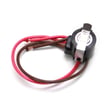
- Refrigerator defrost bi-metal WPW10225581 (helps control defrost heating)
- Refrigerator heater WP2263749 (melts frost off the evaporator during defrost)
Why it matters
The evaporator fan moves cold air from the freezer to the refrigerator section. When airflow is restricted (blocked vents or frost) or the fan circuit fails, temperatures rise, moisture increases, and food can spoil faster.
Last updated: February 2026
How to tell if a Kenmore refrigerator compressor is bad?
If your Kenmore 10662972900 isn’t cooling and you hear repeated clicking, buzzing, or the unit runs but never gets cold, the compressor may be failing. First rule out normal high-efficiency operating sounds and basic power or control issues using the owner's manual.
What to check first (fast, no tools)
- Confirm the refrigerator is plugged into a grounded 3-prong outlet and the breaker is not tripped.
- Make sure the temperature control is not set to OFF.
- Wait 30 minutes if it just entered an automatic defrost cycle (cooling pauses during defrost).
- Listen for the evaporator fan running (air movement sound) when the doors are closed.
- Check whether the cabinet is warm but the compartments are staying warm (suggests poor cooling performance).
Signs that point to a compressor problem
A compressor issue is more likely when the refrigerator has power but cooling never recovers.
- Repeated clicking every few minutes (overload trying to start the compressor)
- Compressor is very hot to the touch and shuts off quickly
- Loud humming followed by a click and then silence
- Refrigerator and freezer both warm even though fans run
- Cooling is weak and temperatures slowly rise over hours or days
Normal sounds vs. problem sounds
Your model can sound different than older refrigerators because it uses a high-efficiency compressor and fans.
| Sound | Often normal | More concerning |
|---|---|---|
| High-pitched or pulsating | Compressor and fans adjusting | If cooling is poor at the same time |
| Gurgling | Refrigerant moving at cycle end | If paired with repeated clicking and no cooling |
| Sizzling | Water dripping on defrost heater | If it never returns to cooling |
Parts that are commonly involved (and why)
If the compressor is not starting, the start components are often checked along with the compressor.
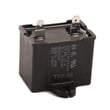
- Upright freezer run capacitor WPW10662129: helps the compressor start and run smoothly
- Refrigerator defrost timer 4388931: if stuck in defrost, cooling can stop even with a good compressor
- Refrigerator defrost heater WP2263749 and refrigerator defrost bi-metal WPW10225581: heavy frost can block airflow and mimic a sealed-system problem
Why it matters
A bad compressor is one of the most expensive cooling failures, but many “no cool” complaints are caused by defrost problems, airflow issues, or a start component. Checking the basics first prevents unnecessary part replacement.
Last updated: February 2026