Owner’s manual


What is the life of an LG dryer?
Most LG dryers, including the LG DLGY1202W dual-fuel dryer, typically last 10 to 15 years with normal household use. Consistent airflow maintenance (lint screen and venting) and addressing wear parts early are the biggest factors in reaching the high end of that range.
What affects dryer lifespan the most
- Vent restriction (long runs, crushed flex duct, clogged wall cap) that causes overheating
- Lint buildup in the lint screen area and blower housing
- Overloading that strains the drum, belt, rollers, and motor
- Worn drum support parts that create drag and extra heat
- Heat system cycling issues (thermostats, igniter, gas valve on gas/dual-fuel models)
Maintenance that helps you get 10 to 15 years
Use the care and cleaning schedule in the DLGY1202W owner's manual. In general, these habits extend life:
- Clean the lint screen every load
- Check airflow at the outside vent regularly; strong, steady exhaust is the goal
- Keep the dryer level to reduce drum and roller wear
- Avoid drying heavy, waterlogged items that exceed typical load size
- Stop using the dryer if you smell burning or notice repeated overheating
Common “wear parts” that can shorten life if ignored
When a dryer starts squealing, thumping, or taking longer to dry, these parts are frequent causes:
| Symptom | Common cause | Example part for DLGY1202W |
|---|---|---|
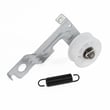
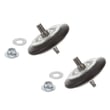
| Squealing or rumbling | Worn roller or idler pulley | Dryer drum support roller 4581EL2002H |
| Drum not turning | Broken or slipping belt | Dryer drum belt 4400EL2001F |
| Long dry times | Airflow restriction or blower issue | (inspect venting and lint path) |
Why it matters
A dryer that runs hot or has high friction wears out the motor, drum supports, and heat components faster. Keeping airflow strong and replacing a belt, roller, or idler pulley at the first signs of wear helps prevent bigger, more expensive failures.
Last updated: February 2026
How to take the front off of a LG sensor dryer?
To remove the front panel on an LG DLGY1202W sensor (dual-fuel) dryer, we typically disconnect power, remove the top panel, then remove the front panel mounting screws and lift the panel up and off while supporting its weight. Use the DLGY1202W owner's manual for the exact screw locations and panel sequence.
Before you start (safety and prep)
- Unplug the dryer (and shut off the gas supply for a dual-fuel model).
- Let the dryer cool completely.
- Protect the floor; the front panel edges can scratch.
- Have a container ready for screws.
- Take a quick photo of wire connectors before disconnecting anything.
Common front panel removal steps (most LG front-load dryers)
- Remove the lint screen, then remove the screws in the lint screen housing (if present).
- Remove the top panel: take out the rear screws, slide the top back, and lift it off.
- Remove the control panel fasteners (if they block the front panel); set the control panel aside without straining the harness.
- Remove the lower access panel (kick plate) screws and pull the panel off.
- Support the front panel, remove the mounting screws (often along the top inside edge and/or lower corners).
- Lift the front panel up and off the lower tabs/clips.
- Disconnect the door switch harness (and any drum light connector if equipped) as you pull the panel away.
What you may need to disconnect (quick reference)
| Item you see | What it is | What to do |
|---|---|---|
| Small wire plug near door opening | Door switch harness | Unplug before fully removing panel |
| Screws at lint screen opening | Lint duct/housing screws | Remove early to free the top/front |
| Panel feels “hung” at bottom | Lower tabs/clips | Lift up, then pull forward |
Why it matters
Removing the front panel correctly prevents broken plastic tabs, pinched wiring, and air leaks that can cause long dry times and overheating.
If you’re opening the front to fix noise or no-tumble
Front access is commonly used to inspect the belt and drum support parts. If the drum is not turning or you hear squealing, check the dryer drum belt 4400EL2001F and the idler pulley and rollers for wear.
Last updated: February 2026
How much to replace a LG dryer motor?
For the LG DLGY1202W dual-fuel dryer, replacing the motor typically costs $200 to $600 total. That range usually includes the motor part plus 1 to 2 hours of labor; DIY replacement is often $200 to $350 if the motor is the only failed part. See the DLGY1202W owner's manual for access and safety guidance.
Typical cost breakdown
Costs vary by region and whether additional wear parts are replaced at the same time.
| Item | Typical cost (USD) | Notes |
|---|---|---|
| Motor part | $200 to $350 | Model-specific motor pricing varies |
| Labor | $150 to $300 | Often 1 to 2 hours |
| Service call/diagnostic | $0 to $120 | Sometimes waived with repair |
What can increase the price
If the motor failed because the drum is hard to turn, a tech may recommend replacing common friction parts during the same visit.
- Worn belt or idler pulley adds labor and parts
- Noisy or seized drum rollers can overload the motor
- Lint buildup and restricted venting can overheat components
- Electrical issues (switches, wiring) can extend diagnosis time
- Dual-fuel dryers may require extra checks around the burner and thermostats
Quick checks before you buy a motor
We recommend ruling out simpler problems first (many “motor” symptoms are actually airflow or drum-drive issues).
- Unplug the dryer; try turning the drum by hand (it should rotate smoothly)
- Listen for squealing or thumping (often belt, idler, or rollers)
- Clean the lint screen and confirm strong airflow at the outside vent
- If the dryer will not start, check the door switch and power supply first
- If you use a meter, follow safe testing practices in how to use a multimeter to test electrical parts video
Parts commonly replaced with a motor (when needed)
These are frequent wear items on this model that can contribute to motor strain or noise.
- LG dryer motor assembly 4681EL1008A
- Dryer drum belt 4400EL2001F
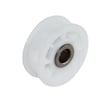
- Dryer idler pulley 4560EL3001A
- Dryer drum support roller 4581EL2002H
Why it matters
A weak or failing motor can cause slow starts, humming without tumbling, overheating shutdowns, or repeated blown thermal protection. Replacing the motor without addressing a tight drum, worn belt, or bad rollers can shorten the life of the new motor.
Last updated: February 2026