Error Codes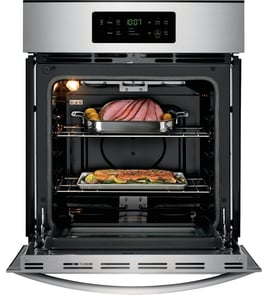



How long should a Dacor oven last?
A Dacor electric wall oven like model CPS227 typically lasts 15 to 20 years with normal household use and basic maintenance. Consistent cleaning, good airflow around the cabinet, and fixing small issues early (like a leaking door seal) are what most often determine whether it reaches the high end of that range.
Most wall ovens fall into a predictable lifespan range; Dacor units are built to run on the longer side when they are maintained.
- Typical lifespan: 15 to 20 years
- Heavy use (daily high-heat cooking): often closer to 12 to 15 years
- Poor sealing, overheating, or neglected repairs: can shorten life significantly
- Stable power and correct wiring: helps protect controls and connections
| What you’re seeing | Most likely meaning | Common next step |
|---|---|---|
| Uneven baking or long preheat | Heat or airflow issue | Check temperature performance; inspect convection fan area |
| Heat leaking around the door | Worn door seal | Replace the door gasket (Dacor door gasket) de81-09164a |
| Oven goes dead or trips power | Electrical connection or protection issue | Inspect wiring and fusing; test safely with a meter |
| Loud fan noise | Fan blade wear or obstruction | Inspect/replace the fan blade (Dacor fan blade) 82651 |
These habits reduce stress on heating and electrical components.
- Keep the door sealing surfaces clean so the gasket can seal evenly.
- Avoid slamming the door; it can distort hinges and compromise the seal.
- Don’t block vents; restricted airflow increases internal temperatures.
- If the oven loses power intermittently, inspect connections at the terminal block (Dacor terminal block) 83556.
- Address abnormal noises early; a failing fan can lead to overheating.
A wall oven that holds temperature and vents correctly runs cooler at the controls and wiring, which reduces premature failures. Small fixes like replacing a worn gasket or noisy fan blade often prevent bigger, more expensive breakdowns later.
Last updated: January 2026
Is Dacor wall oven good?
Dacor wall ovens, including the Dacor CPS227, are generally considered a premium choice with strong build quality and cooking performance. “Good” depends most on your priorities (even baking, quiet convection, service access, and parts availability) and the condition or age of the unit.
We judge wall ovens on a few practical factors that affect day-to-day use and long-term ownership:
- Temperature consistency: even baking and roasting across racks
- Convection performance: fan-driven heat for faster, more even results
- Reliability of high-heat components: door seal, wiring, and power connections
- Serviceability: access to common wear parts and straightforward diagnostics
- Fit and finish: door alignment, trim fit, and overall sturdiness
| Category | What you typically get with Dacor wall ovens | What to watch for over time |
|---|---|---|
| Cooking results | Strong baking and roasting performance | Calibration drift, sensor issues on older units |
| Build quality | Solid door and cabinet construction | Door seal wear, hinge alignment |
| Ownership | Premium feel and features | Repair cost can be higher than basic brands |
These checks help you decide if your CPS227 is performing like a good wall oven should:
- Preheat time: should be consistent from cook to cook
- Bake evenness: try a simple cookie-sheet test for hot spots
- Door seal: look for heat leakage, torn gasket, or hardened sections
- Fan noise: convection fan should run smoothly without scraping
- Power connections: any burning smell or intermittent power needs immediate attention
If you find heat leaking around the door, replacing the Dacor door gasket is a common, high-impact fix.
A wall oven can seem “fine” but still waste energy and cook unevenly if the door seal is weak or airflow is compromised. Addressing wear items early helps protect the control area, improves temperature stability, and keeps cooking results consistent.
Last updated: January 2026
How much does a 27 inch wall oven weigh?
Most 27-inch electric wall ovens weigh about 120 to 180 lb. For the Dacor CPS227, the exact installed weight depends on the specific configuration and trim, but planning for 150 lb is a solid baseline for handling, cabinet support, and safe installation.
Most 27-inch wall ovens fall into these ranges:
- Single wall oven: 120 to 180 lb
- Double wall oven: 200 to 300 lb
- Shipping weight: typically 10 to 30 lb higher than installed weight
- Heavier builds: more insulation, thicker door glass, or convection hardware can add weight
| Oven type | Typical weight | Notes |
|---|---|---|
| 27-inch single electric wall oven | 120 to 180 lb | Most common range for residential units |
| 27-inch double electric wall oven | 200 to 300 lb | Often requires 2 to 4 people to lift |
| Shipping vs installed | +10 to 30 lb | Packaging and pallets add weight |
Weight affects more than lifting. It impacts cabinet integrity, mounting stability, and whether the oven sits square in the cutout.
- Plan for at least 2 people to lift and guide the oven into the cabinet cutout.
- Protect the door and trim; avoid using the door handle as a lifting point.
- Confirm cabinet support; the base and side rails must be solid and level.
- Shut off power at the breaker before moving or wiring the oven.
- Use proper PPE (work gloves, closed-toe shoes) and a stable dolly if moving across floors.
If you are correcting gaps, heat leaks, or alignment issues after installation, these model-related parts are commonly involved:
Last updated: January 2026
Why is my Dacor oven not heating up?
If your Dacor CPS227 electric wall oven is not heating, the most common causes are a power supply problem (tripped breaker), a failed temperature sensor or heating circuit, or a safety device opening due to overheating. Start with power checks, then inspect the heating and control wiring.
- Confirm the oven is set to Bake (not Delay Start or Sabbath mode, if equipped).
- Make sure the door is fully closed; some modes can behave oddly if the door is not seated.
- Reset power: turn the oven breaker OFF for 2 minutes, then back ON.
- Check your home electrical panel: many wall ovens use a double-pole breaker; one side can trip and leave the oven with partial power.
- If the display works but there is no heat, suspect a heating circuit, sensor, or control issue.
These are frequent failure points on electric wall ovens like the Dacor CPS227:
- Oven temperature sensor (reads wrong temperature and prevents proper heating)
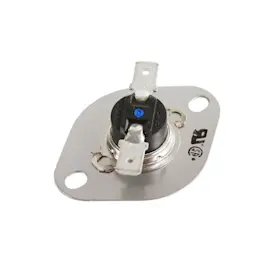
- Thermal fuse or high-limit device (opens if the oven overheats)
- Control board/relay (does not send power to the heating circuit)
- Loose or burned wiring connection at the power input or control area
- Terminal block connection damage (overheating at the wire lugs)
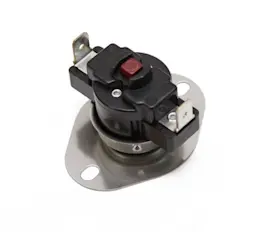
If you see heat damage or loose connections at the power input, replacing the terminal block 83556 is a common fix.
- Shut off power at the breaker before removing any panels.
- Inspect for burned wires, melted insulation, or loose spade terminals.
- Check the power cord/conduit connections at the terminal block for tightness.
- If you have a multimeter, test for correct voltage and continuity through suspect components.
Helpful DIY references:
| What you notice | Most likely cause | What to check next |
|---|---|---|
| Display works, no heat in Bake or Broil | Control/relay, sensor, open safety device | Wiring, sensor, fuse/high-limit |
| Oven heats sometimes, then stops | Overheating protection opening, failing relay | Cooling airflow, wiring, control |
| No display and no heat | No power supply | Breaker, junction box, terminal block |
A wall oven that powers on but will not heat often has a failing electrical connection or control component. Catching a loose terminal block or overheated wire early helps prevent repeat shutdowns and more extensive wiring damage.
Last updated: January 2026