

Can I search for Whirlpool parts by model?
Yes. For Whirlpool dryer model LER6611LQ0, searching by the full model number is the most accurate way to match compatible replacement parts because it filters results to the exact diagrams and part listings built for your dryer.
How to search by model number (best practice)
- Use the complete model number: LER6611LQ0 (letters and numbers matter).
- Match the model number from the dryer’s ID tag, not just the series name.
- Start with common wear items if you are troubleshooting noise, no heat, or no start.
- Use the parts list to confirm the part name and identifier before ordering.
- If multiple versions appear, pick the listing that matches your dryer’s configuration (electric, control style, door style).
Common LER6611LQ0 parts customers search for
These are frequent replacements for this Whirlpool dryer model:
| Symptom or maintenance need | Part to check first | Example part for this model |
|---|---|---|
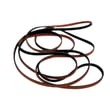
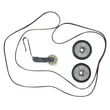
| Drum not turning, squealing | Belt and drum support parts | Dryer drum belt 341241 |
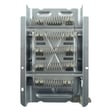
| No heat or weak heat | Heating circuit parts | Dryer element 279838 |
| Dryer will not start when door closes | Door switch and latch parts | Dryer door switch WP3406107 |
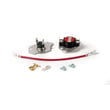
| Overheating or shuts off | Safety thermostats and fuses | Dryer thermal cut-off fuse kit 279816 |
Why searching by model matters
Whirlpool often uses similar-looking parts across many dryers, but mounting points, wiring terminals, and temperature ratings can differ. Searching by LER6611LQ0 helps prevent ordering a part that fits a different Whirlpool platform.
Helpful DIY reading
If you are searching for parts because drying performance is poor, we recommend starting with airflow and venting checks before replacing components; see dryer takes a long time to dry.
Last updated: February 2026
How to tell if a Whirlpool heating element is bad?
On a Whirlpool LER6611LQ0 electric dryer, a bad heating element typically shows up as no heat, very long dry times, or clothes that stay damp even though the drum tumbles. We confirm it by doing a quick visual check and a multimeter continuity test on the heater terminals.
Quick symptoms checklist
- Dryer runs but produces little or no heat
- Cycles take much longer than normal
- Clothes feel cool or damp at end of cycle
- Burning smell (stop the dryer and inspect)
- Breaker trips when heat should turn on (possible short)
How we test the heating element (safe, reliable method)
- Disconnect power: Unplug the dryer or switch off the breaker.
- Access the heater housing and locate the element terminals.
- Remove at least one wire from the element terminal so you do not backfeed through the circuit.
- Set a multimeter to ohms (Ω) and test across the two element terminals.
- Test each terminal to the metal heater housing (ground) to check for a short.
What readings mean
| Test | What you should see | What indicates a bad element |
|---|---|---|
| Terminal-to-terminal resistance | Typically around 10 to 20 Ω on many Whirlpool-style electric dryers | OL/infinite (open) or 0 Ω (short) |
| Terminal-to-housing (ground) | OL/infinite | Any measurable resistance (short to ground) |
Parts that are commonly replaced with the element
If the element tests bad, we often inspect or replace heat-safety parts at the same time because restricted airflow can overheat the heater.
- Dryer element 279838 (heater coil assembly)
- Dryer thermal cut-off fuse kit 279816 (overheat protection)
- Dryer high-limit thermostat WP3977767 (temperature safety limit)
- Venting and lint path for blockage
Why it matters
A weak or failed heating element can mimic airflow problems, but a shorted element can also overheat the dryer or trip the breaker. Testing the element and checking the venting together helps restore normal heat and drying performance.
Last updated: February 2026
What's the average lifespan of a Whirlpool dryer?
A Whirlpool dryer like model LER6611LQ0 typically lasts 10 to 13 years with normal household use. Regular vent cleaning, not overloading, and replacing wear items early (such as a belt or thermostat) can help you reach the high end of that range.
Typical lifespan at a glance
| Usage and care level | What most owners see | What helps most |
|---|---|---|
| Light use, excellent maintenance | 13+ years | Clean airflow path, gentle loads |
| Average family use | 10 to 13 years | Routine cleaning, timely part replacement |
| Heavy use, poor airflow | Under 10 years | Fix vent restrictions, avoid overheating |
What shortens dryer life fastest
- Restricted venting (long dry times, overheating, blown thermal fuse)
- Overloading the drum (extra strain on the motor, rollers, and belt)
- Running with poor airflow or heavy lint buildup
- Ignoring squealing, thumping, or burning smells
- Skipping basic cleaning (lint screen area, blower housing, exhaust duct)
Parts that commonly extend life when replaced early
If your LER6611LQ0 is otherwise in good shape, replacing common wear parts often restores reliable drying:
- Dryer drum belt 341241 (drum stops turning or slips)
- Dryer operating thermostat WP3387134 (temperature control issues)
- Dryer thermal cut-off fuse kit 279816 (no heat after overheating event)
- Dryer blower wheel WP694089 (weak airflow, rumbling, lint buildup)
Why it matters
A dryer’s lifespan is mostly an airflow and wear-parts story. When airflow stays strong and heat is controlled, the motor and drum support components run cooler and with less strain, so the dryer lasts longer and dries faster.
Last updated: February 2026