Get free shipping on your order, with any water filter subscription. Find my filter

Open Hamburger Menu
Sears Parts Direct
Tips to find your model number
LG WT4870CW washer

LG WT4870CW washer Parts

Here are the diagrams and repair parts for LG WT4870CW washer, as well as links to manuals and error code tables, if available.

By Schematic
By Part
SELECT DIAGRAM
?

This is the number corresponding to the part on the diagram / schematic

Browse Parts for WT4870CW Washer

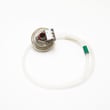
  • Lg Washer Water-level Pressure Switch for LG WT4870CW - Part 6501EA1001R

    Control panel assembly parats diagram

    Lg Washer Water-level Pressure Switch

    In Stock
    $63.11
    9% OFF Phone Price : $69.11Info Icon
    Minus Item
    Qty
    Plus Item
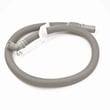
  • Washer Drain Hose for LG WT4870CW - Part AEM73213001

    Tub assembly parts diagram

    Washer Drain Hose

    Part #AEM73652901

    Replaced by #AEM73213001

    Info Icon
    Manufacturer substitution
    This part replaces AEM73652901. Substitute parts can look different from the original.
    In Stock
    $40.13
    13% OFF Phone Price : $46.13Info Icon
    Minus Item
    Qty
    Plus Item
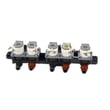
  • Kenmore Elite Washer Water Inlet Valve Assembly for LG WT4870CW - Part AJU75152601

    Control panel assembly parats diagram

    Lg Washer Water Inlet Valve Assembly

    Part #AJU73213301

    Replaced by #AJU75152601

    Info Icon
    Manufacturer substitution
    This part replaces AJU73213301. Substitute parts can look different from the original.
    In Stock
    $126.43
    9% OFF Phone Price : $138.43Info Icon
    Minus Item
    Qty
    Plus Item
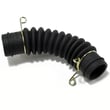
  • Washer Drain Hose for LG WT4870CW - Part AEM73732901

    Outer case assembly parts diagram

    Washer Drain Hose

    Part #5215EA1001A

    Replaced by #AEM73732901

    Info Icon
    Manufacturer substitution
    This part replaces 5215EA1001A. Substitute parts can look different from the original.
    In Stock
    $46.45
    11% OFF Phone Price : $52.45Info Icon
    Minus Item
    Qty
    Plus Item
  • Washer Washplate Cap for LG WT4870CW - Part 5006EA3009B

    Tub assembly parts diagram

    Washer Washplate Cap

    Part #MBL65219301

    Replaced by #5006EA3009B

    Info Icon
    Manufacturer substitution
    This part replaces MBL65219301. Substitute parts can look different from the original.
    In Stock
    $33.73
    15% OFF Phone Price : $39.73Info Icon
    Minus Item
    Qty
    Plus Item
  • Washer Lid Lock And Switch Assembly for LG WT4870CW - Part EBF61674802

    Control panel assembly parats diagram

    Washer Lid Lock

    Part #EBF60665201

    Replaced by #EBF61674802

    Info Icon
    Manufacturer substitution
    This part replaces EBF60665201. Substitute parts can look different from the original.
    In Stock
    $141.86
    8% OFF Phone Price : $153.86Info Icon
    Minus Item
    Qty
    Plus Item
  • Washer Shifter Coupling for LG WT4870CW - Part MCJ61861201

    Tub assembly parts diagram

    Washer Clutch Band

    Part #MCJ61941202

    Replaced by #MCJ61861201

    Info Icon
    Manufacturer substitution
    This part replaces MCJ61941202. Substitute parts can look different from the original.
    In Stock
    $36.94
    14% OFF Phone Price : $42.94Info Icon
    Minus Item
    Qty
    Plus Item
  • Washer Bleach Dispenser for LG WT4870CW - Part ACZ72910401

    Control panel assembly parats diagram

    Washer Bleach Dispenser

    Part #ACZ73410701

    Replaced by #ACZ72910401

    Info Icon
    Manufacturer substitution
    This part replaces ACZ73410701. Substitute parts can look different from the original.
    In Stock
    $34.69
    15% OFF Phone Price : $40.69Info Icon
    Minus Item
    Qty
    Plus Item
  • Washer Motor Rotor for LG WT4870CW - Part 4413EA1004D

    Tub assembly parts diagram

    Washer Motor Rotor

    In Stock
    $189.99
    12% OFF Was : $215.30Info Icon
    Minus Item
    Qty
    Plus Item
  • Washer Motor Stator for LG WT4870CW - Part 4417EA1002K

    Tub assembly parts diagram

    Washer Motor Stator

    In Stock
    $332.64
    $12.00 OFF Phone Price : $344.64Info Icon
    Minus Item
    Qty
    Plus Item

LG Washer WT4870CW FAQs

The LG WT4870CW washer has a 4.5 cu. ft. capacity. For cycle-specific loading guidance (bulky items, bedding, and high-efficiency detergent amounts), we recommend following the load and care instructions in the WT4870CW manual.

What “4.5 cu. ft.” means for real-world loads

Capacity is the tub volume; it helps you estimate how much laundry the washer can handle without overfilling.

  • Best cleaning happens when clothes can tumble and circulate freely
  • Overloading can cause poor rinsing, out-of-balance spinning, and extra wear
  • Underloading can lead to inefficient water and energy use

Quick loading guidelines (works well for most top-load washers)

Use these practical checks when loading your WT4870CW:

  • Load loosely; do not pack items down
  • Keep items below the top of the tub ring area
  • Mix large and small items to help balance during spin
  • For bulky items, wash 1 to 2 pieces at a time (depending on size)
  • Use HE detergent and measure carefully to avoid oversudsing

Common load examples (approximate)

These examples help translate capacity into typical household loads.

Load type Typical fit in a 4.5 cu. ft. top-load washer Tip
Everyday mixed laundry Medium to large load Leave space at the top for movement
Towels Several bath towels plus hand towels Avoid washing only one heavy towel
Bedding Many comforters fit, but thickness varies Use “Bulky” cycle if available

Why it matters

Matching load size to the WT4870CW’s 4.5 cu. ft. capacity helps prevent vibration, improves cleaning and rinsing, and reduces strain on key components like the drive system and suspension.

Last updated: January 2026

Most LG top-load washers, including model WT4870CW, do not have a front-access drain pump filter like many front-load washers. Instead, draining clogs are usually handled by checking the drain hose, the pump inlet area, and the tub for small items; see the WT4870CW washer manual for model-specific care and cleaning guidance.

What WT4870CW typically has instead of a drain filter

On WT4870CW-STYLE top-load designs, the most common places debris causes “won’t drain” symptoms are in the drain path, not a clean-out filter door.

  • Check the standpipe or laundry sink for slow draining
  • Inspect the drain hose for kinks, crushing, or a clogged hose end
  • Listen for the drain pump running during the drain portion of the cycle
  • Look for small items (coins, socks) trapped between the inner basket and outer tub
  • If the washer hums but does not drain, the pump may be obstructed or failing

Quick drain-path checklist (safe DIY)

  1. Unplug the washer.
  2. Confirm the drain hose is not pushed too far down the standpipe.
  3. Remove the drain hose from the standpipe and check for blockage at the hose end.
  4. If draining is still poor, the next step is typically inspecting the pump and hoses for obstructions.

If you determine the pump is not moving water (or is noisy/humming), the compatible replacement for this model is the kenmore elite washer drain pump 4681EA1007A.

Symptoms and likely causes

Symptom Most likely cause What to check first
Won’t drain at all Blocked hose or failed pump Drain hose routing and clogs
Drains slowly Partial clog or restricted standpipe Standpipe flow and hose end
Hums during drain Pump jammed or failing Pump inlet area and impeller
Drains but leaves water Siphoning or installation issue Hose depth in standpipe

Why it matters

A restricted drain path can trigger long cycle times, poor spin performance, and standing water that leads to odor. Keeping the drain hose routed correctly and clearing obstructions early helps protect the drain pump and prevents repeat clogs.

Last updated: January 2026

On the LG WT4870CW washer, TurboWash is designed to shorten the overall cycle time while still cleaning effectively by using more aggressive spray action and optimized wash motions; a normal wash typically relies on standard fill, agitation, and rinse steps and usually takes longer.

How TurboWash changes what the washer does

TurboWash is mainly about cleaning efficiency per minute. Instead of only depending on the tub filling and the washplate moving the load, the washer uses additional spray patterns and timing to speed up saturation and soil removal.

  • Shortens cycle time compared with a comparable normal cycle
  • Uses added spray action (water jets) to wet and flush fabrics faster
  • Often changes the rhythm of agitation and pauses to improve turnover
  • Can reduce “waiting” time during fill by cleaning while filling
  • Works best with typical mixed loads, not extreme overloading

For cycle-by-cycle details and which cycles support TurboWash on this model, use the WT4870CW manual.

When to use TurboWash vs normal wash

TurboWash is a good default when you want faster results without stepping down to a “quick wash” style cycle. Normal wash is a solid choice when you want a more traditional, longer wash profile.

Choose this Best for What to expect
TurboWash Everyday loads, time savings Shorter cycle, more spray action
Normal wash Heavier soil, when time is not a concern Longer cycle, standard wash pattern

Tips that matter on this model

Even with TurboWash, load size and water level sensing still affect performance.

  • Load loosely around the washplate; avoid packing items down
  • Use HE detergent and measure carefully (too much can reduce rinsing)
  • Select the right soil level; higher soil can extend time even in TurboWash
  • If cleaning seems weak, inspect the washplate area for buildup or looseness

If you suspect poor agitation (clothes not moving, grinding, or slipping), the wash system parts to check first on WT4870CW include the washer washplate AGZ72909711.

Why it matters

Choosing TurboWash vs normal wash helps balance cleaning, fabric care, and time. If you are troubleshooting “not cleaning well,” knowing which cycle you used helps narrow whether it is a cycle-selection issue or a wash system (washplate/drive) issue.

Last updated: January 2026

Most common symptoms to help you fix your washers

Choose a symptom to see related washer repairs.

Main causes: clogged drain hose, house drain clogged, bad drain pump, water-level pressure switch failure, bad control b…

Main causes: broken lid switch or lid lock, bad pressure switch, broken shifter assembly, faulty control system…

Main causes: worn agitator dogs, bad clutch, broken motor coupler, shifter assembly failure, broken door lock, suspensio…

Main causes: water heater failure, bad water temperature switch, faulty control board, bad water valve, faulty water tem…

Main causes: lack of electrical power, wiring failure, bad power cord, electronic control board failure, bad user interf…

Main causes: no water supply, bad water valves, water-level pressure switch failure, control system failure, bad door lo…

Main causes: unbalanced load, loose spanner nut, worn drive block, broken shock absorber or suspension spring, debris in…

Main causes: leaky water inlet valve, faulty water-level pressure switch, bad electronic control board…

Main causes: bad lid switch or door lock, bad timer or electronic control board, wiring failure, bad water inlet valve a…

Repair guides for gas ranges

How to replace an oven temperature sensor on a gas range

How to replace an oven temperature sensor on a gas range

See how to replace an oven temperature sensor on a gas range.…

Repair time and Difficulty

 15 minutes or less
How to replace a range spark igniter electrode

How to replace a range spark igniter electrode

Learn how to replace the spark igniter electrode for the surface burners on a gas range or dual-fuel range.…

Repair time and Difficulty

 45 minutes or less
How to replace a gas range oven control board

How to replace a gas range oven control board

These step-by-step instructions explain how to replace an oven control board on a gas range…

Repair time and Difficulty

 15 minutes or less

Effective articles & videos to help repair your washers

Use the advice and tips in these articles and videos to get the most out of your washer.

How auto-load sensing washers work (and when they don't)

How auto-load sensing washers work (and when they don't)

Your washer barely fills or seems stuck in sensing mode? Find out how auto-load sensing and Precise Fill features work, …

How to remove the main control board and user interface from a Maytag Epic Z front-load washer

How to remove the main control board and user interface from a Maytag Epic Z front-load washer

Get step-by-step instructions for removing the main electronic control board and the control panel from a Maytage Epic Z…

Using a wiring schematic to trace a current video

Using a wiring schematic to trace a current video

Find out what’s wrong with your appliance by following a circuit.…

Parts & More

Bottom-Mount Refrigerator
Canister Vacuum
Dehumidifier
Dryer
Front-Engine Lawn Tractor
Gas Chainsaw
Gas Cooktop
Gas Walk-Behind Mower
Parts
Reverse Osmosis System
Table Saw
Upright Freezer
Washer