 Owner’s manual
 Error Codes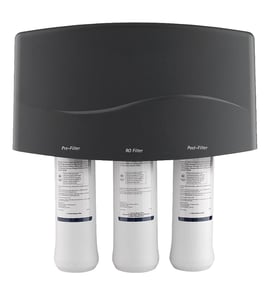




What is the life expectancy of a reverse osmosis system?
For the Kenmore reverse osmosis water system model 625381560, the main housing and frame typically last 10 to 15 years. Performance parts wear sooner: plan on replacing the prefilter and postfilter regularly and the RO membrane when water quality or production drops (see the 625381560 owner's manual).
Typical lifespan by component
These are the service-life ranges most homeowners see with under-sink RO systems like the Kenmore 625381560.
| Component | Typical replacement interval | Common “it’s time” signs |
|---|---|---|
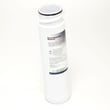
| Prefilter and postfilter cartridges | 6 to 12 months | Slower flow, more taste/odor |
| RO membrane | 2 to 5 years | Lower output, worse taste/TDS |
| Battery (if equipped) | With filter changes | Low indicator function |
| Faucet, tubing, fittings | 5 to 10+ years | Leaks, drips, cracked tubing |
| Storage tank | 5 to 10+ years | Low draw volume, won’t hold pressure |
What shortens (or extends) RO system life
The manual notes membrane life depends heavily on supply-water conditions, especially pH and hardness. Higher pH can shorten membrane life and lead to pinhole leaks.
- High pH and hard water increase membrane stress and scaling
- Heavy sediment can plug filters faster and reduce output
- Chlorine exposure can damage the membrane if prefiltration is overdue
- Low water pressure reduces production and can mimic “worn out” filters
- Infrequent use can cause stale taste and longer tank refill times
Maintenance habits that protect the system
We recommend these practices to keep the Kenmore 625381560 producing good water for the longest time.
- Replace prefilter and postfilter when flow slows or at least annually
- Replace the battery whenever you replace the cartridges (per the manual)
- Expect 1 to 3 hours to fill the storage tank after service or first pressurizing
- Check fittings and connections for leaks as pressure builds
- Sanitize during major filter service using the reverse osmosis system sanitation kit 7301203 when appropriate
Why it matters
RO systems do not usually “fail all at once”; water quality and production decline as filters load up and the membrane ages. Staying on a replacement schedule protects the RO membrane, reduces water waste, and keeps taste and TDS where you expect them.
Last updated: January 2026
What are the downsides of reverse osmosis?
Reverse osmosis on Kenmore model 625381560 produces very clean drinking water, but it also sends concentrated minerals and impurities to the drain as waste water and makes water more slowly than a standard faucet. Ongoing maintenance (filters, membrane, sanitation) is part of owning an RO system; see the 625381560 owner's manual.
Common downsides you may notice
- Waste water to the drain: RO works by pushing water through a membrane; the “reject” stream carries dissolved solids away.
- Slower production rate: This system makes product water at about one ounce per minute, then stores it in the tank for faster dispensing.
- Tank dependence: When the storage tank is low, faucet flow can feel weak until the tank refills.
- Maintenance costs and time: Prefilter, postfilter, and the RO membrane need periodic replacement; output slows as filters load with sediment.
- Taste changes when service is overdue: When the membrane is worn, product water quality can drop and taste can turn “off.”
- Sanitation matters: Any drinking-water system can develop odors or contamination if it is not cleaned and serviced on schedule.
What to do to minimize the downsides
- Stay on a filter schedule: Replace prefilter and postfilter when flow slows or taste/odor returns.
- Watch for membrane wear: Replace the RO membrane when production rate and/or water quality drops.
- Sanitize during service: Use a proper sanitation procedure and supplies such as the reverse osmosis system sanitation kit 7301203.
- Confirm the shutoff is working: This model uses an automatic shutoff valve to reduce water waste when the tank is full and the faucet is closed.
- Check tank pressure if flow is poor: A typical RO tank is around 5 to 7 psi empty and about 30 psi full; incorrect pressure reduces faucet flow.
Quick trade-off summary
| What you want | What RO does well | Typical downside |
|---|---|---|
| Lower TDS, clearer taste | Membrane reduces dissolved solids and organics | Creates reject water to the drain |
| Convenient dispensing | Storage tank provides faster faucet flow | Slow refill rate after heavy use |
| Consistent performance | Replaceable cartridges protect the membrane | Ongoing filter and membrane replacements |
Why it matters
RO systems are designed to remove dissolved solids (TDS) and improve taste, but that performance depends on water pressure, a healthy membrane, and timely filter changes. Keeping up with maintenance protects water quality and helps prevent slow output and unnecessary waste.
Last updated: January 2026
How much does it cost to replace RO parts?
For Kenmore reverse osmosis water system model 625381560, replacement cost depends on which items are due. Most owners budget for prefilter/postfilter changes about every 6 months and an RO membrane about every 6 to 12+ months, plus occasional tubing or valve parts as needed (see the 625381560 owner's manual).
Typical replacement schedule (and what drives cost)
Your ongoing cost is mostly set by how often you replace filters and the membrane.
- Prefilter and postfilter: replace at least every 6 months (sooner if flow slows from sediment buildup)
- RO membrane: often well over 1 year, but can be as short as 6 months with high pH water (about 8.5 to 10)
- Battery: replace whenever you replace cartridges
- Sanitizing: periodic sanitizing helps keep taste and performance consistent
Common parts that affect your total
These are model-matched parts that can add to your replacement cost when symptoms point to them.
- Reverse osmosis system sanitation kit 7301203 for periodic sanitizing
- Reverse osmosis membrane 3857705 when production rate or water quality drops
- Kenmore reverse osmosis system automatic shut-off kit 7333145 if the system will not shut off when the tank is full
- Kenmore elite reverse osmosis system check valve 7333137 if you have backflow-related issues
- Kenmore reverse osmosis system flow control kit 7333153 if waste-to-product flow seems abnormal
Cost planning guide
Exact totals vary by water quality and which components you replace, but this framework helps you estimate.
| What you replace | How often (typical) | What changes the cost most |
|---|---|---|
| Prefilter + postfilter + battery | Every 6 months | Sediment level, chlorine exposure, usage volume |
| RO membrane | 6 to 12+ months | Feed-water pH, TDS level, maintenance consistency |
| Valves/tubing/fittings | As needed | Leaks, slow fill, failure to shut off |
Why it matters
Replacing the prefilter and postfilter on schedule protects the RO membrane from chlorine damage and prevents plugging that slows output. Replacing the membrane when taste or production drops keeps TDS reduction and drinking-water quality where it should be.
Last updated: January 2026
What is the highest rated reverse osmosis system?
There is no single “highest rated” reverse osmosis system because ratings vary by what’s being scored (NSF/ANSI certifications, contaminant list, efficiency, taste, or cost). For Kenmore model 625381560, the best choice is the system that matches your home’s water pressure, temperature, and source; confirm those requirements in the 625381560 owner's manual.
What “highest rated” usually means
When comparing RO systems, we recommend focusing on measurable criteria:
- NSF/ANSI certifications (commonly 42 and 58) and the exact contaminants listed
- Feed-water requirements (pressure and temperature range; cold water only)
- Efficiency and waste water ratio under typical use
- Production rate (membrane output plus storage tank delivery)
- Maintenance access (filters, membrane, tubing, valves)
Key operating requirements for Kenmore 625381560
This Kenmore RO system uses household pressure to push water through a semi-permeable membrane; product water goes to the faucet or storage tank and reject water goes to the drain.
| Item | Typical requirement for this model type | Why it matters |
|---|---|---|
| Supply pressure | 40 to 100 psi | Low pressure reduces output; high pressure can require regulation |
| Water temperature | 40°F to 100°F | Cold-only supply protects the membrane and seals |
| Water source | Potable, properly disinfected | Protects health and prevents biological fouling |
If you’re asking because performance seems “low rated”
These model-matched parts commonly affect flow, shutoff behavior, and water quality:
- Sanitize the system with the reverse osmosis system sanitation kit 7301203
- Fix continuous drain flow with the Kenmore reverse osmosis system automatic shut-off kit 7333145
- Restore proper tank drawdown with the Kenmore reverse osmosis system diaphragm kit 7333179
- Improve TDS reduction with the reverse osmosis membrane 3857705
Why it matters
A top-ranked RO system can perform poorly if your pressure, temperature, or water source does not meet its requirements. Matching the system to your conditions delivers better taste, stable TDS reduction, and reliable automatic shutoff.
Last updated: January 2026