 Owner’s manual


Where is the model number on Kenmore Elite dryer?
On a Kenmore Elite dryer like model 11077032600, the model number is printed on the rating label; you’ll typically find it when you open the dryer door and look around the door opening on the cabinet frame. For diagrams and label locations, use the 11077032600 owner's manual.
Where to look first (most common spots)
- Open the dryer door and check the cabinet frame around the opening
- Look along the top edge of the door opening
- Check the left and right sides of the door opening
- Inspect the inside face of the dryer door (inner panel)
- Use a flashlight; the label print can be small or lightly faded
What the label usually includes
The rating label normally lists more than just the model number, which helps confirm you found the right tag.
| Label item | What it’s used for |
|---|---|
| Model number | Matching parts and service information |
| Serial number | Identifying production run and age |
| Type (gas/electric) | Confirming correct heating parts |
| Electrical ratings | Verifying power requirements |
Why it matters
We use the exact model number to match the correct Kenmore Elite dryer parts list and diagrams. Even small model-number differences can change which parts fit (for example, a thermal fuse, igniter, or drum support roller).
Quick tip for ordering parts
Once you find the label, write the model number and serial number exactly as shown. Then you can shop the parts list for your dryer model or search by model number on Sears PartsDirect.
Last updated: February 2026
How to hard reset a Kenmore dryer?
To hard reset your Kenmore Elite dryer model 11077032600, disconnect power (unplug the cord or switch the breaker off) for about 1 to 5 minutes, then restore power and start a new cycle. This clears most temporary control glitches and power-failure states; see the 11077032600 owner's manual for model-specific display messages.
Hard reset steps (safe and effective)
- Turn the dryer OFF.
- Unplug the dryer (or switch the circuit breaker OFF).
- Wait 1 to 5 minutes.
- Restore power.
- Close the door and press START (large loads may require holding START for 2 to 5 seconds).
- If the dryer was mid-cycle, select the cycle again and restart.
If the display shows a code after the reset
Your 11077032600 can show messages that point to the next step.
| What you see | What it usually means | What to do next |
|---|---|---|
| PF | Power failure interrupted the cycle | Press and hold START to restart the dryer |
| F codes (F1, F2, etc.) | Service code | Power reset once; if it returns, schedule service |
| No code, but won’t start | Basic start condition not met | Confirm door is fully closed; press and hold START |
When a “reset” won’t fix the problem
A hard reset helps with control lockups, but it will not bypass a real safety or heat issue. If the dryer runs but stops heating or shuts down repeatedly, check airflow first; overheating can trip safety devices.
- Clean the lint screen and confirm the lint screen housing is clear
- Inspect the vent hose for kinks or crushing
- Make sure the outside vent hood opens freely
- If the dryer has no heat, check common safety parts like the dryer thermal fuse WP3390719 and the dryer thermal cut-off kit WP8573713
Why it matters
Resetting restores normal control operation after a brief power interruption and helps you avoid unnecessary part replacement. If heat-related safety parts trip, fixing the venting problem first prevents repeat failures.
Last updated: February 2026
How do I know if my Kenmore dryer thermal fuse is blown?
If your Kenmore Elite dryer model 11077032600 will not start at all, a blown thermal fuse is a common cause. Another frequent clue is the drum runs but you get no heat. The sure way to confirm is a continuity test with a multimeter; see the 11077032600 owner's manual for safety steps before servicing.
Quick symptoms checklist
- Dryer will not run even with the door closed and Start pressed
- Drum tumbles but there is no heat (gas models can still tumble with no heat)
- Dryer stopped mid-cycle and will not restart after cooling down
- You recently had long dry times (often tied to restricted venting)
- You notice excessive heat at the cabinet or a hot laundry room
How we confirm a blown thermal fuse (multimeter test)
- Unplug the dryer (or disconnect power).
- Access the thermal fuse (typically on the blower housing or exhaust duct area).
- Pull the wire connectors off the fuse terminals.
- Set your meter to continuity or the lowest ohms setting.
- Touch a probe to each terminal.
Result guide
| Meter result | What it means | What to do next |
|---|---|---|
| Continuity (near 0 ohms or beep) | Fuse is good | Check door switch, start switch, motor circuit, and power supply |
| No continuity (open/infinite) | Fuse is blown | Replace the fuse and correct the overheating cause |
A common replacement for this model is the dryer thermal fuse WP3390719.
Why the fuse blows (and what to fix so it does not happen again)
A thermal fuse usually opens because the dryer overheated. The most common reason is restricted airflow.
- Clean lint screen and lint screen housing
- Inspect and clean the vent duct to the outside
- Check for crushed, kinked, or overly long vent runs
- Make sure the outside vent hood opens freely
Related “no heat” checks from the manual
Our troubleshooting guidance for 11077032600 also includes basics like verifying power, checking household fuses or breakers, and confirming the gas shutoff valve is open on gas models. Those steps are outlined in the 11077032600 owner's manual.
Ordering the right part
We recommend ordering by the exact model number 11077032600 to avoid mismatches. You can order the fuse and other common maintenance parts from the parts list for this model, or search by model on Sears PartsDirect.
Last updated: February 2026
What is the life expectancy of a Kenmore dryer?
A Kenmore dryer like model 11077032600 typically lasts 10 to 13 years with normal household use. Regular lint cleaning, correct venting, and replacing common wear items (belt, rollers, fuses) on time are what most often determine whether it reaches the high end of that range.
Typical lifespan and what changes it
Most dryers fail early because of airflow restrictions (overheating) or normal wear in the drum support and drive system.
- Best case: light use, short vent run, consistent lint removal
- Average case: normal family use with routine maintenance
- Shortened life: clogged venting, repeated overheating, ignored squealing or thumping
Quick reference
| Usage and care level | What you can expect | Common reason dryers quit |
|---|---|---|
| Light use + good maintenance | 12 to 15 years | Wear parts finally reach end of life |
| Typical family use | 10 to 13 years | Rollers/belt wear, heat-related shutdowns |
| Heavy use or poor venting | 7 to 10 years | Overheating damages fuses, sensors, wiring |
Maintenance that extends life (and prevents overheating)
Your 11077032600 manual emphasizes keeping the lint screen in place and clear; running with a loose, blocked, damaged, or missing lint screen can lead to overheating and damage. Use the 11077032600 owner's manual as your checklist.
- Clean the lint screen every load
- Inspect and clean the exhaust venting and outside hood regularly
- Remove accumulated lint from the vent system; a good rule is about every 2 years, sooner with heavy use
- Keep the dryer area clean so lint and dust do not get pulled into the cabinet
- Address new noises early (squeal, thump, rumble) before they wear other parts
Wear parts that commonly decide “repair vs. replace”
If the dryer still runs but is noisy or stops mid-cycle, replacing wear parts often restores years of service.
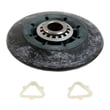
- For rumbling or thumping: drum support rollers such as the support WPW10314173
- For no-heat or overheating symptoms: safety devices like the dryer thermal fuse WP3390719
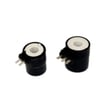
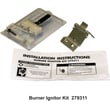
- For gas heat ignition issues: the igniter 279311 and the dryer valve coil kit 279834
Why it matters
A dryer’s “life expectancy” is mostly an airflow and heat-management story. Good venting and lint control prevent overheating, which protects key components like the thermistor, radiant sensor, and thermal cut-offs.
You can order replacement parts for Kenmore 11077032600 from the parts list for this model, or search by model number on Sears PartsDirect.
Last updated: February 2026
Is it worth repairing an old Kenmore dryer?
Yes; repairing an older Kenmore Elite dryer like model 11077032600 is worth it when the failure is a single common wear part (thermal fuse, igniter, drum rollers) and the drum and cabinet are solid. If multiple major assemblies are failing, replacement is the better value.
Quick decision checklist
- Repair when the dryer tumbles normally and you have one clear symptom (no heat, no start, squeal).
- Replace when the drum is damaged, the cabinet is severely rusted, or several expensive parts fail together.
- Fix airflow first; restricted venting causes overheating and repeat fuse trips.
- Confirm symptoms and safe service steps in the 11077032600 owner's manual.
Repairs that are usually worth it on this model
- No heat on a gas dryer: ignition components such as the igniter 279311 or dryer radiant sensor WP338906
- Dryer will not run: safety device such as the dryer thermal fuse WP3390719
- Squealing or thumping: worn drum support parts such as the support WPW10314173
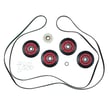
- Preventive refresh for common wear items: dryer repair kit 4392067
Cost and effort comparison
| Situation | What it points to | Typical best choice |
|---|---|---|
| One failed safety or ignition part | Single-point failure | Repair |
| Noise from rollers or seals | Normal wear | Repair |
| Motor plus other issues | Higher labor and parts | Replace |
| Repeated fuse trips | Vent restriction or overheating | Repair after fixing airflow |
Why it matters
A dryer that overheats from lint buildup or poor venting can keep blowing safety fuses and shorten the life of heating and motor components. Routine cleaning and vent checks help the repair last.
You can order replacement parts for model 11077032600 from the parts list for this dryer, or search by model number on Sears PartsDirect.
Last updated: February 2026








