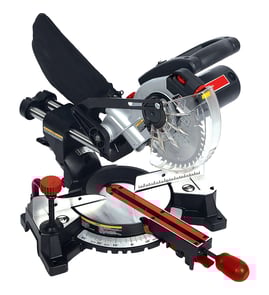

What should you never cut with a miter saw?
You should never use a Craftsman miter saw model 137285680 to cut material that the tool is not designed to handle or that you cannot control safely at the fence, such as tiny loose offcuts, rip cuts (with the grain), or hard materials like steel or masonry. These cuts raise the risk of kickback, binding, and loss of control.
Materials and cuts to avoid
- Very small pieces that put your fingers close to the blade path (use a clamp or a purpose-built jig instead).
- Rip cuts (cutting with the grain); a miter saw is for crosscuts, miters, and bevels, not ripping.
- Ferrous metals (iron or steel) unless the saw is specifically equipped and rated for metal cutting.
- Masonry products (brick, concrete, tile); abrasive dust and the wrong blade type make this unsafe.
- Freehand cuts without the work supported flat on the table and tight to the fence.
- Warped, twisted, or bowed boards that cannot sit flat and stay stable against the fence.
Safe alternatives that work better
If the cut you need is on the “never cut” list, these options are typically safer and more accurate:
| What you need to do | Better tool or method | Why it’s safer |
|---|---|---|
| Rip a board | Table saw with rip fence (or circular saw with guide) | Proper support and controlled feed |
| Cut steel/iron | Metal-cutting saw or abrasive chop saw rated for metal | Correct blade speed and guarding |
| Cut masonry | Masonry saw or angle grinder with masonry wheel | Designed for abrasive dust and material |
| Cut tiny parts | Clamp + stop block/jig | Keeps hands away from the blade |
Quick safety checks before any cut
- Use the right blade for the material (wood blade for wood only).
- Keep the workpiece flat on the table and tight to the fence.
- Clamp whenever the piece is short, narrow, or wants to roll.
- Let the blade reach full speed before entering the cut.
- Wait for the blade to stop completely before lifting the saw head.
Why it matters
Most miter saw injuries and damaged workpieces come from poor control at the fence or using the saw for tasks it was not built for. Avoiding rip cuts, tiny loose pieces, and hard materials helps prevent binding and kickback.
For more repair help and tool resources, search by model number on Sears PartsDirect.
Last updated: February 2026
Can a 10 inch miter saw cut a 2x4?
Yes. A 10-inch miter saw like the Craftsman 137285680 can cut a standard 2x4 in typical setups, including common 90-degree crosscuts and most miter cuts. Actual capacity depends on the saw’s design (standard vs. sliding) and how tall the board sits against the fence.
What you can expect a 10-inch miter saw to cut
Most 10-inch miter saws handle these common cuts on construction lumber:
- 2x4 at 90 degrees: typically yes (flat against the table)
- 2x4 at 45 degrees: typically yes (mitered crosscut)
- Wider boards (like 2x6): often possible at 90 degrees, but varies by saw
- Tall cuts (base molding nested): capacity is usually more limited than flat cuts
- Thicker hardwoods: may cut, but feed rate and blade choice matter more
Key factors that change the answer
Even with the same 10-inch blade size, cutting capacity can vary a lot.
| Factor | What it changes | What to do |
|---|---|---|
| Standard vs. sliding miter saw | Sliding models cut wider boards | If you need wider crosscuts, choose a sliding design |
| Fence height and head travel | Limits “vertical” or nested cuts | Test-fit the board against the fence before cutting |
| Blade type and tooth count | Cut quality and motor load | Use a sharp blade matched to framing or finish work |
| Board position | Changes effective cut height/width | Keep the board flat and tight to the fence |
Quick safety and cut-quality checklist
Before cutting a 2x4 on a miter saw, we recommend:
- Unplugging the saw before changing blades or adjusting the fence
- Clamping the 2x4 so it cannot lift or twist during the cut
- Letting the blade reach full speed before entering the wood
- Using a steady, controlled downfeed (do not force the cut)
- Waiting for the blade to stop before raising the arm
Why it matters
Knowing your real cut capacity helps prevent binding, kickback, and rough cuts. It also helps you choose the right blade and decide whether you need a sliding miter saw for wider stock.
If you need replacement parts for Craftsman 137285680, start with the model’s parts list, or search by model number on Sears PartsDirect.
Last updated: February 2026
Why is 31.6 on a miter saw?
The 31.6° mark on a miter saw (including Craftsman model 137285680) is a built-in shortcut for making common crown molding corner cuts. It pairs with a matching bevel setting (often 33.9°) to create tight 90° room corners without doing angle math.
What the 31.6° setting is used for
Most miter saws include “crown molding” detents because crown corners are repetitive and easy to get wrong. The 31.6° miter setting is typically used when you’re making a compound cut.
Common uses:
- Cutting crown molding for inside corners and outside corners
- Speeding up repeat cuts when you’re installing multiple pieces
- Reducing trial-and-error when the molding profile is consistent
- Working with common crown “spring angles” (the angle crown sits against wall and ceiling)
Typical companion settings (quick reference)
These presets are meant to work together for many standard crown installations.
| Cut type | Typical miter setting | Typical bevel setting | Notes |
|---|---|---|---|
| Compound crown (common preset) | 31.6° | 33.9° | Used for many standard crown spring angles |
| Non-compound (nested against fence) | Varies | 0° | Crown is held at its installed angle |
Why it matters
Crown molding is “compound” because it touches both the wall and ceiling. The 31.6° detent helps you hit the correct geometry faster, which means:
- Cleaner corner joints
- Less wasted material
- More consistent results across multiple rooms
Tips to get accurate crown cuts
- Confirm whether you’re cutting crown flat on the table (compound) or nested against the fence (non-compound); the settings are different.
- Use a stop block or repeatable measuring method for matching left and right pieces.
- Make test cuts on scrap first, especially if the crown profile is not standard.
- Keep the blade sharp; dull blades tear crown edges and make joints look open.
- If your saw detents feel “off,” check for fence alignment and miter scale accuracy.
Finding the right parts for your saw
If your miter detents are slipping, the bevel won’t lock, or the fence won’t stay square, we recommend looking up replacement parts by model number 137285680. Start with the parts list for this model, or search by model on Sears PartsDirect.
Last updated: February 2026
Which mitre saw is the most accurate?
The most accurate miter saw is the one that cuts square and stays locked in after calibration; a rigid, well-tuned non-sliding compound miter saw typically delivers the best repeatable accuracy. For Craftsman model 137285680, accuracy comes from setup, a sharp blade, and tight pivots.
What “most accurate” means in real use
Accuracy is a combination of alignment and repeatability.
- Miter detents hit true 0°, 45°, etc.
- Bevel stops return to true 0° and common angles
- Fence and table stay square under load
- Slide and pivot points have minimal play
Quick comparison of saw types
| Saw type | Accuracy potential | Notes |
|---|---|---|
| Non-sliding compound miter saw | Very high | Fewer moving parts, less deflection |
| Sliding compound miter saw | High | More to tune; rail play affects squareness |
| Table saw with a crosscut sled | Extremely high | Best for repeatable 90° crosscuts |
How we get the best accuracy from a miter saw (including 137285680)
These steps usually matter more than brand:
- Square the blade to the fence at 0° miter using a reliable square
- Verify bevel at 0° with an angle gauge; adjust the stop if your saw allows
- Check the fence faces are straight and coplanar; shim if needed
- Install a sharp, high-tooth-count blade for trim and finish work
- Support long stock with stands so the board does not sag during the cut
- Let the blade reach full speed, then feed steadily to reduce deflection
Why it matters
When the saw is truly square and repeatable, trim joints close tightly, miters match, and you waste less material. Even a premium saw cuts poorly if the fence is out of alignment or the blade is dull.
For accessories and replacement parts by model number, search Craftsman 137285680 on Sears PartsDirect.
Last updated: February 2026