Installation guide
 Owner’s manual
 Error Codes


Is Frigidaire Gallery high end?
Frigidaire Gallery is generally considered mid-range, not truly high-end. For a Frigidaire side-by-side refrigerator like model LGHC2342LF3, Gallery typically means nicer finishes and more convenience features than basic Frigidaire models, without the price and build level of luxury or pro-style lines.
How Gallery compares to “high-end”
In most appliance lineups, “high-end” usually implies premium materials, more specialized features, and higher pricing. Gallery sits between entry-level and premium tiers.
- More feature-rich than basic Frigidaire models
- Often includes upgraded styling (such as stainless finishes)
- Designed for everyday performance and value
- Not positioned as a luxury or built-in category
- Typically fewer pro-grade options than premium lines
What to check on your LGHC2342LF3
Because “Gallery” is a brand collection name (not a single spec), the best way to confirm what your exact refrigerator includes is to review the feature list and operating details in the LGHC2342LF3 owner’s manual.
Quick comparison
| Tier (typical) | Where Gallery fits | What you usually get |
|---|---|---|
| Budget | Below Gallery | Basic storage, fewer convenience features |
| Mid-range | Gallery | Better styling, more features, strong value |
| Premium / luxury | Above Gallery | Pro-style options, higher-end materials, specialty features |
Why it matters
Knowing the tier helps set expectations for repair decisions and upgrades. Mid-range models like Gallery often have widely available service parts and practical feature sets, which can make maintenance and ownership costs more predictable.
Last updated: January 2026
What is the average lifespan of a Frigidaire refrigerator?
For a Frigidaire side-by-side refrigerator like model LGHC2342LF3, the manufacturer does not publish a single “average lifespan” in the model’s installation information we have. In real-world use, many refrigerators are often kept in service for roughly a decade or more, depending on conditions and maintenance.
What we can say for LGHC2342LF3 (model-specific)
The best model-specific guidance is to focus on the factors that most directly affect how long LGHC2342LF3 runs efficiently and avoids major repairs. The installation requirements and operating setup in the LGHC2342LF3 installation instructions help reduce early wear by ensuring proper airflow, leveling, and correct water supply.
Biggest factors that shorten or extend refrigerator life
- Dirty condenser area that makes the compressor run hotter and longer
- Poor door sealing or misaligned doors that cause long run times and frost
- Inadequate ventilation clearances around the cabinet
- Water system issues (low pressure, leaks, restricted filter)
- Frequent warm-room exposure (garage or hot kitchen locations)
Practical maintenance that helps most
- Keep the toe grille clear and maintain airflow around the cabinet
- Clean the condenser area on a regular schedule (more often with pets)
- Verify doors close fully and gaskets seal all the way around
- Replace the water filter on schedule to prevent flow restriction
- Address dispenser or ice maker leaks quickly to prevent corrosion and damage
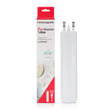
If you’re seeing slow water flow or want to stay ahead of water-system wear, the compatible refrigerator water filter ULTRAWF is a common maintenance item for this model.
Repair vs. replace: a simple decision guide
| Refrigerator age | Usually makes sense to | Why |
|---|---|---|
| Under ~5 years | Repair | Value is high; fewer age-related failures |
| ~5 to 10 years | Compare options | Depends on repair type and overall condition |
| Over ~10 years | Price out both | Multiple components may be nearing end of life |
Why it matters
When a refrigerator runs longer than normal to hold temperature, it increases energy use and adds stress to the compressor, fans, and defrost system. Good airflow, sealing, and water-flow maintenance often prevents the “runs all the time” pattern.
Last updated: January 2026
What is the most common problem with Frigidaire refrigerators?
For the Frigidaire LGHC2342LF3 side-by-side refrigerator, the most common trouble spots we see are ice maker and water dispenser issues (no ice, slow ice, weak water flow) and cooling complaints (warm fresh-food section, frost buildup, or temperature swings). Start with the setup and operating checks in the LGHC2342LF3 use & care manual.
Quick checks we recommend first
- Confirm doors close fully and the gaskets seal all the way around.
- Verify the household water shut-off valve is fully open and the supply line is not kinked.
- Replace the water filter if flow is slow or taste is off.
- Make sure vents inside the refrigerator and freezer are not blocked by food packages.
- Listen for airflow in the freezer; poor airflow often shows up as a warm refrigerator section.
Parts that commonly relate to these symptoms (LGHC2342LF3)
If your troubleshooting points to a specific component, these are model-matched parts that often come up:
- Refrigerator water filter ULTRAWF (a restricted filter can reduce dispenser flow and ice production)
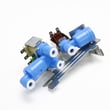
- Refrigerator water inlet valve assembly 242252702 (can cause no water to dispenser and no ice fill)
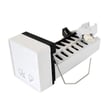
- Refrigerator ice maker 5303918344 (ice maker not cycling or not producing)
- Refrigerator defrost heater 242044113 (frost buildup leading to reduced cooling)
- Refrigerator defrost bi-metal thermostat 5303918214 (defrost system not operating correctly)
Symptom-to-cause cheat sheet
| Symptom | Most likely area to check | Common next step |
|---|---|---|
| No ice, water still works | Ice maker system | Check freezer temp, ice maker, and fill path |
| No water and no ice | Water supply or inlet valve | Confirm supply pressure, then test valve |
| Freezer cold, fridge warm | Airflow/damper/defrost | Check for blocked vents or frost on rear panel |
| Frost buildup in freezer | Defrost system | Inspect heater and defrost thermostat |
Why it matters
Ice and water problems are often caused by simple restrictions (filter, supply valve, air in the line). Cooling and frost issues can lead to food spoilage if airflow or defrost problems are ignored, so early diagnosis helps prevent bigger repairs.
Last updated: January 2026