Installation guide
 Owner’s manual
 Error Codes


Is JennAir considered high end?
Yes. Jenn-Air is widely considered a high-end (luxury) kitchen appliance brand; it is positioned above mainstream lines and is known for premium styling, higher-grade features, and a higher price tier. For your Jenn-Air range model JES9900BAS, the JES9900BAS owner's manual helps confirm the exact features and options your unit includes.
What “high end” means in practical terms
When we describe a brand as high end, we are usually talking about a combination of design, performance, and ownership experience.
- Premium design and finishes (built to match upscale kitchens)
- Feature-forward cooking options (more control and specialized modes)
- Higher parts and repair costs compared to mid-tier brands
- More complex electronics and controls on many models
- Longer-term support through model-specific parts and documentation
How to judge your specific range (JES9900BAS)
Even within a high-end brand, features vary by model and production run. Use these checks to evaluate what your range has:
- Review cooking modes, temperature settings, and special functions in the JES9900BAS owner's manual
- Confirm whether your unit has downdraft ventilation and what filter it uses
- Compare control layout and knob functions to the manual diagrams
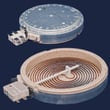
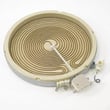
- Check for dual radiant surface elements and their size/heat zones
| What you compare | Typical “high-end” expectation | What to use for JES9900BAS |
|---|---|---|
| Cooking performance | More precise control and even heating | Manual feature list and operating instructions |
| Venting integration | Downdraft or premium hood pairing | Venting section and parts list |
| Serviceability | Parts are available but can cost more | Model parts diagrams and part listings |
Why it matters
Knowing Jenn-Air is high end helps set expectations: replacement parts (like controls, elements, and door components) often cost more, and correct model matching matters more because premium ranges can have multiple configurations.
Last updated: January 2026
Are JennAir ovens gas or electric?
Jenn-Air ovens can be gas, electric, or dual-fuel, depending on the model. Your JES9900BAS is an electric range, so its oven uses electric heating elements for baking and broiling (not a gas burner).
How to tell which type you have
Check the model tag and the fuel hookup points. For JES9900BAS, the key identifiers match an electric range.
- Model number on the rating plate: JES9900BAS
- No gas shutoff valve or flexible gas connector behind the range
- A heavy-duty power cord or hardwired connection (typically 240V)
- Oven heat comes from electric elements (bake and broil)
- Cooktop heat is from radiant elements (not open gas flames)
For model-specific confirmation and operating details, use the JES9900BAS owner's manual.
Quick comparison: gas vs electric vs dual-fuel
| Type | Oven heat source | What you will see | Common service parts |
|---|---|---|---|
| Gas range | Gas burner | Gas line connection, igniter system | Igniter, gas valve, burner parts |
| Electric range (JES9900BAS) | Electric elements | 240V power supply, no gas line | Bake element, broil element, control board |
| Dual-fuel range | Electric oven + gas cooktop | Both 240V power and gas line | Mix of gas and electric components |
Why it matters
The fuel type determines the correct troubleshooting steps and replacement parts. For example, an electric oven that will not heat often points to an element or control issue, while a gas oven issue often involves ignition or gas flow.
Parts that relate to electric-oven heating on JES9900BAS
If your oven is not heating evenly or not heating at all, these model-matched parts are commonly involved:
- Bake element WPW10310274 (primary heat for baking)
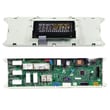
- Oven control (manages temperature and element cycling)
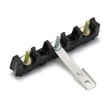
- Wiring connections at the terminal block
Last updated: January 2026
How long should a JennAir oven last?
A Jenn-Air oven like model JES9900BAS typically lasts 15 to 20 years with normal household use and basic maintenance. Heavy daily cooking, frequent self-clean cycles, and heat-related wear on controls and elements can shorten that lifespan.
Typical lifespan and what affects it
Most electric ranges fall into a predictable lifespan range, but real-world results depend on heat exposure and upkeep.
- Average lifespan: 15 to 20 years
- Heavy use (multiple cooks daily): often closer to 10 to 15 years
- Light to moderate use: commonly 20 years or longer
- Frequent self-cleaning: can accelerate wear on wiring, door gasket, and controls
- Power quality: surges and loose connections can damage the control and terminal block
Quick “repair or replace” guide
Use this as a practical way to decide what makes sense for your JES9900BAS.
| What you’re seeing | Most common cause | Usually worth repairing? |
|---|---|---|
| Oven not heating evenly or not heating | Failed bake element | Yes |
| Door won’t seal, heat escapes | Worn door gasket | Yes |
| One surface burner won’t regulate heat | Failed burner control switch | Often |
| Unit dead or intermittent power | Loose/burned terminal block or wiring | Yes (address promptly) |
Parts that commonly determine “end of life”
These are the components that most often drive major performance issues over time.
- Heating components such as the bake element WPW10310274
- Heat sealing parts such as the door gasket WPW10162384
- Surface heat regulation parts such as the burner control WPW10185286
- Power connection parts such as the terminal block WPW10245259
- Venting components (on downdraft models) such as grease filters and blower parts
Why it matters
When an oven reaches the 15 to 20 year mark, small symptoms (slow preheat, uneven baking, weak broil, heat leaking around the door) often trace back to a few serviceable parts. Replacing the right part restores performance and helps the range run safely and efficiently.
Where to confirm model-specific care and usage
For JES9900BAS operating tips, cleaning guidance, and feature-specific recommendations (including self-clean use), follow the JES9900BAS owner's manual.
Last updated: January 2026
What are common problems with JennAir stoves?
Common problems we see on Jenn-Air electric ranges like model JES9900BAS include the oven not heating, surface elements not working, weak or noisy downdraft venting, and door issues (not sealing or not closing smoothly). Many symptoms trace back to a failed heating element, control switch, door gasket, or a power connection problem.
Most common symptoms and what they usually point to
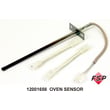
- Oven won’t heat or heats unevenly: failed bake element, temperature sensing issue, or control problem.
- Broil works but bake doesn’t (or vice versa): one heating circuit or element has failed.
- One surface burner won’t heat or cycles oddly: bad surface element or burner control switch.
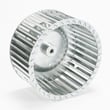
- Downdraft vent is weak or loud: clogged grease filter, blower wheel issue, or motor problem.
- Door doesn’t seal, heat escapes, or cooking is inconsistent: worn door gasket or hinge alignment.
Quick checks we recommend first (safe, no disassembly)
- Confirm the range has full power (a tripped breaker can leave you with partial 240V power).
- Try a different surface element setting and note whether the indicator light behaves normally.
- Clean the downdraft grease filter and verify airflow is not blocked.
- Inspect the oven door seal for gaps, tears, or hardened spots.
- Review operating modes, error displays, and basic diagnostics in the JES9900BAS owner’s manual.
Parts that commonly solve these problems on JES9900BAS
| Problem area | Common suspect part | Example part for this model |
|---|---|---|
| Oven not heating | Bake element | Bake element WPW10310274 |
| Burner not heating | Burner control switch or element | Burner control WPW10185286 |
| Weak downdraft vent | Grease filter | Range downdraft vent grease filter WP71002111 |
| Door not sealing | Door gasket | Door gasket WPW10162384 |
Why it matters
Heating and airflow problems can cause long preheat times, uneven baking, and overheating around the control area. Door seal and venting issues also make the range work harder, which can shorten the life of components like elements and switches.
Last updated: January 2026