Owner’s manual
 Error Codes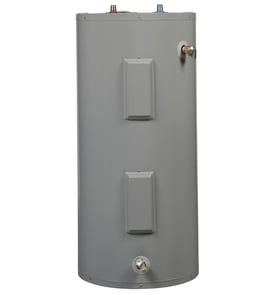

How do I read my water heater model number?
For your Kenmore electric water heater model 449320511, the model number is printed on the rating decal located under the front panel. Use that exact model number when looking up parts, wiring information, and specifications in the owner's manual.
Where to find the model number on model 449320511
On this Kenmore Survivor water heater, the rating decal is not on the outside jacket. It’s behind the access cover.
- Turn power OFF at the breaker (electric shock hazard).
- Remove the front panel (access cover).
- Locate the rating decal under that panel.
- Write down the model number and serial number.
- Reinstall the panel before restoring power.
What the model number tells you
Kenmore Survivor model numbers identify the exact configuration (for example, tank size and element setup). Your manual lists 449320511 in the model number group for these water heaters.
| What to record | Example for this unit | Why we need it |
|---|---|---|
| Model number | 449320511 | Ensures correct parts and instructions |
| Serial number | (from decal) | Helps match production details |
| Item name | Electric water heater | Speeds up parts identification |
Why it matters
Many water heater parts and troubleshooting steps are model-specific (like single vs. dual element, wiring layout, and which components are factory-installed). Using the exact model number prevents ordering the wrong repair part and reduces repeat service.
Last updated: February 2026
How old is my water heater by the serial number?
Your Kenmore electric water heater model 449320511 has its serial number on the rating decal under the front panel. Once you have the serial number, you can decode the manufacture date using the Kenmore format shown in the owner's manual.
Where to find the serial number (model 449320511)
On this Kenmore Survivor electric water heater, the identifying label is the rating decal under the front panel.
- Turn power off at the breaker before opening any access panel
- Remove the front panel (the manual shows the panel location)
- Locate the rating decal
- Write down the model number and serial number exactly as shown
- Take a clear photo so you do not mix up similar characters (0/O, 1/I)
How serial number dating usually works
Most water heater serial numbers encode a date using one of these common patterns:
- YYWW: year + week of year (example: 2318 = 2023, week 18)
- MMYY: month + year (example: 0522 = May 2022)
- Letter codes: letters represent month and year (some systems repeat every 20 years)
Quick comparison of common formats
| Serial number pattern | What it typically means | Example decode |
|---|---|---|
| YYWW | Year, then production week | 2318 = 2023, week 18 |
| MMYY | Month, then year | 0522 = May 2022 |
| Letter based | Month and year by letters | Varies by brand |
Why it matters
Knowing the manufacture date helps us match the right thermostat, heating element, temperature and pressure relief valve, and other water heater parts, and it also helps you plan for typical water heater lifespan and maintenance.
Last updated: February 2026
What is the life expectancy of a Kenmore water heater?
Most Kenmore electric water heaters last 8 to 12 years. With the Kenmore 449320511 (Survivor) electric water heater, correct installation and maintenance can extend service life, while high water pressure, sediment, and neglected issues can shorten it; see the owner's manual for model-specific care guidance.
Typical lifespan and what affects it
A water heater’s lifespan is mainly driven by water conditions and how hard the unit works.
- Water pressure: Inlet pressure above 80 PSI shortens water heater life.
- Sediment/mineral buildup: Hard water accelerates scale on heating elements and in the tank.
- Temperature setting: Higher setpoints increase stress on components.
- Usage load: Large households and frequent hot-water demand increase cycling.
- Maintenance habits: Periodic checks help catch small problems before they become tank or electrical failures.
Maintenance and setup that help it last longer
We recommend these practical steps for Kenmore 449320511 owners:
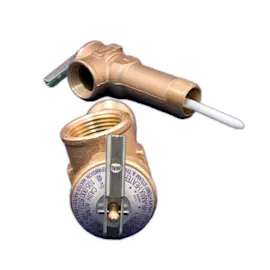
- Verify a working temperature and pressure relief valve is installed and not removed.
- If your home’s pressure is high, install a pressure reducing valve on the main water supply.
- Keep wiring and connections safe; this model operates on 240 volts.
- Watch for early warning signs: popping noises, slow recovery, discolored water, or moisture at the base.
- Follow the manual’s care and troubleshooting guidance before replacing parts.
Quick reference: lifespan drivers
| Factor | What you want | What shortens life |
|---|---|---|
| Water pressure | 40 to 80 PSI | Over 80 PSI |
| Water quality | Low sediment | Hard water, heavy scale |
| Temperature | Moderate setting | Very high setting |
| Maintenance | Regular checks | Ignored leaks/noises |
Why it matters
Replacing a water heater is usually triggered by tank leakage, electrical heating problems, or chronic performance issues. Managing pressure and sediment helps protect the tank, heating elements, and safety components so you get the full expected lifespan.
Last updated: February 2026
What is usually the most common water heater problem?
For the Kenmore 449320511 electric water heater, the most common problem we see is not enough or no hot water, usually tied to scale buildup on the heating elements, a tripped breaker or blown fuse, or a thermostat or high-limit safety opening the circuit. Use the owner's manual checklist to narrow it down fast.
Most common problems (and what they look like)
- Not enough or no hot water: water turns lukewarm quickly or never gets hot.
- Rumbling or popping noises: typically scale or mineral deposits on the heating elements.
- Tripped breaker or blown fuse: heater stops heating; power issue at the panel.
- Thermal expansion pressure relief: temperature and pressure relief valve drips or releases due to a closed plumbing system.
- Leaks at fittings: moisture at connections to and from the tank (not always a tank failure).
Quick checks we recommend first (safe, no disassembly)
- Confirm the cold water supply valve is fully open.
- Check for a partially open or leaking hot water faucet wasting hot water.
- Verify the home electrical supply is on; this model is 240V.
- Check for a popped circuit breaker or blown fuse.
- Consider seasonal impact; colder inlet water in winter takes longer to heat.
What the symptoms usually point to
| Symptom | Most likely cause | Typical next step |
|---|---|---|
| No hot water | Power issue, high-limit opened, failed element | Check breaker/fuse; then test components |
| Hot water runs out fast | Scale on elements, heavy usage | Flush tank; inspect elements |
| Rumbling/popping | Scale buildup on elements | Drain/flush; consider water treatment |
| Relief valve drips often | Thermal expansion in closed system | Add bypass and/or expansion tank |
Why it matters
Scale on heating elements makes it harder to heat water, which reduces efficiency and can shorten element life. Thermal expansion issues can also cause repeated relief valve discharge, which is a sign the plumbing system pressure needs correction.
Last updated: February 2026