Owner’s manual
 Error Codes


How to identify a Kenmore washer model?
Your Kenmore washer’s model number is printed on the model and serial number plate; for Kenmore model 11026702690, that plate is the official identifier you use to match exact replacement parts and the correct manual.
Where to look on the washer
On Kenmore washers, the model and serial number plate is typically in one of these spots:
- Under the lid (top-load washers), near the tub opening
- Inside the door opening (front-load washers)
- On the back panel, often near the power cord entry
- Along the cabinet edge behind the control console area
For this Kenmore platform, the 11026702690 owner's manual refers to the “Model and Serial Number Plate” as the location for the complete model and serial numbers.
What the model number looks like (and why it matters)
Kenmore washer model numbers are commonly 10 to 12 characters and often start with 110 (a common Kenmore prefix). Use the full model number exactly as shown on the plate; even one digit off can point to a different parts list.
Quick check table
| What you see | What it means | What to do next |
|---|---|---|
| Model number (example: 11026702690) | Identifies the exact washer design | Use it to select matching parts and diagrams |
| Serial number | Identifies the production unit | Keep it for service and warranty records |
| Partial number or worn label | Not reliable for parts matching | Recheck the plate location and rewrite it carefully |
Tips to avoid ordering the wrong part
- Copy the model number directly from the plate, not from the lid or console styling
- Include all digits; do not shorten “11026702690” to “110.2670”
- If you are troubleshooting a symptom (no drain, no spin, no agitation), match parts by model first, then symptom
- Keep the number with your records so you can reference it quickly later
Why it matters
Kenmore washers share many similar-looking components, but part fit can change by model series. Using the exact model number ensures parts like a lid switch, drain pump, or agitator components match your washer’s configuration.
Last updated: February 2026
Is it worth repairing a Kenmore washing machine?
Yes, it’s usually worth repairing a Kenmore washer when the fix restores reliable washing and costs less than replacing the machine. For Kenmore model 11026702690, we recommend using the troubleshooting and operating guidance in the 11026702690 owner's manual to confirm the symptom and narrow the repair to the right part.
How we decide if repair makes sense
We use a simple cost and condition check before buying a new washer:
- Repair cost vs. replacement cost: if the repair is clearly cheaper, repair wins.
- What failed: common wear parts (lid switch, drain pump, motor coupling) are often cost-effective.
- Overall condition: rusted cabinet, chronic leaks, or repeated failures push toward replacement.
- Performance after repair: a solid fix should restore normal agitation, spin, and drain.
- DIY vs. service call: diagnosis is often the best first spend because it prevents buying the wrong part.
Common repairs that are often worth it on this style of Kenmore top-load washer
These are frequent, high-impact fixes on two-speed, direct-drive style washers like model 11026702690:
| Symptom | Common cause | Example part for this model |
|---|---|---|
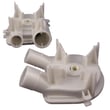
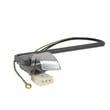
| Won’t spin or won’t drain | Failed lid switch or drain pump | Washer lid switch WP3949238 or washer drain pump WP3363394 |
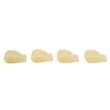
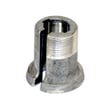
| Agitates poorly or “slips” | Worn agitator dogs or agitator cam | Agitator dog 80040 or agitator cam 285748 |
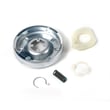
| No agitation/spin but motor runs | Worn motor coupling | Coupling 285753A |
Why it matters
A targeted repair keeps a proven Kenmore washer running for years and avoids the biggest money-waster: replacing parts based on guesswork. The manual for this washer also highlights setup items (like leveling and tightening the front leg nuts) that reduce vibration and prevent repeat problems.
Quick next steps we recommend
- Confirm the exact symptom (no spin, no drain, weak agitation, loud noise).
- Check basics first: load balance, cycle selection, and lid closure.
- Use the troubleshooting section in the 11026702690 owner's manual to narrow the cause.
- If it points to a common failure item, match the symptom to the part table above.
Last updated: February 2026
What is the average lifespan of a Kenmore washer?
A Kenmore washer typically lasts 10 to 15 years with normal household use. For your Kenmore model 11026702690, staying within proper load sizes, using the right water temperature, and following routine care steps in the 11026702690 owner's manual helps you reach the longer end of that range.
Typical lifespan and what affects it
Most washers land in the 10 to 15 year window; the biggest difference is how hard the machine works and how well it is maintained.
- Overloading and frequent heavy loads shorten drive system life
- Off-balance loads increase wear on suspension and tub components
- Poor draining strains the pump and can leave water in the tub
- Hot water and harsh chemicals can accelerate hose and seal aging
- Small issues (noise, slow spin, leaks) fixed early prevent bigger failures
What usually wears out first (common on top-load agitator washers)
On a two-speed, top-load Kenmore washer like this one, these parts commonly drive performance problems as the unit ages.
| Symptom | Common wear area | Example part for this model |
|---|---|---|
| Won’t spin or stops mid-cycle | Lid safety circuit | Washer lid switch WP3949238 |
| Won’t drain or drains slowly | Drain pump or blockage | Washer drain pump WP3363394 |
| Agitator moves poorly or “ratchets” | Agitator drive pieces | Agitator dog 80040 |
| No agitation/spin but motor runs | Motor coupling | Coupling 285753A |
Maintenance that extends washer life
These habits reduce strain on the motor, clutch, gearcase, and basket drive.
- Level the washer so it does not walk or bang during spin
- Load evenly around the agitator; avoid packing items down
- Use the correct detergent amount; too much can cause residue and odors
- Check pockets and remove coins, screws, and small items before washing
- If draining seems slow, address it right away to prevent pump damage
Why it matters
A washer that is kept balanced, draining freely, and operating with correct load sizes runs cooler and smoother. That reduces wear on high-cost drive components (like the clutch and gearcase) and helps your Kenmore 11026702690 deliver dependable cleaning for more years.
Last updated: February 2026