 Owner’s manual


How many years does a LG washing machine last?
Most LG washing machines last 10 to 15 years with normal household use. For your LG top-load washer WT5480CW, keeping the tub clean, using HE detergent correctly, and fixing small problems early are the biggest factors in reaching the high end of that range.
What affects lifespan the most
We see these items make the biggest difference in how long a WT5480CW-STYLE washer keeps running well:
- Monthly tub cleaning to prevent residue and odor buildup (use the Tub Clean cycle)
- Correct detergent: use High-Efficiency (HE) detergent and avoid over-dosing
- Proper installation: level washer, correct drain hose height, solid flooring
- Balanced loads: avoid chronic out-of-balance spinning and overloading
- Fast repairs when symptoms start (leaks, grinding, slow drain, fill issues)
For model-specific care steps and cycle guidance, follow the WT5480CW owner’s manual.
Quick maintenance schedule (simple and realistic)
| Task | How often | Why it helps |
|---|---|---|
| Run Tub Clean cycle | Monthly | Reduces odor, buildup, and corrosion risk |
| Clean dispenser drawer/inserts | Monthly | Prevents detergent/softener clogs and residue |
| Check inlet hoses for bulges/cracks | Every 6 months | Prevents leaks and water damage |
| Verify washer is level | Every 6 months | Reduces vibration and wear on suspension/drivetrain |
When a “small issue” can shorten washer life
If any of these show up repeatedly, it is worth troubleshooting right away:
- Loud banging or walking during spin
- Slow draining or standing water after cycles
- Overfilling or underfilling
- Burning smell, repeated error codes, or frequent cycle stopping
- Leaks at the back (hoses/valves) or underneath (pump/hose)
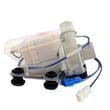
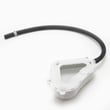
If you’re chasing a drain problem, a common repair path is inspecting the drain hose and pump; the washer drain pump assembly 5859EA1004P is one of the key components involved in draining.
Why it matters
A washer that is kept clean, level, and not overloaded typically avoids the early failures that drive replacement. That is how many owners get a full decade or more out of an LG top-load washer like the WT5480CW.
Last updated: January 2026
What are the common errors on an LG washing machine?
On the LG WT5480CW washer, the most common error codes you’ll see relate to the lid not locking, filling problems, draining problems, and out-of-balance loads. Many are fixed with simple checks like closing the lid firmly, turning on water valves, clearing hose kinks, and redistributing the load (see the WT5480CW manual).
Common LG WT5480CW error codes and what they usually mean
- Lid/lock errors: lid not closed or lid lock switch issue
- Fill errors: water not entering fast enough (valves off, kinked hoses, clogged inlet screens)
- Drain errors: water not draining (kinked drain hose, drain too high, blockage)
- Unbalanced load errors: load too small, mixed heavy and light items, tangling
- Control/motor related errors: may require a reset or service if they repeat
Quick checks you can do first (safe DIY)
- Press START/PAUSE, wait for the lid to unlock, then re-close the lid firmly.
- Confirm hot and cold water faucets are fully open.
- Check inlet hoses for kinks/pinches; clean inlet screens if filling is slow.
- Verify the drain hose is not kinked and the standpipe height is within the installation range.
- For balance errors, redistribute items and avoid washing single heavy items alone.
When a part is commonly involved
If the washer won’t drain and you’ve confirmed the drain hose and standpipe setup are correct, the drain pump can be a common suspect. For this model, the compatible replacement is the washer drain pump assembly 5859EA1004P.
| Symptom on display | Most common cause | First action |
|---|---|---|
| Lid/lock message | Lid not fully closed, item caught | Clear obstruction; close lid; restart |
| Fill message | Valves off, kinked hose, clogged inlet screen | Open valves; straighten hoses; clean screens |
| Drain message | Kinked hose, drain too high, blockage | Check hose routing and drain height |
| Unbalanced message | Load too small or uneven | Add items; redistribute |
Why it matters
Error codes on the WT5480CW are designed to prevent flooding, protect the drive system, and reduce vibration. Addressing the simple causes first can save time and help avoid unnecessary part replacement.
Last updated: January 2026
Can I fix an oe error myself?
Yes. On the LG WT5480CW washer, an OE error usually means the washer isn’t draining fast enough; you can often fix it yourself by checking the drain hose setup, clearing clogs, and verifying the drain pump can move water. Use the WT5480CW manual for model-specific safety and operating steps.
Quick DIY checks (start here)
- Unplug the washer for 60 seconds, then try a Rinse+Spin or Spin Only cycle.
- Make sure the drain hose isn’t kinked, crushed, or pinched behind the washer.
- Confirm the standpipe or laundry tub drain isn’t backing up (a slow house drain can mimic an OE).
- Verify the drain hose height is reasonable; overly high drains can prevent proper draining.
- Look for small items (coins, socks) that can block the drain path.
Drain hose setup tips for WT5480CW
Our WT5480CW owner’s manual calls out common drain-hose installation limits that matter for draining performance.
| Item | What to check | Why it matters |
|---|---|---|
| Hose routing | No sharp bends or pinches | Restricts flow and triggers drain errors |
| Standpipe insertion | Don’t shove the hose too far in | Helps prevent siphoning and slow drain |
| Drain height | Avoid extreme height | Too much lift can overwhelm the pump |
When a part is likely involved
If the hose and household drain are OK but OE returns, the drain pump or drain hose may be restricted or failing.
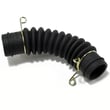
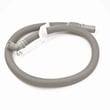
- Inspect the drain hose for internal blockage; replace if damaged: washer drain hose AEM73732901.
- If you hear humming but little or no water movement, the pump may be jammed or worn: washer drain pump assembly 5859EA1004P.
Why it matters
An OE drain error can leave water in the tub, stop the cycle mid-wash, and strain the drain pump. Fixing the restriction early helps prevent repeat clogs and reduces the chance of a no-drain situation.
Last updated: January 2026
Do LG washers have a filter that needs to be cleaned?
Yes. For the LG WT5480CW top-load washer, there is no front “drain pump filter” access door like many front-load models; instead, routine maintenance focuses on running the Tub Clean cycle and cleaning the water inlet filter screens when fill problems occur. See the WT5480CW manual.
What filters apply to LG WT5480CW (top load)
- Water inlet filter screens: Small screens at the hot/cold inlet valves where the fill hoses connect; they can clog with sediment or hard-water scale.
- Drain pump system: This washer uses a drain pump, but it is not designed with a regular, user-accessible lint trap like many front-load LG washers.
- Tub and dispenser buildup: Residue and odor control is handled with periodic cleaning (Tub Clean and dispenser cleaning), not a removable “lint filter.”
How to clean the inlet filter screens (quick steps)
- Unplug the washer and turn off both water faucets.
- Remove the hot and cold fill hoses from the back of the washer.
- Carefully pull out the inlet screens, soak/rinse to remove scale and debris, then reinstall.
- Reconnect hoses and check for leaks.
If you’re also dealing with slow filling or an IE-style fill error, our LG top load washer error codes resource can help you narrow down the cause.
When cleaning is enough vs. when a part may be needed
| Symptom | Most common cause | What to do next |
|---|---|---|
| Washer fills slowly | Clogged inlet screens | Clean inlet screens first |
| Won’t fill at all | Faucet off, kinked hose, clogged screens | Verify supply, then clean screens |
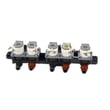
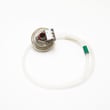
| Overfilling or incorrect water level | Pressure sensing issue | Inspect the air hose and consider the LG washer water-level pressure switch 6501EA1001R |
Why it matters
Keeping the inlet screens and tub maintenance on schedule helps prevent fill errors, improves wash performance, and reduces odor and residue buildup in high-efficiency top-load washers.
Last updated: January 2026


