 Owner’s manual



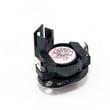
How do I know if my Kenmore dryer thermal fuse is blown?
If your Kenmore Elite dryer model 11067032601 suddenly won’t run (or runs but has no heat after an overheating event), a blown thermal fuse is a common cause. We confirm it by unplugging the dryer and testing the fuse for continuity with a multimeter; an “open” reading means it’s blown.
What you’ll typically notice when the thermal fuse is blown
- Dryer will not start at all (most common)
- Dryer starts but stops quickly
- No heat (on some designs, depending on how the fuse is wired)
- You recently had restricted airflow (clogged lint screen, crushed vent, long vent run)
- You smell “hot” or notice the dryer cabinet getting unusually warm
How we test the thermal fuse (safe, quick check)
- Unplug the dryer (or shut off the breaker) before opening any panels.
- Access the thermal fuse location shown in the 11067032601 owner’s manual.
- Pull one wire off the fuse terminal (so you don’t read through the circuit).
- Set your multimeter to continuity (or lowest ohms).
- Touch a probe to each terminal.
Interpreting the meter reading
| Meter result | What it means | What we do next |
|---|---|---|
| Beep / near 0 ohms | Fuse is good | Keep troubleshooting (door switch, start switch, power supply, etc.) |
| No beep / OL / infinite ohms | Fuse is blown | Replace the fuse and fix the airflow problem that caused overheating |
The correct replacement part for this model
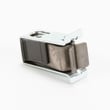
For Kenmore Elite 11067032601, the thermal fuse listed for this model is the dryer thermal fuse WP3390719.
Why the fuse blows (and why it matters)
A thermal fuse is a one-time safety device; it opens when the dryer overheats. Replacing the fuse without correcting airflow (lint buildup, blocked vent, failed blower path) often leads to another blown fuse and longer dry times.
Quick airflow checks we recommend before restarting
- Clean the lint screen and confirm the screen housing is clear
- Inspect the vent hose for kinks, crushing, or heavy lint
- Check the outside vent hood for a stuck flap or blockage
- Run a timed heat cycle briefly and verify strong airflow at the vent outlet
Last updated: February 2026
What are the codes for Kenmore Elite dryer?
For the Kenmore Elite dryer model 11067032601, the display can show status and fault codes that point to airflow problems, power interruptions, or sensor and control failures. Use the code to guide quick checks first, then test likely parts if the code returns. See the 11067032601 owner's manual for the exact code behavior and reset steps.
Common codes you may see
- PF: Power failure; the cycle was interrupted. Press and hold START to restart.
- AF: Low airflow condition; usually a venting or lint restriction.
- F:01: Main electronic control board failure.
- F:02: Keypad or user interface failure.
- F:20: Heater relay failure.
- F:22 / F:23: Outlet thermistor failure.
- F:24 / F:25: Inlet thermistor failure.
What to do first (fast checks)
- Clear the code: For AF, press STOP once; the time display returns, but AF will reappear until airflow is fixed.
- Fix airflow (most common):
- Clean the lint screen and confirm it is seated correctly.
- Check the vent pipe from the dryer to the wall for kinks or clogs.
- Check the outside vent hood for blockage.
- Have the home vent run cleaned if buildup is likely.
- After PF: Confirm the breaker did not trip; then press and hold START.
Parts that commonly relate to heat and sensor codes
If you keep getting heat or temperature-related codes after airflow is corrected, these parts are common suspects:
| Symptom or code family | What it often points to | Example part for this model |
|---|---|---|
| AF, long dry times | Restricted venting, lint buildup | (No part needed first) |
| F:22-F:25 | Temperature sensing issue | Dryer thermistor WP8577274 |
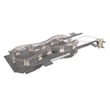
| No heat or overheating symptoms | Heater circuit protection or heater failure | Dryer thermal fuse WP3390719, dryer heating element WP8544771 |
Why it matters
Airflow and temperature control protect the heater and prevent repeated shutdowns. Correcting vent restrictions first often resolves AF and helps prevent blown thermal fuses and overheating-related failures.
Last updated: February 2026
What does F1 mean on a Kenmore Elite dryer?
On the Kenmore Elite dryer model 11067032601, an F1 code is a service fault (an “F variable” code) that indicates the dryer has detected a problem that requires service-level diagnosis. We use the troubleshooting and service-code guidance in the 11067032601 owner's manual to confirm the next steps.
What to do right away
- Press Stop/Cancel to clear the display, then restart the cycle once.
- Unplug the dryer (or switch off the breaker) for 1 minute, then restore power.
- If F1 returns, stop using the dryer until it’s checked.
- If you also see AF (low airflow), correct airflow first because overheating and poor venting can trigger faults.
- Check for obvious issues: loose power cord, tripped breaker, or a door that is not fully latched.
Airflow checks that prevent repeat faults
Even when the display shows F1, we recommend verifying airflow because restricted venting is a common root cause of heat-related shutdowns.
- Clean the lint screen before every load.
- Inspect the vent duct behind the dryer for kinks or crushing.
- Check the outside vent hood for blockage.
- Use only rigid or heavy metal venting (avoid plastic or foil).
Quick symptom guide
| What you notice | What it usually points to | What we check first |
|---|---|---|
| F1 comes back immediately | Control or wiring issue | Power reset, connections |
| Dryer runs hot, long dry times | Airflow restriction | Lint screen, vent path |
| No heat or shuts off mid-cycle | Heat circuit safety trip | Thermal fuse, thermostats |
Parts commonly involved when heat problems accompany F1
If the dryer is overheating, not heating, or stopping mid-cycle, these parts are frequent suspects during diagnosis:
- Dryer thermal fuse WP3390719 (opens if the dryer overheats)
- Dryer thermistor WP8577274 (senses temperature for the control)
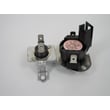
- Dryer high-limit thermostat WP8557403 (limits heater temperature)
Why it matters
Continuing to run a dryer that repeatedly shows F1 can lead to unreliable operation and, if airflow is restricted, excessive heat. Correct venting and prompt diagnosis protect the heater circuit, wiring, and electronic control.
Last updated: February 2026
What is the capacity of a Kenmore Elite dryer?
The capacity depends on the exact Kenmore Elite dryer model. For Kenmore Elite model 11067032601, the 11067032601 owner's manual is the right place to confirm the official drum capacity; most full-size Kenmore Elite dryers of this style are typically in the 7.0 to 7.5 cu. ft. range.
How to confirm capacity for model 11067032601
We recommend checking the specifications section in the manual first, then verifying by model tag if needed.
- Look for a “Capacity” or “Drum volume” line in the specs pages of the 11067032601 owner's manual
- Check the model/serial tag (usually inside the door opening) to confirm you are matching the correct model number
- If you are comparing dryers, note that drum size and usable capacity can be listed differently
- If drying seems slow, confirm airflow first; restricted venting can mimic “small capacity” performance
Typical capacity ranges (for context)
These ranges help when you are comparing models or shopping for accessories like a rack.
| Dryer type | Typical capacity range | Best for |
|---|---|---|
| Compact (24-inch) | 3.4 to 4.4 cu. ft. | Apartments, small loads |
| Full-size standard | 6.5 to 7.4 cu. ft. | Most households |
| Full-size large capacity | 7.5 to 9.0 cu. ft. | Bulky items, large families |
Why it matters
Capacity affects how much you can dry per cycle and how well items tumble. Overloading reduces airflow and can increase dry time, while underloading can cause poor sensor performance on automatic cycles.
Related parts that affect real-world drying performance
If the dryer “feels” like it has less capacity because loads take too long or come out damp, these parts commonly impact results:
- Lint screen and housing fit (airflow restriction)
- Heating performance (electric models): dryer heating element WP8544771
- Overheat protection trips from poor airflow: dryer thermal fuse WP3390719
- Temperature sensing accuracy: dryer thermistor WP8577274
Last updated: February 2026
What year did the Kenmore Elite come out?
Kenmore Elite was introduced in the late 1990s; the line first appeared on Kenmore laundry products around 1997, with Kenmore Elite dryers following shortly after. For your Kenmore Elite dryer model 11067032601, the exact year is determined from the serial number date code in the 11067032601 owner's manual.
Quick timeline (Kenmore Elite)
- 1997: Kenmore Elite name begins appearing on select premium laundry models
- Late 1990s: Kenmore Elite expands into more laundry configurations, including dryers
- 2000s: Kenmore Elite branding broadens across additional major appliances
How to find the year for your specific dryer (11067032601)
The “Kenmore Elite” launch timeframe is different from your dryer’s manufacture date. Use the model and serial tag to identify the production year.
- Locate the model/serial tag (commonly inside the door opening or on the cabinet frame)
- Record the full serial number exactly as shown
- Use the serial number date-code guidance in the 11067032601 owner's manual
- When ordering parts, always match by model number 11067032601 for correct fit
Common wear parts that help date-related symptoms
Age-related wear often shows up as noise, no-heat, or drum drive issues. These are common checks on this Kenmore Elite dryer platform:
- Drum not turning: belt and idler system
- Squealing or thumping: drum support rollers
- No heat or shuts off: thermal fuse and heat controls
| Symptom | What to check first | Example part for this model |
|---|---|---|
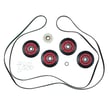
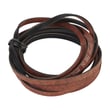
| Drum won’t turn | Belt condition and tension | Dryer drum belt WP8547157 |
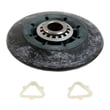
| Squeals or thumps | Roller wear/flat spots | Support WPW10314173 |
| No heat | Blown safety fuse | Dryer thermal fuse WP3390719 |
Why it matters
The manufacture year helps us match the correct Kenmore parts, troubleshoot accurately, and plan maintenance. It also helps when comparing control features and cycle options across late-1990s and early-2000s Kenmore Elite dryers.
Last updated: February 2026
Where is the model number on a Kenmore Elite dryer?
On Kenmore Elite dryer model 11067032601, the model number is on the rating label. You’ll typically find that label when you open the dryer door and look around the door opening (often on the door frame or just inside the front panel). For label illustrations and exact locations, use the 11067032601 owner's manual.
Where to look first (fast checks)
- Open the dryer door and inspect the door frame on the cabinet.
- Check just inside the front opening near the lint screen housing.
- Look along the inside edge of the door itself.
- If you don’t see it, check the rear panel of the dryer cabinet.
What the label looks like and what you need
The rating label usually includes the model number and other identifiers you may see when ordering parts.
| Label item | What it’s used for | Example format |
|---|---|---|
| Model number | Ensures parts fit your exact dryer | 11067032601 |
| Serial number | Helps date and identify production run | Letters and numbers |
| Electrical info | Confirms power requirements | Volts/amps |
Why it matters
Kenmore Elite dryers often share similar styling across multiple model series. Using the exact model number (like 11067032601) prevents ordering the wrong heating, drum, or door parts and helps match the correct troubleshooting steps.
Tip for parts and troubleshooting
Once you have the model number, match parts by model and symptom. For example, squealing or thumping commonly points to drum support wear; a common wear item is the support WPW10314173.
Last updated: February 2026








