 Owner’s manual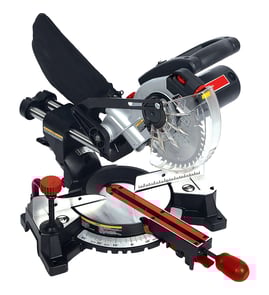

What are the parts of a miter saw?
On the Craftsman miter saw model 315212220, the main parts you use and adjust are the blade and blade guards, the fence and table (miter table/base), the miter and bevel controls, and the switch and motor assembly. These parts work together to support the workpiece, set the cut angle, and control the blade safely (see the owner's manual).
Main miter saw parts (what they do)
- Saw blade (12-inch): makes the cut; mounts on a 1-inch arbor.
- Upper and self-retracting lower blade guard: protects you from the blade; the lower guard retracts as you lower the saw into the workpiece.
- Fence: holds the workpiece securely against the back support during cuts.
- Miter table/base: supports the workpiece and provides the platform for angle settings.
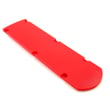
- Zero clearance throat plate: insert in the miter table that the blade cuts a slot into; helps minimize tear-out.
- Switch/trigger and electric brake: starts the saw; the brake helps stop blade rotation quickly after you release the switch.
- Motor (15-amp): provides cutting power; this model uses a 15 AMP motor.
Common accessories you may see on this model
These are not “core parts,” but they are frequently used for accuracy and control:
- Dust bag and dust guide
- Work clamp assembly (plus clamp brackets and extension rod)
- Table extensions and stop block
- Blade wrench and hex key wrenches
Quick reference specs (model 315212220)
| Item | Typical value for this model |
|---|---|
| Blade diameter | 12 in. |
| Arbor size | 1 in. |
| No-load speed | 4000 RPM |
| Electrical rating | 120V, 60 Hz AC, 15A |
Why it matters
Knowing the names and functions of the fence, guards, throat plate, and miter/bevel controls helps you set angles correctly, clamp the workpiece securely, and avoid unsafe situations like kickback or throw-back. It also makes it easier to identify what needs adjustment or replacement.
Last updated: February 2026
Which Mitre saw is the most accurate?
The most accurate miter saw is the one that holds its settings and can be tuned precisely; a well-adjusted saw often beats a “premium” saw that is out of alignment. For your Craftsman 315212220, accuracy comes from checking factory adjustments, keeping the fence and table true, and using proper clamping (see the owner's manual).
What “most accurate” really means
Accuracy is a mix of repeatability and alignment:
- Miter accuracy: the table stops land exactly at 0°, 45°, 22.5°, etc.
- Bevel accuracy: the blade tilts to true 0° and 45° without drift
- Fence squareness: the fence is 90° to the blade at 0° miter
- Cut consistency: the saw returns to the same angle after many cuts
- Work control: the board stays tight to the fence and table during the cut
How to get maximum accuracy from a Craftsman 315212220
Your manual notes the saw is factory-adjusted for very accurate cuts, but shipping and wear can knock components out of alignment; it also calls out positive miter stops (0°, 15°, 22-1/2°, 31.62°, 45° left/right) that should be verified during setup.
- Unplug the saw before any adjustment or blade change
- Verify the 0° miter stop with a reliable square, then fine-tune if needed
- Check the fence for straightness and tight mounting; clean pitch and dust off mating surfaces
- Use the work clamp or a C-clamp; never cut freehand (this is a major cause of “inaccurate” cuts)
- Make trial cuts in scrap for compound miters and crown molding setups
Quick accuracy checklist (symptom to likely cause)
| What you see | Most common cause | What to do first |
|---|---|---|
| Gap at the back of a miter joint | Miter stop slightly off | Re-check 0° and 45° stops with a square |
| Two identical cuts do not match | Workpiece shifting | Clamp workpiece; keep it tight to fence |
| Cut is not square at 0° miter | Fence not square to blade | Clean and re-square fence |
| Burning or wandering cut line | Dull/incorrect blade, feed too fast | Install a sharp crosscut blade; slow feed |
Why it matters
On a compound miter saw, tiny alignment errors multiply in miters, bevels, and crown molding cuts. A tuned saw with solid workholding produces tighter joints, less rework, and safer, more controlled cuts.
Last updated: February 2026
What's the difference between a compound mitre saw and a sliding mitre saw?
A compound miter saw (like the Craftsman 315212220) makes miter cuts and bevel cuts, so we can set a left or right miter angle and also tilt the blade for bevel angles to create compound miter cuts. A sliding miter saw adds a sliding rail so the head travels forward and back, increasing crosscut width on wider boards.
What each saw type does
- Compound miter saw: pivots for miter angles and tilts for bevel angles (compound cuts use both at once).
- Sliding miter saw: typically miter (and often bevel) plus a sliding action to cut wider stock.
- Sliding compound miter saw: combines compound (miter + bevel) with sliding for maximum capacity.
- Non-sliding saws: usually feel more compact and stable on a bench.
- Sliding saws: need extra clearance behind the saw for the rails.
Capacity and use-case comparison
The biggest practical difference is cutting capacity. Our Craftsman 315212220 is a 12-inch compound miter saw; the manual lists these typical capacities at common settings.
| Saw type | What changes | Typical benefit | Typical tradeoff |
|---|---|---|---|
| Compound miter saw | Adds bevel to miter | Great for trim, molding, picture frames | Crosscut width limited by fixed head |
| Sliding miter saw | Adds sliding travel | Cuts wider boards in one pass | More space, more moving parts |
| Sliding compound miter saw | Adds both | Most versatile for finish and framing | Heavier, more setup/maintenance |
Why it matters for real projects
Compound capability is what lets you accurately cut crown molding, baseboard, and frames using a miter angle and a bevel angle at the same time. Sliding capability is what helps when the board is simply too wide to crosscut on a fixed-head saw.
Tips for choosing the right style
- Choose compound when you mainly cut trim and molding and want a simpler, compact saw.
- Choose sliding when you frequently crosscut wide boards (shelving, decking, larger stock).
- Check your common material sizes, then compare them to the cutting capacity charts in the owner's manual.
- Plan for dust collection and bench space; sliding rails often require more rear clearance.
- For best accuracy, mount the saw securely to a firm surface and re-check alignment after moving it.
Last updated: February 2026
What size board can you cut with a 10 inch miter saw?
A typical 10-inch miter saw can crosscut about a 2x6 at 90° and about a 2x4 at 45°, but the exact capacity depends on the saw’s design and fence height. For your Craftsman 315212220 compound miter saw, the manual lists a maximum crosscut width of 7-7/8 inches at 0° miter and 0° bevel. See the owner's manual for the full cutting-capacity chart.
Cutting capacity for Craftsman 315212220 (from the manual)
These are the published maximum material sizes (width x height) for common settings:
| Saw setting | Max width | Max height |
|---|---|---|
| Miter 0°, bevel 0° | 7-7/8 in. | 2-1/2 in. |
| Miter 45°, bevel 0° | 5-1/2 in. | 2-1/2 in. |
| Miter 0°, bevel 45° | 7-7/8 in. | 1-3/4 in. |
What that means in “board size” terms
Nominal lumber sizes vary by actual thickness and width, so we recommend using the capacity table above as your go by. In general, these guidelines help:
- A “2x” board is typically about 1-1/2 inches thick, so height capacity is usually not the limiter.
- Width capacity is the main limiter on a non-sliding miter saw.
- Wider boards can sometimes be cut by flipping the workpiece, but only if you can keep it stable and safely clamped.
- Crown molding and tall baseboard cuts depend heavily on how the material sits against the fence.
- If you are near the limit, make a test cut in scrap first.
How to get the cleanest, safest cut at max capacity
When you are cutting near the saw’s maximum width, setup matters as much as blade size:
- Support long stock level with the saw table (roller stand or a flat work surface).
- Keep one edge firmly against the fence; clamp the workpiece when possible.
- Let the blade reach full speed before entering the wood.
- Lower the blade slowly through the cut; do not force it.
- Wait for the blade to stop completely before lifting the saw arm or moving the workpiece.
Why it matters
Knowing your true crosscut capacity helps you choose the right saw settings (miter and bevel), avoid binding or kickback, and prevent inaccurate cuts when you are working with wider trim, shelving, or framing lumber.
Last updated: February 2026
What size is the miter slot on a Craftsman table saw?
The Craftsman 315212220 is a compound miter saw, not a table saw; it does not use a table saw style miter slot (3/4 in. x 3/8 in.). Instead, it uses a rotating miter table with angle detents and a fence for alignment; see the 315212220 owner's manual for adjustment and setup details.
What this saw has instead of a miter slot
- A miter table that rotates left and right for angle cuts
- Miter detents/stops (common angles) to help repeat cuts
- A fence to register the workpiece square to the blade
- A bevel mechanism to tilt the saw head for bevel cuts
- A work clamp area for securing material during cuts
If you are actually measuring a table saw miter slot
Most table saws use a standard miter gauge slot size, but you should measure your specific table saw top because Craftsman models vary.
| Tool type | Has a miter slot? | What to measure instead |
|---|---|---|
| Table saw | Yes | Slot width, depth, and any T-slot undercut |
| Miter saw (315212220) | No | Miter detents, fence alignment, bevel and miter calibration |
Quick checks that solve the real fit and accuracy issues
- Confirm the model number on the tool matches the manual you are using
- Calibrate the miter pointer to 0° and verify with a square
- Check the fence is straight and coplanar left to right
- Verify the bevel stop at 0° so the blade is square to the table
- Use a clamp and keep hands clear; the manual safety steps apply every time
Why it matters
A table saw miter slot controls how a miter gauge or sled runner tracks. On a miter saw like the Craftsman 315212220, cut accuracy comes from miter detents, fence alignment, and bevel stops, not a slot dimension.
Last updated: February 2026