Owner’s manual
 Error Codes


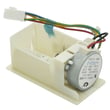

Why is the bottom freezer refrigerator not popular?
Bottom-freezer refrigerators (like Whirlpool model GB2FHDXWB05) are less popular mainly because they typically cost more than top-freezer models and many people prefer easier access to frozen foods without bending. They can also feel less convenient to organize because most bottom freezers use deep pull-out drawers.
Common reasons shoppers skip bottom-freezer designs
- Higher upfront price compared with basic top-freezer refrigerators
- More bending and lifting to reach frozen items in a lower drawer
- Drawer organization challenges (items can stack and get buried)
- More parts and features on many models, which can increase repair complexity over time
- Kitchen fit preferences: some homes prefer the simpler, narrower top-freezer footprint
What you gain with a bottom freezer
Many customers still choose bottom-freezer units because the refrigerator section is at eye level, which makes daily use easier.
| Feature | Bottom freezer | Top freezer |
|---|---|---|
| Fresh food access | Easier (eye level) | Requires bending |
| Frozen food access | Requires bending | Easier (chest height) |
| Typical price | Higher | Lower |
| Freezer organization | Drawer-based | Shelf-based |
If you already own one, reliability comes down to maintenance
A bottom-freezer refrigerator can run for years when airflow and defrost performance stay healthy.
- Keep condenser area clean and allow proper ventilation
- Watch for frost buildup or warming that points to a defrost issue
- If cooling is uneven, check freezer airflow components such as the evaporator fan and damper
For model-specific use and care details, follow the GB2FHDXWB05 owner's manual.
Why it matters
Popularity is mostly about buying preferences, not whether the design is “bad”. If your GB2FHDXWB05 fits your cooking habits (fresh food used most often), the layout can be a strong advantage.
Last updated: January 2026
What's the average lifespan of a Whirlpool refrigerator?
Most Whirlpool refrigerators, including the Whirlpool GB2FHDXWB05 bottom-mount style, typically last 10 to 20 years. In real-world use, we see many units land in the 10 to 15 year range, and simple, well-maintained models can reach the upper end of that range.
What affects lifespan the most
- Condenser coil cleanliness (dirty coils make the compressor work harder)
- Door seal condition (air leaks cause longer run times and frost issues)
- Ice maker and water system use (more components, more wear points)
- Room temperature and ventilation (tight cabinets and hot garages shorten life)
- Power quality (surges and repeated outages stress the electronic control)
Maintenance that helps you reach the high end (15 to 20 years)
- Vacuum dust from the condenser area regularly (frequency depends on pets and dust).
- Keep doors closing squarely; fix sagging or misalignment early.
- Confirm the freezer drawer seals fully and does not bind on baskets.
- Keep food loads reasonable so air can circulate.
- Follow the care and cleaning schedule in the GB2FHDXWB05 owner's manual.
Common “life-shortening” symptoms and what they usually point to
| Symptom | What it often means | What to check first |
|---|---|---|
| Warm fridge, freezer OK | Airflow issue between compartments | Damper, frost buildup, evaporator fan |
| Loud humming, frequent cycling | Compressor working too hard | Dirty coils, airflow blockage |
| Frost buildup in freezer | Door leak or defrost issue | Gaskets, defrost system |
| No ice or slow ice | Water supply or ice maker issue | Valve, ice maker, filter |
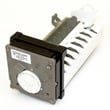
If you are troubleshooting ice production on this model, the refrigerator ice maker D7824706Q is a common replacement part when the mold is not filling or the harvest cycle fails.
Why it matters
A refrigerator that is running longer than normal uses more electricity and puts extra wear on high-cost components like the compressor and electronic control. Basic upkeep often prevents the “slow decline” that leads to early failure.
Last updated: January 2026
Do you remove cardboard from the bottom of a Whirlpool refrigerator?
For the Whirlpool GB2FHDXWB05 bottom-mount refrigerator, we leave the cardboard-style cover at the bottom in place. That panel is designed to protect the condenser area and other components, and removing it can reduce airflow control and expose wiring and tubing to damage.
What that “cardboard” piece usually is
On many Whirlpool bottom-mount refrigerators, the material you see underneath or at the lower rear is a factory-installed access or airflow cover (often fiberboard). It is not packing material.
- Helps direct air across the condenser for proper cooling
- Shields the compressor area from dust, pets, and accidental contact
- Reduces the chance of snagging or damaging wires and water lines
- Helps keep the unit quieter by limiting open air paths
For model-specific panel locations and access points, follow the GB2FHDXWB05 owner's manual.
When you would remove something
We remove only shipping materials, not protective panels. Use this quick check:
| Item you see | Remove it? | What it looks like |
|---|---|---|
| Shipping tape/foam | Yes | Tape on doors/shelves, foam blocks, plastic wrap |
| Cardboard base cover/fiberboard panel | No | Flat panel fastened with screws or clips |
| Temporary cardboard spacers | Yes | Loose pieces not fastened to the cabinet |
If you need access for cleaning or service
If you are cleaning the condenser area or troubleshooting cooling issues, we follow safe access steps from the manual and reinstall any covers exactly as found.
- Unplug the refrigerator before removing any access panel
- Vacuum dust from the condenser area and floor
- Confirm the cover is secured and not bowed into the fan area
- Restore power and verify the condenser fan runs when the compressor runs
If you are chasing a cooling or fan issue, our how to fix your evaporator cooling fan guide can help you narrow down symptoms.
Why it matters
That lower cover is part of the refrigerator’s designed airflow path. Leaving it installed helps the GB2FHDXWB05 cool efficiently and protects critical parts like the compressor and condenser tubing.
Last updated: January 2026
What is the most common problem with Whirlpool refrigerators?
The most common Whirlpool refrigerator problems are cooling issues (warm fridge or freezer, running constantly) and ice maker or water dispenser failures. On the Whirlpool GB2FHDXWB05, these symptoms are often tied to airflow restrictions, dirty condenser coils, or a failing fan, valve, or control component; start with basic checks in the GB2FHDXWB05 owner's manual.
Most common symptoms and what they usually point to
- Not cooling well: dirty condenser coils, blocked vents, evaporator fan issue, or defrost problem
- Runs all the time: condenser coils clogged, door not sealing, temperature set too cold, or airflow restriction
- No ice or slow ice: water supply issue, clogged filter, ice maker fault, or inlet valve problem
- Water dispenser weak or not dispensing: air in the line, filter restriction, or inlet valve problem
- Frost buildup in freezer: door seal leak, defrost heater issue, or airflow blocked by ice
Quick checks we recommend first (before replacing parts)
- Confirm controls are set to normal (not “max cool”) and allow 24 hours after any change.
- Clean condenser coils and make sure the condenser fan area is clear.
- Check door closing and gasket contact all the way around.
- Verify freezer vents are not blocked by packages or ice.
- For ice maker issues, confirm the shutoff arm is down and the household water supply valve is fully open.
Parts that commonly solve these problems on this model
If basic checks do not fix the issue, these model-matched parts are common next steps:
| Problem area | What fails | Example model-matched part |
|---|---|---|
| Ice production | Ice maker assembly | Refrigerator ice maker D7824706Q |
| Water to ice maker/dispenser | Inlet valve not opening fully | Refrigerator water inlet valve assembly WP2315576 |
| Temperature control | Control board not regulating correctly | Refrigerator electronic control WPW10503278 |
| Defrost system | Heater not melting frost | Refrigerator defrost heater WP12729128 |
Why it matters
Cooling and ice maker problems often start small (restricted airflow or a weak water fill) but can lead to food temperature swings, heavy frost, and extra compressor run time. Catching the root cause early helps protect the compressor and improves efficiency.
For model-specific troubleshooting steps and settings guidance, use the GB2FHDXWB05 owner's manual.
Last updated: January 2026