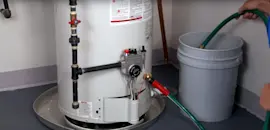
Owner’s manual
 Error Codes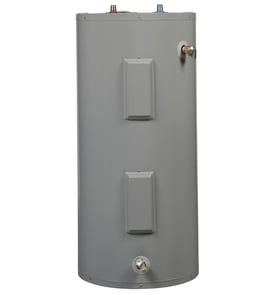




Can you replace parts on a water heater?
Yes. On the American water heater model EE3J40RD045V, we can replace many service parts (like heating elements, sensors, and valves) to restore heating performance and extend the heater’s usable life. We always follow the safety steps and procedures in the EE3J40RD045V use & care manual.
Parts you can commonly replace on EE3J40RD045V
These are typical repair items on this electric model:
- Heating elements (upper and lower)
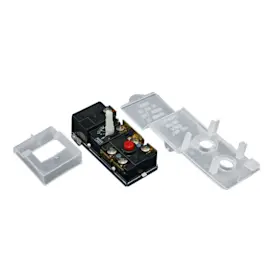
- Temperature sensors (thermistors)
- Electronic control board
- Drain valve
- Dip tube
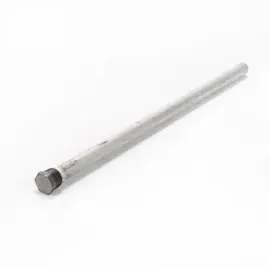
- Anode rod (corrosion protection)
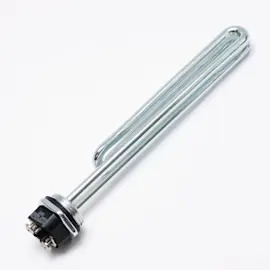
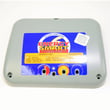
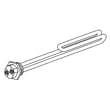
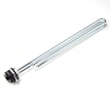
If you’re troubleshooting “no hot water” or slow recovery, the lower element and sensors are frequent suspects; for example, the lower element 100287290 is a compatible replacement part for this model.
Safety basics before any repair
Electric water heater repairs can be hazardous. Before opening access doors or touching wiring:
- Turn OFF the 240V breaker and verify power is off
- Shut off the cold water supply if you’re removing a wet-side part (element, drain valve, dip tube)
- Relieve pressure by opening a hot water faucet
- Drain the tank as needed before removing an element or valve
- Reinstall insulation and access doors before restoring power
Quick “repair vs. replace” guide
We use this rule of thumb for electric water heaters:
| Situation | Usually best choice |
|---|---|
| Failed element, sensor, drain valve, or dip tube | Replace the part |
| Repeated element failures due to sediment | Flush tank; replace element if needed |
| Tank is leaking from the tank body | Replace the water heater |
Why it matters
Replacing the right part can fix symptoms like no hot water, insufficient hot water, or high operating costs without replacing the whole unit. Routine maintenance (flushing sediment and checking the anode rod) also helps prevent premature tank damage.
Last updated: January 2026
How much should a 40 gallon electric water heater cost?
A 40-gallon electric water heater like the American Water Heaters EE3J40RD045V typically costs $400 to $900 for the tank only, with installed replacement commonly totaling $1,000 to $2,500+ depending on labor rates, code upgrades, and any plumbing or electrical changes. For model-specific operating details, use the EE3J40RD045V installation instructions and use & care guide.
What drives the price up or down
- Brand and efficiency features (standard vs. “smart” controls)
- Warranty length (longer warranties usually cost more)
- Electrical work (new breaker, wiring, disconnect, conduit)
- Plumbing changes (shutoff valve, expansion tank, piping updates)
- Local code requirements (seismic strapping, drain pan, discharge piping)
- Disposal and haul-away of the old tank
Typical cost ranges (quick comparison)
| Scenario | What you’re paying for | Typical range |
|---|---|---|
| Tank only | Water heater unit | $400 to $900 |
| Basic replacement install | Swap tank, reconnect existing lines | $1,000 to $1,800 |
| Install with upgrades | Expansion tank, new shutoff, electrical updates | $1,800 to $2,500+ |
What to confirm for EE3J40RD045V before you buy
Even within “40-gallon electric,” exact specs vary by model family. We recommend confirming these items on the unit data plate and in the manual:
- Voltage and circuit (many are 240V, 30A)
- Element wattage (match replacement elements to the rating)
- Connection sizes (commonly 3/4-inch NPT)
- Space and service clearance for access doors and controls
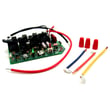
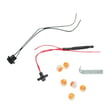
If you’re repairing instead of replacing, common cost-saving fixes include replacing a failed element or sensor. For example, a no-heat or error condition can point to the water heater electronic control board kit 100093769 or the water heater thermistor kit 100093745, depending on diagnosis.
Why it matters
Choosing the right price range helps you avoid paying for unnecessary upgrades, while still budgeting for the items that protect your home (like a properly piped drain pan and a correctly installed temperature and pressure relief valve).
Last updated: January 2026
Is it cheaper to repair or replace a water heater?
For the American water heater model EE3J40RD045V, it’s usually cheaper to repair when the issue is limited to serviceable components (like sensors, elements, or the control board). It’s usually smarter to replace when the tank itself leaks or corrosion is present, because the tank is not a practical repair.
How we decide for EE3J40RD045V
We use the same decision points technicians use: is the failure in a replaceable part, or is the tank failing? The EE3J40RD045V installation instructions and use & care guide explains common operating issues, diagnostics, and maintenance that can help you confirm what’s actually failing.
- Repair when you have no hot water, slow recovery, or error flashes tied to electrical components.
- Replace when the tank is leaking, heavily corroded, or repeatedly failing after multiple repairs.
- Repair when troubleshooting points to a single component such as a sensor or element.
- Replace when water damage risk is high (water in the drain pan from the tank, not a fitting).
Typical repair vs replace scenarios
| What you’re seeing | More likely choice | Why |
|---|---|---|
| No hot water, diagnostic light codes | Repair | Often a control, sensor, or element issue |
| Not enough hot water | Repair | Commonly lower element, dip tube, or sediment |
| Water in drain pan from fittings/valve | Repair | A valve or connection may be the source |
| Water leaking from the tank body | Replace | Tank failure is not a normal parts repair |
Parts that commonly make repair worthwhile
If troubleshooting points to a component (not the tank), these are common repair items for this model:
- Water heater electronic control board kit 100093769 (controls operating modes and diagnostics)
- Water heater thermistor kit 100093745 (temperature sensing)
- Lower element 100287290 (heating performance and recovery)
- Water heater dip tube 100089234 (hot water delivery and capacity)
Why it matters
A correct repair decision prevents repeat service calls and reduces the risk of unexpected leaks. For EE3J40RD045V, many “no hot water” and “not enough hot water” complaints are fixable with parts and maintenance, but a leaking tank is the clear line where replacement makes more sense.
Last updated: January 2026
What is the normal lifespan of an electric water heater?
For the American Water Heaters EE3J40RD045V electric water heater, the normal lifespan is 10 to 15 years. Regular maintenance like draining and flushing sediment and inspecting the anode rod helps the tank and heating elements reach that typical service life.
What affects lifespan the most
- Water quality (hard water and sediment speed up wear)
- Maintenance frequency (tank flushing helps prevent sediment-related failure)
- Anode rod condition (a depleted anode rod allows the tank to corrode)
- Operating temperature (higher setpoints increase stress and scale)
- Usage patterns (heavy demand increases heating cycles)
Maintenance schedule we recommend for EE3J40RD045V
Use the steps and safety notes in the EE3J40RD045V use & care manual to follow the correct procedure.
| Task | How often | Why it matters |
|---|---|---|
| Drain and flush the tank | Every 6 months | Reduces sediment that can cause noise, slow recovery, and premature tank failure |
| Check the anode rod | Every 3 years | Protects the glass-lined tank from corrosion |
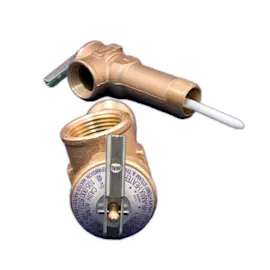
| Test the T&P relief valve | Yearly | Helps confirm overpressure protection is working |
Parts that commonly extend service life when replaced on time
If performance drops (slow recovery, not enough hot water, error codes), these model-compatible parts are often involved:
- Water heater anode rod 100110266 (corrosion protection)
- Lower element 100287290 (heating performance)
- Water heater thermistor kit 100093745 (temperature sensing)
Why it matters
Most electric water heaters fail from tank corrosion or sediment-related overheating. Staying ahead of flushing and anode rod inspection is usually the difference between replacing a part and replacing the entire water heater.
Last updated: January 2026