Owner’s manual


How to reset garage door openers?
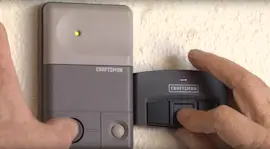
To reset a Chamberlain 3280 garage door opener, we clear the opener’s stored remote codes using the Learn/Program button on the motor unit, then reprogram each remote and keypad. This is the right fix when you move into a new home or a remote is lost.
How to reset (erase) the opener’s memory
- Locate the Learn/Program button on the motor head (near the antenna wire and indicator LED).
- Press and hold the Learn/Program button until the indicator light turns off (typically about 6 to 10 seconds).
- Release the button. All previously programmed remotes and keyless entries are now erased.
What you’ll need to do next
- Reprogram every hand-held remote you still want to use
- Reprogram the wireless keypad (if equipped)
- Test the wall control and door travel after programming
How to reprogram a remote (after reset)
- Press and release the Learn/Program button (the indicator light should turn on or blink).
- Within 30 seconds, press and hold the button on the remote you want to pair.
- Release when the opener light flashes or you hear a click.
Quick checks if the door still will not close
The manual notes the opener will not close from a remote if a safety sensor indicator light is off (misalignment or obstruction). Use these checks before adjusting anything:
- Make sure both safety sensor lenses are clean and facing each other
- Confirm both sensor indicator lights are on and steady
- Remove anything blocking the sensor beam near the floor
- Try closing with the wall control; if it closes only from the wall control, focus on sensor alignment
- If the opener lights blink during a close attempt, check the diagnostic pattern using Chamberlain error codes
Reset vs. force and travel adjustments (what’s different)
| Task | What it changes | When to do it |
|---|---|---|
| Reset (erase memory) | Removes stored remote/keypad codes | New home, lost remote, security concern |
| Reprogram | Adds remotes/keypad back | After a reset or adding a new remote |
| Force/travel adjustment | How hard and how far the door moves | Only if the door reverses, stops, or won’t fully open/close |
Why it matters
Resetting protects access to your garage by removing old transmitters from memory. After any changes that affect door movement, we follow the safety guidance in the owner's manual and verify the safety reversal and sensor system are working correctly.
Last updated: February 2026
What's the average cost to have a garage door opener installed?
For a Chamberlain 3280 garage door opener, the average installed cost is typically $300 to $800+ (opener plus labor). Basic chain-drive installs often land on the lower end, while belt-drive and smart features push totals higher; electrical work or new framing support can add cost.
Typical installed cost ranges
Costs vary most by opener type, whether this is a replacement vs. a first-time install, and whether an outlet or permanent wiring is needed.
- Replacement install (existing opener already there): often $300 to $650 total
- New install (no prior opener): often $400 to $900+ total
- Electrical upgrades (if needed): can add $100 to $400+ depending on the work
- Extra hardware/support framing: can add $50 to $200+
| Scenario | What’s included | Typical total |
|---|---|---|
| Replace an existing opener | Swap unit, reuse many brackets/wiring, set limits and force | $300 to $650 |
| New opener install | New mounting, rail setup, sensors, wall control, calibration | $400 to $900+ |
| Install plus electrical work | New outlet or code-required permanent wiring | $500 to $1,200+ |
What drives the price up (and what to check first)
The Chamberlain 3280 installation instructions call out several requirements that can affect labor time and materials.
- Opener must be mounted 7 ft or more above the floor
- Emergency release handle should be 6 ft above the floor
- Safety reversing sensor alignment matters; door-to-floor gap at the bottom should be no more than 1/4 in.
- Opener must be secured to structural supports (masonry needs proper anchors)
- Power requirements: a grounded outlet is expected; some areas require permanent wiring
For the exact placement and wiring steps for model 3280, use the owner's manual.
Why it matters
A correct install is not just convenience; it directly affects door safety reversing, sensor performance, and whether the opener stops or reverses when it should. That reduces nuisance problems like a door that will not close or reverses unexpectedly.
Helpful DIY references (if you’re troubleshooting after install)
If your opener is installed but not behaving correctly, these guides help narrow down common issues:
Last updated: February 2026
What is the life expectancy of a Chamberlain garage door opener?
A Chamberlain garage door opener like model 3280 has a typical life expectancy of 10 to 15 years in normal residential use. With consistent care and periodic safety testing (as outlined in the 3280 owner's manual), many openers reach the upper end of that range.
What affects how long it lasts
Several real-world factors determine whether your Chamberlain 3280 lands closer to 10 years or closer to 15 years:
- Cycles per day (more openings and closings equals more wear on the motor and drive system)
- Door condition (a binding or unbalanced door strains the opener)
- Maintenance habits (inspection, tightening hardware, and keeping safety sensors clean)
- Environment (heat, cold, humidity, and dust can shorten component life)
- Correct adjustments (travel limits and force settings that are off can overwork the opener)
Maintenance that extends lifespan
The manual calls out the need for periodic checks to ensure safe operation. For long life and reliable performance, we recommend:
- Test the safety reversal system regularly
- Verify the Protector System® safety sensors stay aligned and unobstructed
- Check door balance (a heavy or drifting door indicates a door issue, not an opener issue)
- Inspect the rail, trolley, and door arm connection for looseness or wear
- Keep photo-eye lenses clean and confirm indicator lights show normal operation
For model-specific procedures and test steps, use the 3280 owner's manual.
When replacement makes more sense than repair
If your opener is near the end of its expected life, repeated failures usually point to wear in multiple components.
| Symptom | What it often indicates | What to do next |
|---|---|---|
| Door reverses unexpectedly | Force/travel settings, door binding, or safety system issue | Recheck door movement and adjustments; retest safety reversal |
| Door will not close | Misaligned/blocked safety sensors | Align sensors; clear obstructions |
| Motor runs but door does not move | Drive or internal gear wear | Inspect drive components; consider repair vs. replacement |
| Intermittent operation | Wiring, wall control, or logic board aging | Check connections; use diagnostics |
Why it matters
A garage door opener is a safety device as much as a convenience feature. Keeping the safety reversal system and Protector System® working correctly protects people, pets, and vehicles while also reducing strain that shortens opener life.
For troubleshooting by symptom or blinking-light patterns, use Chamberlain error codes.
Last updated: February 2026
What does it mean when one garage door sensor is green and one is yellow?
On the Chamberlain 3280 garage door opener, one amber (yellow) sensor light and one green sensor light is normal: the amber light is the sending eye and the green light is the receiving eye. If the door will not close, the beam is blocked, the sensors are misaligned, or there is a wiring issue (especially if a light is off or not steady). See the owner's manual.
What the colors mean (and what “normal” looks like)
When the Protector System safety reversing sensors are installed and aligned correctly:
- Amber (yellow) indicator = sending eye (transmitter)
- Green indicator = receiving eye (receiver)
- Both lights should be on and steady when the beam path is clear
If the door starts down and then reverses, or the opener lights flash, treat it as a sensor-beam problem first.
Quick checks when the door will not close
Work through these in order (they solve most “won’t close” complaints):
- Wipe both sensor lenses with a clean, dry cloth.
- Remove anything in the beam path (boxes, trash cans, bike tires, cobwebs).
- Confirm both sensors face each other across the door opening.
- Verify mounting height is 6 in. (15 cm) max above the floor.
- Tighten loose brackets; vibration can knock alignment off.
- Inspect the sensor wires for damage or staples through the insulation.
What different light behaviors usually indicate
| Sensor light status | Most likely cause | What to do next |
|---|---|---|
| Amber on steady, green off | Misalignment, obstruction, or receiver wiring issue | Clear beam, realign receiver, check wiring connections |
| Both off | No power to sensors or wiring fault | Check wiring at motor unit and sensors |
| Green flickers | Beam not consistently aligned | Adjust brackets until green stays steady |
Why it matters
These sensors are a primary safety system. The opener is designed to not move the door down unless the safety reversing sensors are connected and aligned correctly. Keeping the beam clear helps prevent the door from closing on a person, pet, or object.
For model-specific placement, wiring, and the Protector System test procedure, follow the owner's manual.
Last updated: February 2026