Installation guide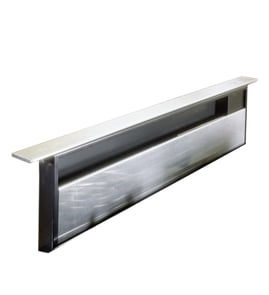



How does a downdraft ventilation system work?
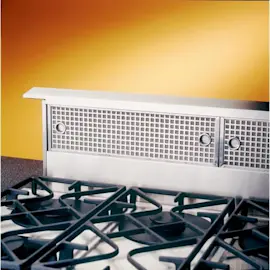
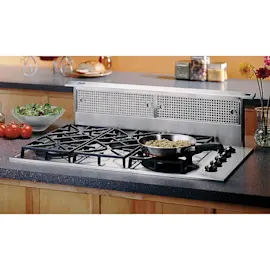
A downdraft ventilation system pulls cooking smoke, steam, and odors downward across the cooktop surface into an intake, then moves that air through ductwork to exhaust outdoors (or through filters if configured for recirculation). For Thermador model VTR1330E-01, correct ducting and makeup air are key to safe, effective airflow; see the installation guide.
What’s happening inside the system
A typical downdraft setup works as a chain of components:
- Intake captures fumes at the cooking surface
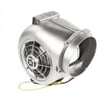
- Blower (remote blower in this setup) creates suction and moves air
- Ductwork carries air to an exterior termination
- Backdraft damper (flap) helps prevent outside air from flowing back in
- Electrical connections power and control the blower
Exhaust vs. recirculation (quick comparison)
| Mode | Where the air goes | What you’ll notice | Best for |
|---|---|---|---|
| Exhaust (ducted) | Outside the home | Strongest odor and smoke removal | Most kitchens with an exterior wall/roof route |
| Recirculation (ductless) | Back into the kitchen through filters | Some odor may remain; filters must be maintained | Spaces where exterior ducting is not possible |
Installation details that affect performance
The VTR1330E-01 installation requirements directly impact how well downdraft ventilation works:
- Vent the air to the outside; do not discharge into walls, ceilings, attics, crawl spaces, or garages.
- Use only metal ductwork to reduce fire risk.
- Keep the duct diameter at 10 inches (do not reduce it).
- Provide sufficient makeup air when other fuel-burning appliances share a flue; underpressure should stay within safe limits.
- Place plug-and-socket connections inside the building per local codes.
Parts that commonly relate to airflow and operation
If airflow is weak, noisy, or you feel cold air coming back through the duct, these model-specific parts are often involved:
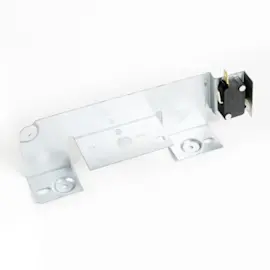
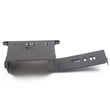
- 1way flap 00641745 (helps limit backdraft)
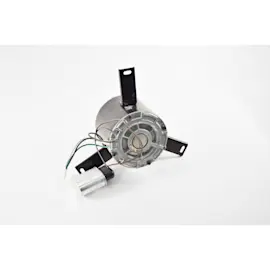
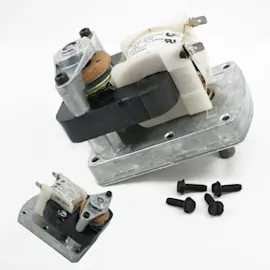
- Fan motor 11007194 (drives airflow)
- Cable harness 00642508 (supports reliable electrical connections)
Why it matters
Downdraft systems have less “capture area” than overhead hoods, so restrictions (undersized ducting, long runs, poor termination, or inadequate makeup air) reduce performance quickly. Following the VTR1330E-01 ducting and safety guidance helps prevent backdrafting and improves smoke and odor removal.
Last updated: February 2026
What does Chrome VTR1330E-01 mean?
“Chrome VTR1330E-01” is not a feature, setting, or error code on your Thermador VTR1330E-01 remote blower. In Thermador parts and installation documentation, VTR1330E-01 is the model number; “Chrome” usually refers to a finish or a web browser and is unrelated to how this blower installs or operates.
What VTR1330E-01 refers to
VTR1330E-01 identifies the exact Thermador remote blower configuration so you get the right wiring, connector, and mounting requirements.
Common places you will see the model number used:
- Parts lookup and compatibility checks
- Wiring diagram references (speed taps and color-coded leads)
- Installation steps for connecting the blower to the hood
- Accessory selection (for example, roof installation accessories)
For the correct model-specific instructions, use the installation guide.
What “Chrome” usually means (and what it does not)
In appliance listings, “Chrome” most often describes a color or finish on a visible trim piece. For a remote blower like the VTR1330E-01, the key details are electrical connections, ducting, and safe mounting, not exterior finish.
Here is a quick way to interpret the phrase:
| Term | What it typically means | What it means for this model |
|---|---|---|
| VTR1330E-01 | Thermador model number | Correct parts and wiring info |
| Chrome | Finish or web browser name | Not an operating mode or code |
Why it matters
Using the exact model number prevents wiring mistakes and unsafe installs. The installation guide also calls out critical safety steps like switching power off at the service panel before servicing, and ensuring adequate make-up air when exhausting.
If you were actually looking for a part called “chrome”
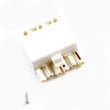
Some customers use “chrome” as shorthand for a visible piece. For this model page, common orderable items include electrical connection parts such as the plug 00418034 and cable harness 00642508. Match the part by name and ID, not by finish.
Last updated: February 2026
Do downdraft vents need to be vented outside?
Yes. For the Thermador VTR1330E-01 downdraft ventilation system (remote blower setup), the exhaust air must be ducted to the outdoors. The installation instructions state to duct air outside and not vent exhaust air into walls, ceilings, attics, crawl spaces, or garages; see the installation guide.
What “vented outside” means
A downdraft system is designed to capture smoke, heat, moisture, and odors at the cooktop and move them out of the home through ductwork.
- Terminate the duct run at an exterior wall or roof cap
- Do not discharge into enclosed building cavities (walls, ceilings, attic, crawl space, garage)
- Use only metal ductwork
- Keep the duct run as short and straight as practical to maintain airflow
- Follow local codes for clearances, termination location, and makeup air requirements
Quick checklist for a correct installation
Use this as a practical way to confirm the venting plan before installation.
| Item to verify | Correct approach | Why it matters |
|---|---|---|
| Discharge location | Outdoors only | Prevents grease and moisture buildup indoors |
| Duct material | Metal ductwork | Reduces fire risk and handles heat/grease |
| Hidden spaces | Never vent into them | Avoids odor, condensation, and contamination |
| Air supply | Provide adequate makeup air | Helps prevent poor draft and performance issues |
Why it matters
If exhaust is not routed outdoors, grease and moisture can accumulate in hidden spaces, odors linger, and performance drops. Outdoor venting also supports safer operation when other fuel-burning appliances are in the home.
Last updated: February 2026